
Historical · U.S. House · Ohio · District 9
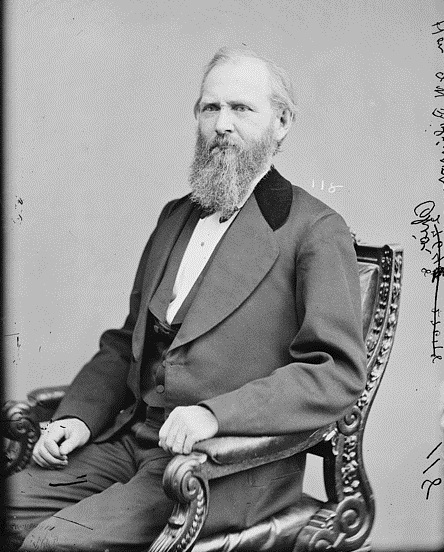
James Robinson
Former U.S. Representative · Ohio District 9 · 1873–1875 · Republican
James Robinson represented Ohio's District 9 in the United States House of Representatives (1873–1875) for the Republican party. The page below collects sourced biographical facts, term history, committee roles, and provenance for Robinson.
Bioguide ID: R000340
Key facts
- Full name
- James Robinson
- State
- Ohio
- District
- District 9
- Party
- Republican
- House service
- 1873–1875
- First House term
- 1873
- Status
- Left office
- Current term ends
- —
- Born
- 1826
- Bioguide ID
- R000340
- Committee assignments
- —
- Dataset version
- 1.20260606
Biographical narrative
936 words · sourced from the Wikipedia REST extract
James Robinson was a prominent American lawyer and politician who served as a U.S. Representative from Ohio's 9th congressional district during the early 1870s. A member of the Republican Party, Robinson's congressional tenure lasted from 1873 to 1875. His career was marked by his legal practice and his involvement in local and state politics, reflecting the political landscape of post-Civil War America. Following his time in Congress, he returned to his legal practice and continued to be active in his community until his death in 1898.
Early life and career
James Wallace Robinson was born on November 26, 1826, in Darby Township, located near Unionville Center, Ohio. His early education took place in local common schools, supplemented by his attendance at Marysville Academy, which laid the groundwork for his future academic pursuits. In 1848, Robinson graduated from Jefferson College in Canonsburg, Pennsylvania, a significant achievement that would lead him to a career in law.
After completing his undergraduate education, Robinson began studying law under the mentorship of Otway Curry. He furthered his legal education by graduating from Cincinnati Law School in 1851. Upon his admission to the bar that same year, Robinson began practicing law in London, Ohio, where he formed a partnership with Curry. This partnership allowed him to gain valuable experience in the legal field and establish a reputation as a competent attorney.
Robinson's involvement in politics began early in his career. He was elected as the prosecuting attorney for Union County, serving two terms in this role as a member of the Whig Party. His legal expertise and community engagement led to his election to the Ohio House of Representatives, where he served from 1860 to 1862. His political career continued when he was elected to fill an unexpired term in the state legislature in 1864, further solidifying his role in Ohio's political landscape.
In 1855, Robinson moved to Marysville, Ohio, where he would later become a well-known figure in the community. His legal practice flourished, and he became deeply involved in local affairs. His commitment to public service extended beyond his legal career, as he was also active in the Presbyterian Church, serving as an elder beginning in 1855. This involvement reflected his dedication to both his faith and his community.
House tenure
Robinson's congressional career began when he was elected as a Republican to the Forty-third Congress, which convened on March 4, 1873. His election came during a period of significant political change in the United States, particularly in the wake of the Civil War. As a member of the House of Representatives, Robinson represented Ohio's 9th congressional district, which encompassed a diverse constituency with various interests and concerns.
During his time in Congress, Robinson participated in the legislative process and contributed to discussions on various issues facing the nation. However, his tenure was relatively brief, lasting only until March 3, 1875. Following his single term in office, he sought reelection in 1874 but was unsuccessful in his bid for the Forty-fourth Congress. This defeat marked the end of his congressional career, but it did not diminish his commitment to public service.
After leaving Congress, Robinson returned to his legal practice in Marysville, where he continued to serve his clients and engage with the local community. His experience in Congress likely informed his legal work and community involvement, as he remained a respected figure in Ohio's legal and political circles.
Legislative focus and committees
While specific details regarding the legislation Robinson supported or the committees he served on during his time in Congress are not extensively documented, his background as a lawyer and his experience in state politics suggest that he would have been involved in issues pertinent to his constituents and the broader national context. The early 1870s were characterized by a focus on reconstruction, economic development, and civil rights, all of which were critical topics of discussion in Congress during this period.
Robinson's legal background would have equipped him with the skills necessary to navigate the complexities of legislative processes and advocate for the interests of his district. His involvement in the Ohio House of Representatives prior to his congressional service likely provided him with insights into the legislative process, enabling him to contribute effectively to discussions and debates within the House.
In addition to his legislative work, Robinson's role as a community leader and his involvement in local organizations, such as his position on the Board of Trustees of the College of Wooster, reflect his commitment to education and civic engagement. The college recognized his contributions by conferring upon him an honorary Doctor of Laws degree in 1896, underscoring his influence and standing in the community.
Robinson's faith also played a significant role in his life. As a Presbyterian elder, he was involved in church activities and community service, which likely informed his perspectives on social issues and public policy. His religious beliefs may have influenced his legislative priorities, aligning with the values of his constituents.
In summary, James Robinson's career as a U.S. Representative was characterized by his legal expertise, commitment to public service, and active engagement in his community. Although his time in Congress was limited to a single term, his contributions to Ohio's political landscape and his dedication to his constituents left a lasting impact. Following his departure from Congress, he continued to practice law and serve his community until his death on June 28, 1898, in Marysville, Ohio, where he was interred in Oakdale Cemetery. Robinson's legacy is reflected in his family's continued involvement in public service, including his nephew, who became an associate justice of the Supreme Court of Ohio.
Notable legislation
Sponsored and co-sponsored legislation for James Robinson is pending operator curation. The biographical narrative above carries the same provenance trail until per-bill rows are written.
Sources
- [1]https://en.wikipedia.org/wiki/James_Wallace_RobinsonWikipedia · retrieved 2026-06-06
Notable quotes
Sourced quotes for James Robinson are pending operator curation. Narrative-scope provenance remains attached below.
Sources
- [1]https://en.wikipedia.org/wiki/James_Wallace_RobinsonWikipedia · retrieved 2026-06-06
Key positions
Curated policy positions for James Robinson are pending operator review. The biographical narrative above carries the same provenance trail until per-topic positions are written.
Sources
- [1]https://en.wikipedia.org/wiki/James_Wallace_RobinsonWikipedia · retrieved 2026-06-06
Terms served
- 1873–1875U.S. House · Term 1 · Republican
Sources & provenance
Every attributable claim above carries a per-section [N] marker that resolves to the corresponding URL below. Each entry records the upstream provider, the canonical URL, and the timestamp at which the source was retrieved by the ingest pipeline.
Key facts
- https://bioguide.congress.gov/search/bio/R000340bioguide · retrieved 2026-06-06
- https://www.govtrack.us/congress/members/409311govtrack · retrieved 2026-06-06
Biographical narrative
- https://en.wikipedia.org/wiki/James_Wallace_Robinsonwikipedia · retrieved 2026-06-06
Find your representative
Every U.S. state elects representatives by district. Browse Ohio’s delegation, the full former-representative roster, or explore the role and term length.
Related on The Candidate
- Preceded by Edward DickinsonEarlier holder of the Ohio District 9 House seat · Democratic.Open
- Succeeded by Earley PoppletonLater holder of the Ohio District 9 House seat · Democratic.Open
- Aaron PerryFormer U.S. Representative · Ohio District 1 · RepublicanOpen
- Alexander DuncanFormer U.S. Representative · Ohio District 1 · DemocraticOpen
- Bellamy StorerFormer U.S. Representative · Ohio District 1 · WhigOpen
- Bellamy StorerFormer U.S. Representative · Ohio District 1 · RepublicanOpen