
Historical · U.S. House · Ohio · District 9
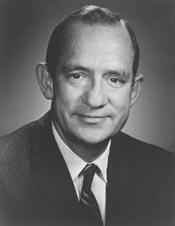
Thomas Ashley
Former U.S. Representative · Ohio District 9 · 1955–1981 · Democratic
Thomas Ashley represented Ohio's District 9 in the United States House of Representatives (1955–1981) for the Democratic party. The page below collects sourced biographical facts, term history, committee roles, and provenance for Ashley.
Bioguide ID: A000222
Key facts
- Full name
- Thomas Ashley
- State
- Ohio
- District
- District 9
- Party
- Democratic
- House service
- 1955–1981
- First House term
- 1955
- Status
- Left office
- Current term ends
- —
- Born
- 1923
- Bioguide ID
- A000222
- Committee assignments
- —
- Dataset version
- 1.20260605
Biographical narrative
981 words · sourced from the Wikipedia REST extract
Thomas L. Ashley was a prominent American politician and businessman who served as a U.S. Representative from Ohio's 9th congressional district from 1955 until 1981. A member of the Democratic Party, Ashley was known for his legislative work on civil rights, anti-poverty initiatives, and energy policy. His tenure in Congress spanned 13 terms, during which he held significant leadership positions and contributed to various legislative efforts.
Early life and career
Thomas L. Ashley was born on January 11, 1923, in Toledo, Ohio. He grew up in the Old West End neighborhood of the city, in a family that had a background in business; his father, William Meredith Ashley, owned a small steel manufacturing firm. The family faced tragedy when Ashley's older brother, William, was killed during World War II in a training accident involving an Army bomber.
Ashley received his early education at Maumee Valley Country Day School before graduating from the Kent School in Connecticut in 1942. Shortly after his graduation, he enlisted in the United States Army, where he served as a corporal in the Pacific Theater during World War II. Following the conclusion of the war, Ashley pursued higher education at Yale University, graduating in 1948. While at Yale, he became a member of the secret society Skull and Bones, which included notable figures such as future U.S. President George H. W. Bush.
After completing his studies at Yale, Ashley returned to Toledo and began working with the Toledo Publicity and Efficiency Commission. His political ambitions were encouraged by Michael DiSalle, who was then the mayor of Toledo and later became the governor of Ohio. To further his education, Ashley attended the University of Toledo College of Law through night classes, eventually graduating from the Ohio State University College of Law in 1951. He was admitted to the bar the same year and began practicing law.
In 1952, Ashley joined the staff of Radio Free Europe (RFE), where he worked in Europe as the co-director of the press section and later as the assistant director of special projects. He left RFE in March 1954 to pursue a political career, setting his sights on a seat in the U.S. Congress.
House tenure
Ashley was elected to the U.S. House of Representatives in 1954, defeating the incumbent independent Frazier Reams in a competitive three-way race. His election marked the beginning of a lengthy career in Congress, during which he served a total of 13 terms. Throughout his time in office, Ashley was actively involved in various legislative initiatives and held several leadership roles.
During the late 1970s, Ashley served as the chairman of the Select Committee on Energy (Ad Hoc) from 1977 to 1979. He later chaired the United States House Committee on Merchant Marine and Fisheries from 1979 until the end of his congressional career in 1981. His leadership in these committees reflected his commitment to addressing energy issues and maritime policy.
Ashley was known for his progressive stance on several key issues. In 1961, he was one of only six congressmen who voted to withdraw funding for the House Un-American Activities Committee, signaling his opposition to what he viewed as an infringement on civil liberties. He played a significant role in the passage of the Civil Rights Act of 1964, which aimed to eliminate discrimination based on race, color, religion, sex, or national origin. Additionally, he was a strong advocate for anti-poverty measures and housing legislation, reflecting his commitment to social justice and equity.
Despite his long and impactful career, Ashley faced challenges in the political arena. In 1980, he experienced an upset defeat in his bid for re-election, losing to Republican challenger Ed Weber. This marked the end of his congressional tenure, concluding a significant chapter in his political life.
Legislative focus and committees
Throughout his time in Congress, Thomas L. Ashley focused on a range of legislative issues that reflected his Democratic values and commitment to public service. His work on civil rights legislation was particularly notable, as he was an ardent supporter of the Civil Rights Act of 1964, which sought to dismantle systemic discrimination and promote equality. Ashley's advocacy for anti-poverty programs demonstrated his concern for the welfare of marginalized communities, and he worked to advance policies that aimed to alleviate poverty and improve housing conditions.
In addition to his focus on social justice, Ashley's leadership in energy policy was significant during a time when the United States faced various energy challenges. As chairman of the Select Committee on Energy, he contributed to discussions and initiatives aimed at addressing energy needs and promoting sustainable practices. His role in the House Committee on Merchant Marine and Fisheries further underscored his interest in maritime issues and the economic implications of shipping and fishing industries.
Ashley’s legislative contributions were characterized by a commitment to bipartisanship and collaboration, as he often worked with colleagues across the aisle to achieve common goals. His ability to navigate complex political landscapes and build coalitions was a hallmark of his congressional career.
After leaving Congress, Ashley continued to engage in public service and corporate governance. He served on the board of the George H. W. Bush Presidential Library and Museum and held positions on the boards of major financial institutions, including Fannie Mae and Freddie Mac, which are significant players in the U.S. mortgage market.
In his personal life, Ashley experienced both challenges and fulfillment. He was married twice, first to Margaret Mary Sherman and later to Kathleen Lucey, with whom he had two children. His family connections included a notable legacy, as he was the great-great-grandson of James Mitchell Ashley, a former U.S. Representative known for his role in the passage of the Thirteenth Amendment.
Thomas L. Ashley passed away on June 15, 2010, from melanoma. His contributions to American politics, particularly in the areas of civil rights and social justice, remain a part of his enduring legacy.
Notable legislation
Sponsored and co-sponsored legislation for Thomas Ashley is pending operator curation. The biographical narrative above carries the same provenance trail until per-bill rows are written.
Sources
- [1]https://en.wikipedia.org/wiki/Thomas_L._AshleyWikipedia · retrieved 2026-06-05
Notable quotes
Sourced quotes for Thomas Ashley are pending operator curation. Narrative-scope provenance remains attached below.
Sources
- [1]https://en.wikipedia.org/wiki/Thomas_L._AshleyWikipedia · retrieved 2026-06-05
Key positions
Curated policy positions for Thomas Ashley are pending operator review. The biographical narrative above carries the same provenance trail until per-topic positions are written.
Sources
- [1]https://en.wikipedia.org/wiki/Thomas_L._AshleyWikipedia · retrieved 2026-06-05
Terms served
- 1955–1957U.S. House · Term 1 · Democratic
- 1957–1959U.S. House · Term 2 · Democratic
- 1959–1961U.S. House · Term 3 · Democratic
- 1961–1963U.S. House · Term 4 · Democratic
- 1963–1965U.S. House · Term 5 · Democratic
- 1965–1967U.S. House · Term 6 · Democratic
- 1967–1969U.S. House · Term 7 · Democratic
- 1969–1971U.S. House · Term 8 · Democratic
- 1971–1973U.S. House · Term 9 · Democratic
- 1973–1975U.S. House · Term 10 · Democratic
- 1975–1977U.S. House · Term 11 · Democratic
- 1977–1979U.S. House · Term 12 · Democratic
- 1979–1981U.S. House · Term 13 · Democratic
Sources & provenance
Every attributable claim above carries a per-section [N] marker that resolves to the corresponding URL below. Each entry records the upstream provider, the canonical URL, and the timestamp at which the source was retrieved by the ingest pipeline.
Key facts
- https://bioguide.congress.gov/search/bio/A000222bioguide · retrieved 2026-06-05
- https://www.govtrack.us/congress/members/400959govtrack · retrieved 2026-06-05
Biographical narrative
- https://en.wikipedia.org/wiki/Thomas_L._Ashleywikipedia · retrieved 2026-06-05
Find your representative
Every U.S. state elects representatives by district. Browse Ohio’s delegation, the full former-representative roster, or explore the role and term length.
Related on The Candidate
- Preceded by Henry ReamsEarlier holder of the Ohio District 9 House seat · Independent.Open
- Succeeded by Edward WeberLater holder of the Ohio District 9 House seat · Republican.Open
- Aaron PerryFormer U.S. Representative · Ohio District 1 · RepublicanOpen
- Alexander DuncanFormer U.S. Representative · Ohio District 1 · DemocraticOpen
- Bellamy StorerFormer U.S. Representative · Ohio District 1 · WhigOpen
- Bellamy StorerFormer U.S. Representative · Ohio District 1 · RepublicanOpen