
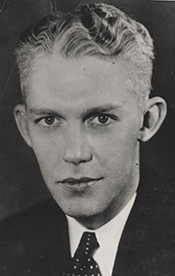
Historical · U.S. House · Ohio · At-Large
Daniel Earhart
Former U.S. Representative · Ohio At-Large · 1936–1937 · Democratic
Daniel Earhart represented Ohio's At-Large in the United States House of Representatives (1936–1937) for the Democratic party. The page below collects sourced biographical facts, term history, committee roles, and provenance for Earhart.
Bioguide ID: E000006
Key facts
- Full name
- Daniel Earhart
- State
- Ohio
- District
- At-Large
- Party
- Democratic
- House service
- 1936–1937
- First House term
- 1936
- Status
- Left office
- Current term ends
- —
- Born
- 1907
- Bioguide ID
- E000006
- Committee assignments
- —
- Dataset version
- 1.20260605
Biographical narrative
889 words · sourced from the Wikipedia REST extract
Daniel Earhart was a U.S. Representative from Ohio, affiliated with the Democratic Party, who served a brief term in the U.S. House of Representatives during the late 1930s. His congressional career was marked by a special election to fill a vacancy, and he later transitioned into military service during two significant global conflicts. After his time in Congress, he returned to his legal practice and continued to serve in various military capacities until his retirement. Earhart's life spanned a period of significant historical events, including the Great Depression and World War II, which shaped the context of his service and career.
Early life and career
Daniel Scofield Earhart was born on May 28, 1907, in Columbus, Ohio. He grew up in a city that would later play a significant role in his professional life. Earhart attended public schools in Columbus, where he received a foundational education that would prepare him for his future endeavors. He pursued higher education at the College of Engineering at Ohio State University, located in his hometown. This institution is known for its rigorous academic programs and has produced numerous notable alumni.
In 1928, Earhart graduated from the Moritz College of Law at Ohio State University, an institution recognized for its commitment to legal education. Upon completing his law degree, he was admitted to the bar in the same year, allowing him to begin his legal career. He commenced his practice in Columbus, where he would establish himself as a lawyer. His early career in law would provide him with the skills and experience that would later inform his work in public service.
House tenure
Earhart's political career began when he was elected as a Democrat to the Seventy-fourth Congress. He won a special election to fill the vacancy left by the passing of Representative Charles V. Truax. This election marked a significant moment in Earhart's life, as it provided him the opportunity to serve in the U.S. House of Representatives, albeit for a short duration. His term began on November 3, 1936, and concluded on January 3, 1937, lasting just over two months.
During his brief tenure, Earhart participated in the legislative process at a time when the country was grappling with the effects of the Great Depression. The political landscape was characterized by significant debates over economic recovery and social welfare programs. However, specific details about the legislation he supported or the committees he served on during this time are not documented. After completing his term, Earhart chose not to seek election for the Seventy-fifth Congress in 1936, opting instead to return to his legal practice in Columbus.
Legislative focus and committees
While specific details regarding Earhart's legislative focus during his time in Congress are limited, it is important to contextualize his service within the broader political environment of the 1930s. The period was marked by the New Deal initiatives of President Franklin D. Roosevelt, aimed at addressing the economic challenges facing the nation. As a member of the Democratic Party, Earhart would have been aligned with many of the policies and programs associated with this movement, which sought to provide relief, recovery, and reform in response to the economic crisis.
Following his congressional service, Earhart returned to his law practice, where he continued to engage with the legal community and contribute to the field of law. His experience in Congress likely influenced his legal work, as he would have gained insights into the legislative process and the intricacies of government operations.
In addition to his legal career, Earhart had a notable military service record. He was a member of the Officers' Reserve Corps from 1928 until 1941, which reflects his commitment to military service even before the onset of World War II. On May 26, 1941, he was ordered to active duty in the Infantry, where he held the rank of captain. His military career progressed as he was later transferred to the Army Air Forces, where he achieved the rank of major. Eventually, he was promoted to lieutenant colonel and was relieved of active duty on February 24, 1946.
Earhart's military service did not end with World War II. In 1948, he was commissioned as a lieutenant colonel in the Ohio Air National Guard, indicating his continued dedication to serving his country. During the Korean War, he was recalled to active federal military service on September 2, 1951, and served until September 7, 1953. During this period, he held various leadership roles, including commanding officer, deputy commander, and operations officer of the One Hundred and Fifty-fifth Tactical Control Group of the United States Air Force. His responsibilities included building NATO tactical air control facilities in Western Europe, highlighting his involvement in significant military operations during a critical time in history.
After his military service, Earhart returned to Columbus, Ohio, where he resumed his law practice. His legal and military careers reflect a commitment to public service and the law, demonstrating his engagement with both civic and national responsibilities.
Daniel Earhart passed away on January 2, 1976, in Columbus, Ohio. His ashes were interred in Green Lawn Cemetery, marking the end of a life dedicated to service in both the legal and military fields. His contributions, though brief in the political arena, were part of a larger narrative of American history during a time of significant change and challenge.
Notable legislation
Sponsored and co-sponsored legislation for Daniel Earhart is pending operator curation. The biographical narrative above carries the same provenance trail until per-bill rows are written.
Sources
- [1]https://en.wikipedia.org/wiki/Daniel_S._EarhartWikipedia · retrieved 2026-06-05
Notable quotes
Sourced quotes for Daniel Earhart are pending operator curation. Narrative-scope provenance remains attached below.
Sources
- [1]https://en.wikipedia.org/wiki/Daniel_S._EarhartWikipedia · retrieved 2026-06-05
Key positions
Curated policy positions for Daniel Earhart are pending operator review. The biographical narrative above carries the same provenance trail until per-topic positions are written.
Sources
- [1]https://en.wikipedia.org/wiki/Daniel_S._EarhartWikipedia · retrieved 2026-06-05
Terms served
- 1936–1937U.S. House · Term 1 · Democratic
Sources & provenance
Every attributable claim above carries a per-section [N] marker that resolves to the corresponding URL below. Each entry records the upstream provider, the canonical URL, and the timestamp at which the source was retrieved by the ingest pipeline.
Key facts
- https://bioguide.congress.gov/search/bio/E000006bioguide · retrieved 2026-06-05
- https://www.govtrack.us/congress/members/403702govtrack · retrieved 2026-06-05
Biographical narrative
- https://en.wikipedia.org/wiki/Daniel_S._Earhartwikipedia · retrieved 2026-06-05
Find your representative
Every U.S. state elects representatives by district. Browse Ohio’s delegation, the full former-representative roster, or explore the role and term length.
Related on The Candidate
- Preceded by Charles TruaxEarlier holder of the Ohio At-Large House seat · Democratic.Open
- Succeeded by Harold MosierLater holder of the Ohio At-Large House seat · Democratic.Open
- Aaron PerryFormer U.S. Representative · Ohio District 1 · RepublicanOpen
- Alexander DuncanFormer U.S. Representative · Ohio District 1 · DemocraticOpen
- Bellamy StorerFormer U.S. Representative · Ohio District 1 · WhigOpen
- Bellamy StorerFormer U.S. Representative · Ohio District 1 · RepublicanOpen