
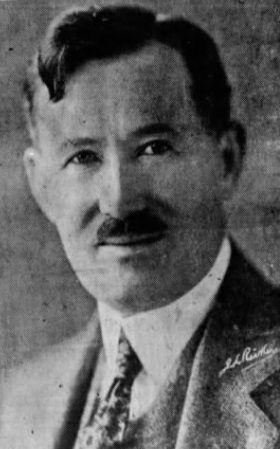
Historical · U.S. House · Oklahoma · District 1
Charles O’Connor
Former U.S. Representative · Oklahoma District 1 · 1929–1931 · Republican
Charles O’Connor represented Oklahoma's District 1 in the United States House of Representatives (1929–1931) for the Republican party. The page below collects sourced biographical facts, term history, committee roles, and provenance for O’Connor.
Bioguide ID: O000027
Key facts
- Full name
- Charles O’Connor
- State
- Oklahoma
- District
- District 1
- Party
- Republican
- House service
- 1929–1931
- First House term
- 1929
- Status
- Left office
- Current term ends
- —
- Born
- 1878
- Bioguide ID
- O000027
- Committee assignments
- —
- Dataset version
- 1.20260606
Biographical narrative
927 words · sourced from the Wikipedia REST extract
Charles O’Connor was an American lawyer and politician who served as a U.S. Representative for Oklahoma's 1st congressional district from 1929 to 1931. A member of the Republican Party, O’Connor's political career was marked by his brief tenure in the U.S. House of Representatives, where he engaged in the legislative process during a period of significant change in American politics and society. After serving one term, he returned to his legal practice and later faced health challenges that led him back to Colorado, where he spent his final years.
Early life and career
Charles O’Connor was born on October 26, 1878, on a farm near Edina, located in Knox County, Missouri. He was the son of Charles and Catherine O’Connor, and he grew up in a rural environment that likely influenced his values and work ethic. O’Connor attended local schools, which provided him with a foundational education. He later pursued higher education at the State Teachers' College in Greeley, Colorado, where he graduated in 1901. This early academic achievement set the stage for his future endeavors in both education and law.
In 1904, O’Connor graduated from the law department of the University of Colorado at Boulder. After being admitted to the bar the same year, he began his legal practice in Boulder, Colorado. His early career in law was characterized by a commitment to public service, as he took on various roles that would enhance his legal experience and community involvement. From 1911 to 1913, O’Connor served as the first Assistant Attorney General of Colorado, a position that allowed him to gain valuable insights into the workings of state law and governance.
In addition to his role as Assistant Attorney General, O’Connor served as the city attorney of Boulder from 1917 to 1918. This position further solidified his reputation as a dedicated public servant and legal professional. In 1919, O’Connor relocated to Tulsa, Oklahoma, where he continued his legal practice. This move marked a significant transition in his life, as he adapted to a new community and legal landscape.
O’Connor's personal life included his marriage to Elizabeth Buell in 1905. Together, they had three sons, although their family faced the tragedy of losing one child at a young age. This personal loss likely had a profound impact on O’Connor and his family, shaping their experiences and perspectives.
House tenure
Charles O’Connor's political career reached a new level when he was elected as a Republican member of the United States House of Representatives. His term began on March 4, 1929, representing Oklahoma's 1st congressional district. This period was marked by significant political and economic changes in the United States, as the nation was on the brink of the Great Depression. O’Connor's election to the House came during a time when the Republican Party was navigating the complexities of governance in a rapidly changing society.
During his time in office, O’Connor participated in the legislative process, contributing to discussions and decisions that would impact his constituents and the nation. His tenure in the House lasted until March 3, 1931, when he completed his term. Despite his efforts and contributions, O’Connor was unsuccessful in his bid for re-election. This defeat marked the end of his congressional career, and he returned to his legal practice in Tulsa, Oklahoma.
After leaving Congress, O’Connor continued to engage with the legal community and maintained his professional activities. However, the challenges of political life and the demands of public service may have influenced his decision to return to a more private legal practice. In 1936, O’Connor moved back to Boulder, Colorado, primarily due to health concerns that had begun to affect him.
Legislative focus and committees
While specific details regarding the legislative focus and committee assignments of Charles O’Connor during his time in the House are not provided, it is important to contextualize his role within the broader framework of congressional activities during the late 1920s and early 1930s. This period was characterized by significant economic challenges and the early signs of the Great Depression, which would soon reshape American politics and policy.
As a member of the Republican Party, O’Connor would have been involved in discussions surrounding economic policies, government spending, and social issues that were pertinent to his constituents in Oklahoma. The Republican Party at that time was grappling with the implications of the economic downturn and the need for effective governance. O’Connor's legal background may have informed his perspectives on various legislative matters, particularly those related to law and public policy.
Although specific legislative achievements or committee memberships are not detailed in the available information, O’Connor's participation in the House would have required engagement with various issues facing the nation. His role as a congressman would have involved collaboration with colleagues, participation in debates, and consideration of the needs of his constituents in Oklahoma's 1st district.
After his congressional tenure, O’Connor returned to his law practice, where he likely continued to influence his community through legal advocacy and professional engagement. His decision to move back to Boulder in 1936 reflects a personal response to health challenges, which ultimately shaped his later years.
Charles O’Connor passed away on November 15, 1940, in Denver, Colorado, due to pneumonia. His remains were interred at Green Mountain Cemetery in Boulder, Colorado. His life and career encapsulate the journey of a public servant who navigated the complexities of law and politics during a transformative period in American history. Through his contributions as a lawyer and politician, O’Connor left a legacy that reflects the challenges and responsibilities of public service in the early 20th century.
Notable legislation
Sponsored and co-sponsored legislation for Charles O’Connor is pending operator curation. The biographical narrative above carries the same provenance trail until per-bill rows are written.
Sources
- [1]https://en.wikipedia.org/wiki/Charles_O'Connor_(politician)Wikipedia · retrieved 2026-06-06
Notable quotes
Sourced quotes for Charles O’Connor are pending operator curation. Narrative-scope provenance remains attached below.
Sources
- [1]https://en.wikipedia.org/wiki/Charles_O'Connor_(politician)Wikipedia · retrieved 2026-06-06
Key positions
Curated policy positions for Charles O’Connor are pending operator review. The biographical narrative above carries the same provenance trail until per-topic positions are written.
Sources
- [1]https://en.wikipedia.org/wiki/Charles_O'Connor_(politician)Wikipedia · retrieved 2026-06-06
Terms served
- 1929–1931U.S. House · Term 1 · Republican
Sources & provenance
Every attributable claim above carries a per-section [N] marker that resolves to the corresponding URL below. Each entry records the upstream provider, the canonical URL, and the timestamp at which the source was retrieved by the ingest pipeline.
Key facts
- https://bioguide.congress.gov/search/bio/O000027bioguide · retrieved 2026-06-06
- https://www.govtrack.us/congress/members/408275govtrack · retrieved 2026-06-06
Biographical narrative
- https://en.wikipedia.org/wiki/Charles_O'Connor_(politician)wikipedia · retrieved 2026-06-06
Find your representative
Every U.S. state elects representatives by district. Browse Oklahoma’s delegation, the full former-representative roster, or explore the role and term length.
Related on The Candidate
- Preceded by Everette HowardEarlier holder of the Oklahoma District 1 House seat · Democratic.Open
- Succeeded by Wesley DisneyLater holder of the Oklahoma District 1 House seat · Democratic.Open
- Bird McGuireFormer U.S. Representative · Oklahoma District 1 · RepublicanOpen
- Dixie GilmerFormer U.S. Representative · Oklahoma District 1 · DemocraticOpen
- George SchwabeFormer U.S. Representative · Oklahoma District 1 · RepublicanOpen
- Republican PartyFederal candidates and office holders on the Republican line.Open