
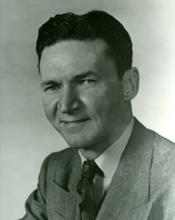
Historical · U.S. House · Oklahoma · District 1
Dixie Gilmer
Former U.S. Representative · Oklahoma District 1 · 1949–1951 · Democratic
Dixie Gilmer represented Oklahoma's District 1 in the United States House of Representatives (1949–1951) for the Democratic party. The page below collects sourced biographical facts, term history, committee roles, and provenance for Gilmer.
Bioguide ID: G000219
Key facts
- Full name
- Dixie Gilmer
- State
- Oklahoma
- District
- District 1
- Party
- Democratic
- House service
- 1949–1951
- First House term
- 1949
- Status
- Left office
- Current term ends
- —
- Born
- 1901
- Bioguide ID
- G000219
- Committee assignments
- —
- Dataset version
- 1.20260605
Biographical narrative
920 words · sourced from the Wikipedia REST extract
William Franklin "Dixie" Gilmer was an American politician who served as a U.S. Representative for Oklahoma's 1st congressional district from 1949 to 1951. A member of the Democratic Party, Gilmer's political career was marked by his commitment to public service, which began in his youth and extended through various roles in local and state government. His tenure in the U.S. House of Representatives was part of a broader career that included legal practice and local governance, reflecting a dedication to his community and state.
Early life and career
Dixie Gilmer was born on June 7, 1901, in Mount Airy, North Carolina. He was the son of W. F. Gilmer and Emma Prather Gilmer. In pursuit of better opportunities, the family relocated to Oklahoma, where Gilmer would eventually complete his education. He attended public schools in Oklahoma City, which laid the foundation for his future endeavors. His early exposure to politics began when he served as a page in the U.S. House of Representatives from 1911 to 1919, a role that provided him with firsthand experience of the legislative process and the workings of government.
After completing his secondary education, Gilmer pursued higher education at the University of Oklahoma in Norman, where he graduated from law school in 1923. Upon being admitted to the bar the same year, he began his legal career in Wetumka, Oklahoma. His legal practice was complemented by his involvement in local governance; he served as a police judge and later as the mayor of Wetumka. These roles not only enhanced his legal acumen but also deepened his understanding of the needs and concerns of his constituents.
In 1927, Gilmer was elected to the Oklahoma House of Representatives, marking his formal entry into the political arena. His marriage to Ellen McClure from Celeste, Texas, occurred in 1928, although the couple did not have children. In 1929, he moved to Tulsa, Oklahoma, where he continued his public service. From 1931 to 1933, he served as the assistant county attorney for Tulsa County, and later, from 1936 to 1946, he held the position of county attorney. His legal and political careers were marked by a commitment to public service and community engagement.
Despite his local successes, Gilmer faced challenges in his political aspirations. In 1946, he ran for the Democratic nomination for governor of Oklahoma but was unsuccessful. This setback did not deter him from pursuing further political opportunities, and he continued to be active in local and state politics.
House tenure
Dixie Gilmer's congressional career began when he was elected as a Democrat to the Eighty-first Congress, serving from January 3, 1949, to January 3, 1951. His election to the U.S. House of Representatives was a significant milestone in his political journey, allowing him to represent the interests of Oklahomans at the national level. During his time in Congress, Gilmer participated in various legislative discussions and contributed to the formulation of policies that affected his constituents and the broader American public.
His tenure in the House was characterized by the post-World War II context, a period marked by significant social and economic changes in the United States. As a member of Congress, Gilmer was involved in addressing the challenges of a rapidly changing society, including issues related to veterans, economic recovery, and civil rights. However, specific details regarding the legislation he supported or opposed during his time in office are not documented in the available records.
Despite his efforts and contributions, Gilmer was not successful in his bid for reelection in 1950, as he sought to continue his service in the Eighty-second Congress. Following his departure from Congress, he was appointed by the governor of Oklahoma to serve as the state safety commissioner, a role that allowed him to continue his public service in a different capacity. He held this position until his death in 1954, further demonstrating his commitment to the welfare and safety of the citizens of Oklahoma.
Legislative focus and committees
While specific details about the committees on which Dixie Gilmer served during his time in the House of Representatives are not available, it is common for members of Congress to focus on issues pertinent to their constituents and areas of expertise. Given his background in law and local governance, it is likely that Gilmer's legislative focus included matters related to legal affairs, public safety, and community welfare. His experience as a county attorney and safety commissioner would have provided him with valuable insights into the legal and regulatory challenges faced by his constituents.
Gilmer's legislative priorities may have also reflected the broader Democratic Party agenda of the time, which included initiatives aimed at economic recovery, social welfare, and civil rights. The post-war era was a transformative period in American history, and legislators were often engaged in discussions surrounding the expansion of social programs, infrastructure development, and the integration of returning veterans into civilian life.
Although the specifics of Gilmer's legislative actions remain undocumented, his commitment to public service and community engagement was evident throughout his career. His roles in local and state government, combined with his time in Congress, illustrate a dedication to addressing the needs of his constituents and contributing to the governance of Oklahoma.
Dixie Gilmer passed away on June 9, 1954, in Oklahoma City, Oklahoma, just two days after his 53rd birthday. He is interred at Memorial Park Cemetery in Oklahoma City. His legacy as a public servant is remembered through his contributions to the state of Oklahoma and his commitment to the principles of democracy and governance.
Notable legislation
Sponsored and co-sponsored legislation for Dixie Gilmer is pending operator curation. The biographical narrative above carries the same provenance trail until per-bill rows are written.
Sources
- [1]https://en.wikipedia.org/wiki/Dixie_GilmerWikipedia · retrieved 2026-06-05
Notable quotes
Sourced quotes for Dixie Gilmer are pending operator curation. Narrative-scope provenance remains attached below.
Sources
- [1]https://en.wikipedia.org/wiki/Dixie_GilmerWikipedia · retrieved 2026-06-05
Key positions
Curated policy positions for Dixie Gilmer are pending operator review. The biographical narrative above carries the same provenance trail until per-topic positions are written.
Sources
- [1]https://en.wikipedia.org/wiki/Dixie_GilmerWikipedia · retrieved 2026-06-05
Terms served
- 1949–1951U.S. House · Term 1 · Democratic
Sources & provenance
Every attributable claim above carries a per-section [N] marker that resolves to the corresponding URL below. Each entry records the upstream provider, the canonical URL, and the timestamp at which the source was retrieved by the ingest pipeline.
Key facts
- https://bioguide.congress.gov/search/bio/G000219bioguide · retrieved 2026-06-05
- https://www.govtrack.us/congress/members/404581govtrack · retrieved 2026-06-05
Biographical narrative
- https://en.wikipedia.org/wiki/Dixie_Gilmerwikipedia · retrieved 2026-06-05
Find your representative
Every U.S. state elects representatives by district. Browse Oklahoma’s delegation, the full former-representative roster, or explore the role and term length.
Related on The Candidate
- Preceded by Wesley DisneyEarlier holder of the Oklahoma District 1 House seat · Democratic.Open
- Succeeded by Page BelcherLater holder of the Oklahoma District 1 House seat · Republican.Open
- Bird McGuireFormer U.S. Representative · Oklahoma District 1 · RepublicanOpen
- Charles O’ConnorFormer U.S. Representative · Oklahoma District 1 · RepublicanOpen
- Everette HowardFormer U.S. Representative · Oklahoma District 1 · DemocraticOpen
- George SchwabeFormer U.S. Representative · Oklahoma District 1 · RepublicanOpen