
Historical · U.S. House · Oregon · District 1
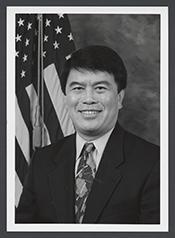
David Wu
Former U.S. Representative · Oregon District 1 · 1999–2011 · Democratic
David Wu represented Oregon's District 1 in the United States House of Representatives (1999–2011) for the Democratic party. The page below collects sourced biographical facts, term history, committee roles, and provenance for Wu.
Bioguide ID: W000793
Key facts
- Full name
- David Wu
- State
- Oregon
- District
- District 1
- Party
- Democratic
- House service
- 1999–2011
- First House term
- 1999
- Status
- Left office
- Current term ends
- —
- Born
- 1955
- Bioguide ID
- W000793
- Committee assignments
- —
- Dataset version
- 1.20260605
Biographical narrative
887 words · sourced from the Wikipedia REST extract
David Wu is a former U.S. Representative who served Oregon's 1st congressional district from 1999 until his resignation in 2011. A member of the Democratic Party, Wu was notable for being the first Taiwanese American to hold a seat in the House of Representatives. His tenure was marked by a focus on science, technology, and human rights, as well as significant involvement in legislative efforts related to space exploration and research funding.
Early life and career
David Wu was born on April 8, 1955, in Hsinchu, Taiwan. His family moved to the United States in 1961, initially settling in Latham, New York. During his early years in the U.S., Wu's family was among the few Asian Americans in their community, which provided him with a unique perspective on cultural integration and identity. Wu pursued higher education in the United States, earning a Bachelor of Science degree in biology from Stanford University in 1977. He briefly attended Harvard Medical School, where he shared living arrangements with future U.S. Senator Bill Frist, although he did not complete his medical studies.
Wu later enrolled at Yale Law School, where he obtained his Juris Doctor degree in 1982. Following his graduation, he began his legal career as a clerk for a federal judge, which provided him with valuable experience in the judicial system. In 1984, he joined the Miller Nash law firm, and four years later, he co-founded Cohen & Wu, a law firm that specialized in representing clients in Oregon's burgeoning high-tech sector, often referred to as "Silicon Forest." This background in law and technology would later inform his legislative priorities during his time in Congress.
House tenure
David Wu entered the political arena when he was elected to the U.S. House of Representatives in 1998, succeeding fellow Democrat Elizabeth Furse. His initial election was competitive, as he narrowly defeated Republican candidate Molly Bordonaro by just over 7,100 votes. Wu successfully secured re-election in 2000 against state senator Charles Starr, garnering 58% of the vote. Following the 2000 census, redistricting altered the boundaries of Oregon's 1st congressional district, making it more favorable for Democrats by incorporating more of Portland. This change contributed to Wu's subsequent electoral successes, including victories in 2004, 2006, and 2008, the latter of which saw him win without facing a Republican challenger.
Wu faced a more challenging re-election in 2010, where he narrowly defeated Republican Rob Cornilles with 54% of the vote. Throughout his seven terms in office, Wu was a member of the New Democrat Coalition, a group of moderate Democrats in the House. His legislative record included a strong commitment to issues related to human rights, science, and technology. He was recognized for his efforts in promoting research funding and was particularly active in advocating for NASA and space exploration initiatives.
Legislative focus and committees
During his time in Congress, David Wu was known for his advocacy on various issues, particularly in the fields of science and technology. He was a member of the House Science Committee and served on its Space Subcommittee, where he worked closely with other members to support NASA's budget and objectives. Wu believed that fostering student interest in space could enhance STEM (science, technology, engineering, and mathematics) education, leading him to establish a scholarship program for underprivileged children to attend space camp. He also initiated programs aimed at facilitating exchanges between American and Chinese students to promote international cooperation in space exploration.
Wu's commitment to research was evident in his funding efforts for virus research at the Oregon Health and Science University, which aimed to develop effective treatments and vaccines for AIDS. He authored legislation designed to encourage small businesses to engage in research and product development, utilizing federal research grants to stimulate innovation.
In addition to his focus on science and technology, Wu was a vocal advocate for human rights. He took a principled stance against granting Most Favored Nation (MFN) trading status to China, citing concerns over human rights violations and predicting negative economic consequences for the United States. His position often put him at odds with significant employers in his district, such as Nike and Intel, who supported the trade status.
Wu's legacy in Congress also includes his successful collaboration with Washington State colleague Brian Baird to establish the Lewis and Clark National Historic Park at the mouth of the Columbia River. He played a crucial role in expanding the Fort Clatsop National Memorial, integrating it into the larger park initiative.
However, Wu's tenure came to an abrupt end in 2011 amid allegations of sexual misconduct. Following reports that an 18-year-old woman had accused him of an unwanted sexual encounter, Wu acknowledged the incident but claimed it was consensual. The situation prompted House Minority Leader Nancy Pelosi to call for an ethics investigation. Initially, Wu indicated he would not resign but would not seek re-election in 2012. Ultimately, he submitted his resignation on August 3, 2011, leading to a special election to fill his vacancy in early 2012, which was won by Democrat Suzanne Bonamici.
Since leaving Congress, David Wu has remained active in political and civic life, primarily in the Washington, D.C. area. He has engaged in fundraising efforts for local Democratic parties and has continued to promote educational and exchange programs related to space exploration between the United States and China.
Notable legislation
Sponsored and co-sponsored legislation for David Wu is pending operator curation. The biographical narrative above carries the same provenance trail until per-bill rows are written.
Sources
- [1]https://en.wikipedia.org/wiki/David_WuWikipedia · retrieved 2026-06-05
Notable quotes
Sourced quotes for David Wu are pending operator curation. Narrative-scope provenance remains attached below.
Sources
- [1]https://en.wikipedia.org/wiki/David_WuWikipedia · retrieved 2026-06-05
Key positions
Curated policy positions for David Wu are pending operator review. The biographical narrative above carries the same provenance trail until per-topic positions are written.
Sources
- [1]https://en.wikipedia.org/wiki/David_WuWikipedia · retrieved 2026-06-05
Terms served
- 1999–2001U.S. House · Term 1 · Democratic
- 2001–2003U.S. House · Term 2 · Democratic
- 2003–2005U.S. House · Term 3 · Democratic
- 2005–2007U.S. House · Term 4 · Democratic
- 2007–2009U.S. House · Term 5 · Democratic
- 2009–2011U.S. House · Term 6 · Democratic
- 2011–2011U.S. House · Term 7 · Democratic
Sources & provenance
Every attributable claim above carries a per-section [N] marker that resolves to the corresponding URL below. Each entry records the upstream provider, the canonical URL, and the timestamp at which the source was retrieved by the ingest pipeline.
Key facts
- https://bioguide.congress.gov/search/bio/W000793bioguide · retrieved 2026-06-05
- http://www.house.gov/wuhouse.gov · retrieved 2026-06-05
Biographical narrative
- https://en.wikipedia.org/wiki/David_Wuwikipedia · retrieved 2026-06-05
Find your representative
Every U.S. state elects representatives by district. Browse Oregon’s delegation, the full former-representative roster, or explore the role and term length.
Related on The Candidate
- Preceded by Elizabeth FurseEarlier holder of the Oregon District 1 House seat · Democratic.Open
- Albin Norblad Jr.Former U.S. Representative · Oregon District 1 · RepublicanOpen
- Andrew ThayerFormer U.S. Representative · Oregon District 1 · DemocraticOpen
- Binger HermannFormer U.S. Representative · Oregon District 1 · RepublicanOpen
- Democratic PartyFederal candidates and office holders on the Democratic line.Open
- Representatives from OregonEvery former U.S. Representative who has represented Oregon.Open