
Historical · U.S. House · Oregon · District 1
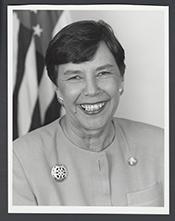
Elizabeth Furse
Former U.S. Representative · Oregon District 1 · 1993–1999 · Democratic
Elizabeth Furse represented Oregon's District 1 in the United States House of Representatives (1993–1999) for the Democratic party. The page below collects sourced biographical facts, term history, committee roles, and provenance for Furse.
Bioguide ID: F000434
Key facts
- Full name
- Elizabeth Furse
- State
- Oregon
- District
- District 1
- Party
- Democratic
- House service
- 1993–1999
- First House term
- 1993
- Status
- Left office
- Current term ends
- —
- Born
- 1936
- Bioguide ID
- F000434
- Committee assignments
- —
- Dataset version
- 1.20260605
Biographical narrative
980 words · sourced from the Wikipedia REST extract
Elizabeth Furse was a prominent American politician and small business owner who served as a U.S. Representative for Oregon's 1st congressional district from 1993 to 1999. A member of the Democratic Party, she made history as the first naturalized U.S. citizen born in Africa to be elected to the United States Congress. Furse's career was marked by her advocacy for various social issues, particularly those related to Native American rights and diabetes education, as well as her commitment to public service.
Early life and career
Elizabeth Furse was born on October 13, 1936, in Nairobi, Kenya Colony, to a Canadian mother and a British father. Her mother, Barbara Elizabeth Ross, hailed from Regina, Saskatchewan, while her father, Peter Reynolds Furse, had a notable lineage that included a painter and a military administrator. Furse's early life was influenced by her family's diverse background and her upbringing in South Africa, where she became an anti-apartheid activist at a young age. In 1951, she participated in the first Black Sash demonstrations in Cape Town, advocating for human rights and social justice.
In 1956, Furse relocated to England before eventually moving to the United States, where she settled in Los Angeles, California. There, she became actively involved in community initiatives, including a women's self-help project in Watts and the United Farm Workers movement led by Cesar Chavez, which aimed to improve conditions for farm laborers. In 1968, she moved to Seattle, Washington, where she focused on advocating for American Indian and Native American rights, particularly concerning fishing and treaty rights.
Furse became a U.S. citizen in 1972, marking a significant milestone in her life. Two years later, she graduated from Evergreen State College with a Bachelor of Arts degree. In 1978, she moved to the Portland, Oregon area and began attending Northwestern School of Law. However, she left law school after two years to lead efforts for several Oregon-based American Indian tribes to gain federal recognition. Her advocacy was instrumental in restoring federal recognition for tribes such as the Coquille, Klamath, Lower Umpqua, Coos, and Grand Ronde.
In addition to her advocacy work, Furse co-founded the Oregon Peace Institute in 1986, an organization dedicated to developing conflict resolution curricula for schools in Oregon. Her early career was characterized by a commitment to social justice and community empowerment, laying the groundwork for her future political endeavors.
House tenure
Elizabeth Furse was first elected to the U.S. House of Representatives in 1992, defeating the incumbent State Treasurer Tony Meeker. Her election was part of a broader trend that year, which saw an increase in the number of women serving in Congress. Furse's tenure in the House began in January 1993, and she was re-elected in 1994 and 1996. During her time in office, she was known for her distinctive approach to politics, often described as a departure from traditional congressional norms.
In the 1994 election, Furse faced a challenging political environment marked by the Republican Revolution, which resulted in significant gains for the Republican Party. Despite this, she won re-election by a narrow margin against businessman Bill Witt. In 1996, she successfully secured her seat again, defeating Witt in a rematch with a majority of the vote.
Throughout her congressional career, Furse was involved in various legislative initiatives. In 1996, she co-founded the Congressional Diabetes Caucus alongside Congressman George Nethercutt from Washington. This caucus aimed to address diabetes-related issues and improve healthcare coverage for diabetes education and supplies within the Medicare program. The caucus has since grown to become one of the largest health-related caucuses in Congress, reflecting Furse's commitment to health advocacy.
Furse also played a significant role in securing funding for transportation projects in her district. Notably, she was instrumental in extending the TriMet Westside MAX Light Rail project, advocating for its expansion from the Beaverton/Hillsboro border to downtown Hillsboro. In recognition of her contributions, TriMet named the plaza at the Sunset Transit Center after her.
In 1998, Furse announced her decision not to seek re-election, emphasizing her belief that public service should not be viewed as a career. Her final term in the House concluded on January 3, 1999, after three terms of service.
Legislative focus and committees
During her tenure in the U.S. House of Representatives, Elizabeth Furse focused on a variety of issues, with a particular emphasis on health care, transportation, and Native American rights. Her work in co-founding the Congressional Diabetes Caucus highlighted her dedication to improving health outcomes for individuals with diabetes, as well as her commitment to addressing broader health policy issues.
Furse's advocacy for Native American rights was a significant aspect of her legislative focus. Her background and prior experience in lobbying for federal recognition of various tribes informed her approach to legislation affecting Native American communities. She worked to ensure that the voices of these communities were represented in Congress and that their rights were protected.
In addition to her legislative accomplishments, Furse served on various committees during her time in office, contributing to discussions and decisions that shaped policy in her areas of focus. Her involvement in these committees allowed her to influence legislation and advocate for the needs of her constituents.
After leaving Congress, Furse continued her engagement in public service and advocacy. She became the director of the Institute for Tribal Government at Portland State University, where she developed educational programs aimed at fostering understanding and collaboration between tribal governments and state entities. Her ongoing commitment to Native American affairs and community empowerment remained a hallmark of her post-congressional career.
Furse's legacy is marked by her pioneering role as a naturalized citizen in Congress, her dedication to social justice, and her efforts to improve the lives of those she represented. She passed away on April 18, 2021, at the age of 84, leaving behind a legacy of advocacy and public service that continues to resonate in the communities she served.
Notable legislation
Sponsored and co-sponsored legislation for Elizabeth Furse is pending operator curation. The biographical narrative above carries the same provenance trail until per-bill rows are written.
Sources
- [1]https://en.wikipedia.org/wiki/Elizabeth_FurseWikipedia · retrieved 2026-06-05
Notable quotes
Sourced quotes for Elizabeth Furse are pending operator curation. Narrative-scope provenance remains attached below.
Sources
- [1]https://en.wikipedia.org/wiki/Elizabeth_FurseWikipedia · retrieved 2026-06-05
Key positions
Curated policy positions for Elizabeth Furse are pending operator review. The biographical narrative above carries the same provenance trail until per-topic positions are written.
Sources
- [1]https://en.wikipedia.org/wiki/Elizabeth_FurseWikipedia · retrieved 2026-06-05
Terms served
- 1993–1995U.S. House · Term 1 · Democratic
- 1995–1997U.S. House · Term 2 · Democratic
- 1997–1999U.S. House · Term 3 · Democratic
Sources & provenance
Every attributable claim above carries a per-section [N] marker that resolves to the corresponding URL below. Each entry records the upstream provider, the canonical URL, and the timestamp at which the source was retrieved by the ingest pipeline.
Key facts
- https://bioguide.congress.gov/search/bio/F000434bioguide · retrieved 2026-06-05
- https://www.govtrack.us/congress/members/404375govtrack · retrieved 2026-06-05
Biographical narrative
- https://en.wikipedia.org/wiki/Elizabeth_Fursewikipedia · retrieved 2026-06-05
Find your representative
Every U.S. state elects representatives by district. Browse Oregon’s delegation, the full former-representative roster, or explore the role and term length.
Related on The Candidate
- Preceded by Les AuCoinEarlier holder of the Oregon District 1 House seat · Democratic.Open
- Succeeded by David WuLater holder of the Oregon District 1 House seat · Democratic.Open
- Albin Norblad Jr.Former U.S. Representative · Oregon District 1 · RepublicanOpen
- Andrew ThayerFormer U.S. Representative · Oregon District 1 · DemocraticOpen
- Binger HermannFormer U.S. Representative · Oregon District 1 · RepublicanOpen
- Democratic PartyFederal candidates and office holders on the Democratic line.Open