
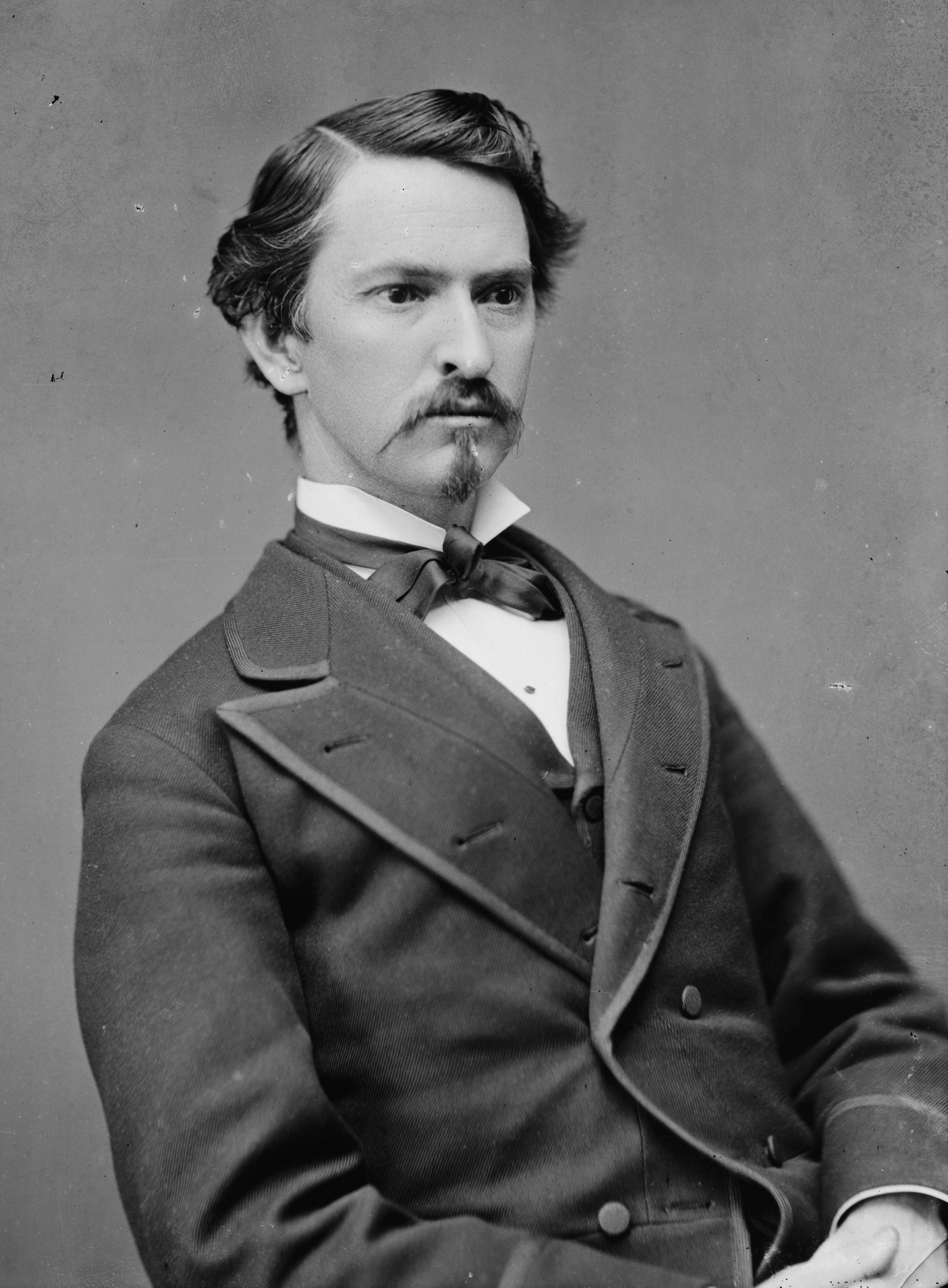
Historical · U.S. House · Oregon · District 1
La Lane
Former U.S. Representative · Oregon District 1 · 1875–1877 · Democratic
La Lane represented Oregon's District 1 in the United States House of Representatives (1875–1877) for the Democratic party. The page below collects sourced biographical facts, term history, committee roles, and provenance for Lane.
Bioguide ID: L000064
Key facts
- Full name
- La Lane
- State
- Oregon
- District
- District 1
- Party
- Democratic
- House service
- 1875–1877
- First House term
- 1875
- Status
- Left office
- Current term ends
- —
- Born
- 1842
- Bioguide ID
- L000064
- Committee assignments
- —
- Dataset version
- 1.20260606
Biographical narrative
927 words · sourced from the Wikipedia REST extract
Lafayette Lane was an American lawyer and politician who served as a U.S. Representative for Oregon's 1st congressional district from 1875 to 1877. A member of the Democratic Party, Lane's political career was marked by his involvement in both state and federal government. He was born on November 12, 1842, and passed away on November 23, 1896. Lane was the son of Joseph Lane, a prominent figure in Oregon's early political landscape, and he was also the uncle of Harry Lane, who would later become a U.S. Senator from Oregon. His life and career reflect the complexities of American politics during the post-Civil War era, as well as the development of the state of Oregon.
Early life and career
Lafayette Lane was born in a rural area near Evansville, Indiana, into a family deeply engaged in politics. His father, Joseph Lane, was serving as an Indiana state senator at the time of Lafayette's birth. The Lane family was large, consisting of ten children, which provided Lafayette with a diverse familial environment. In 1848, Joseph Lane was appointed as the governor of the Oregon Territory, prompting the family to embark on a significant journey westward along the Oregon Trail. They arrived in Oregon in March 1849, a move that would place them at the forefront of the region's political and social development.
Growing up in Oregon, Lafayette received his education in public schools located in Washington, D.C., and Stamford, Connecticut. This educational background provided him with a foundation that would later support his legal career. After completing his studies, he pursued a career in law, which led to his admission to the bar. He began practicing law in Roseburg, Oregon, where he established himself in the local legal community. In 1867, he married Amanda Mann, further solidifying his ties to the region.
Lane's political career began in earnest in 1864 when he was elected as a member of the Oregon House of Representatives, representing Umatilla County. This early involvement in state politics allowed him to gain valuable experience and insight into the legislative process. Although he sought higher office in 1866 as a Democratic nominee for Oregon Secretary of State, he was defeated by the incumbent, Samuel E. May. Despite this setback, Lane continued to engage in public service and was appointed as a code commissioner in 1874. In this role, he collaborated with the noted jurist Matthew Deady to compile Oregon's statutes into a systematic code, resulting in the publication of "Deady and Lane's General Laws of Oregon." This work was significant in organizing and clarifying the legal framework of the state.
House tenure
Lafayette Lane's congressional career began in 1875 when he was elected to the U.S. House of Representatives. His election followed the untimely death of fellow Democrat George A. La Dow, who had been elected to represent Oregon's 1st congressional district but passed away just two months into his term. In a special election held to fill the vacancy, Lane emerged victorious against Republican candidate Henry Warren. He officially took office on October 25, 1875, and served until March 3, 1877.
During his time in Congress, Lane was part of a legislative body that was grappling with the aftermath of the Civil War and the challenges of Reconstruction. His tenure coincided with a period of significant political and social change in the United States, as the nation sought to rebuild and redefine itself. Lane's role as a congressman involved participating in debates and discussions that shaped the future of the country, although specific details regarding his legislative activities during this period are not extensively documented.
In the 1876 election, Lafayette Lane sought re-election to continue representing Oregon in Congress. However, he faced a competitive race against Republican candidate Richard Williams. Ultimately, Lane was defeated in this election, marking the end of his congressional career. Following his defeat, he returned to Roseburg, where he resumed his law practice, continuing to contribute to the legal community in Oregon.
Legislative focus and committees
While specific details about Lafayette Lane's legislative focus during his time in the House of Representatives are limited, it is essential to understand the context in which he served. The 44th Congress, in which he participated, was characterized by discussions surrounding issues such as civil rights, economic policy, and the integration of the Southern states back into the Union following the Civil War. Lane's background as a lawyer and his experience in state government likely informed his perspectives on these matters.
As a member of the Democratic Party during this period, Lane would have aligned with the party's platform, which often emphasized states' rights and limited federal government intervention. This ideological stance was particularly relevant in the context of Reconstruction and the ongoing debates about civil rights and the status of formerly enslaved individuals. Although specific committee assignments for Lane are not detailed in the available records, members of Congress typically served on committees that aligned with their interests and expertise, which could have included judiciary or legal affairs given his legal background.
After leaving Congress, Lafayette Lane continued to engage with the community in Roseburg, where he practiced law until his death on November 23, 1896. He was interred in St. Joseph Catholic Cemetery in Roseburg, marking the end of a life that had been intertwined with the political and legal evolution of Oregon. His contributions to both state and federal government, as well as his familial connections to influential political figures, underscore his role in the historical narrative of Oregon and the broader United States during a transformative era.
Notable legislation
Sponsored and co-sponsored legislation for La Lane is pending operator curation. The biographical narrative above carries the same provenance trail until per-bill rows are written.
Sources
- [1]https://en.wikipedia.org/wiki/Lafayette_LaneWikipedia · retrieved 2026-06-06
Notable quotes
Sourced quotes for La Lane are pending operator curation. Narrative-scope provenance remains attached below.
Sources
- [1]https://en.wikipedia.org/wiki/Lafayette_LaneWikipedia · retrieved 2026-06-06
Key positions
Curated policy positions for La Lane are pending operator review. The biographical narrative above carries the same provenance trail until per-topic positions are written.
Sources
- [1]https://en.wikipedia.org/wiki/Lafayette_LaneWikipedia · retrieved 2026-06-06
Terms served
- 1875–1877U.S. House · Term 1 · Democratic
Sources & provenance
Every attributable claim above carries a per-section [N] marker that resolves to the corresponding URL below. Each entry records the upstream provider, the canonical URL, and the timestamp at which the source was retrieved by the ingest pipeline.
Key facts
- https://bioguide.congress.gov/search/bio/L000064bioguide · retrieved 2026-06-06
- https://www.govtrack.us/congress/members/406573govtrack · retrieved 2026-06-06
Biographical narrative
- https://en.wikipedia.org/wiki/Lafayette_Lanewikipedia · retrieved 2026-06-06
Find your representative
Every U.S. state elects representatives by district. Browse Oregon’s delegation, the full former-representative roster, or explore the role and term length.
Related on The Candidate
- Preceded by Joseph WilsonEarlier holder of the Oregon District 1 House seat · Republican.Open
- Succeeded by Richard WilliamsLater holder of the Oregon District 1 House seat · Republican.Open
- Albin Norblad Jr.Former U.S. Representative · Oregon District 1 · RepublicanOpen
- Andrew ThayerFormer U.S. Representative · Oregon District 1 · DemocraticOpen
- Binger HermannFormer U.S. Representative · Oregon District 1 · RepublicanOpen
- David WuFormer U.S. Representative · Oregon District 1 · DemocraticOpen