
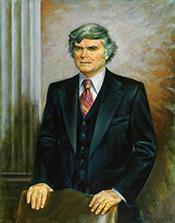
Historical · U.S. House · Oregon · District 2
Albert Ullman
Former U.S. Representative · Oregon District 2 · 1957–1981 · Democratic
Albert Ullman represented Oregon's District 2 in the United States House of Representatives (1957–1981) for the Democratic party. The page below collects sourced biographical facts, term history, committee roles, and provenance for Ullman.
Bioguide ID: U000004
Key facts
- Full name
- Albert Ullman
- State
- Oregon
- District
- District 2
- Party
- Democratic
- House service
- 1957–1981
- First House term
- 1957
- Status
- Left office
- Current term ends
- —
- Born
- 1914
- Bioguide ID
- U000004
- Committee assignments
- —
- Dataset version
- 1.20260605
Biographical narrative
976 words · sourced from the Wikipedia REST extract
Al Ullman was a prominent American politician who served as a U.S. Representative for Oregon's 2nd congressional district from 1957 until 1981. A member of the Democratic Party, Ullman was influential in shaping national policy during his tenure, particularly in areas related to taxation, budget reform, federal entitlement programs, international trade, and energy. He is recognized for his leadership roles in several key congressional committees, most notably as chairman of the House Committee on Ways and Means.
Early life and career
Al Ullman was born on March 9, 1914, in Great Falls, Montana. His early years were spent in Gildford, Montana, before his family relocated to Cathcart, Washington. Ullman's upbringing was influenced by his family's immigrant background, with two grandparents hailing from Germany and the other two from Bohemia, which was then part of the Austro-Hungarian Empire. This diverse heritage may have contributed to his understanding of various cultural perspectives, which would later inform his political career.
Ullman pursued higher education at Whitman College in Walla Walla, Washington, where he graduated in 1935 with a degree in political science. During his time at Whitman, he was also a member of the college football team, playing as a running end. After completing his undergraduate studies, Ullman began his professional career as a teacher, instructing American history and government at Port Angeles High School in Washington for two years. His academic pursuits continued as he earned a master's degree in public law from Columbia University in 1939.
His career was interrupted by World War II, during which he served as a communications officer in the United States Navy in the South Pacific from 1942 to 1945. Following the war, Ullman settled in Baker, Oregon, where he transitioned into the real estate sector. He taught himself the skills necessary to design and build houses, establishing himself as a builder and real estate developer in the early 1950s. This experience in the construction industry would later inform his views on public policy and economic development.
Ullman's political aspirations began to take shape when he first ran for Congress in 1954, seeking to represent Oregon's 2nd congressional district. Although he lost that election to Republican incumbent Sam Coon, he remained undeterred. In 1956, he successfully campaigned for the same seat, defeating Coon in a race that focused on issues such as public power and the management of hydroelectric resources in the region.
House tenure
Ullman's congressional career began in 1957 when he was elected to represent Oregon's 2nd congressional district. This district was notably large, encompassing approximately 70,000 square miles and stretching from Salem to the Idaho border. It included diverse landscapes such as alpine forests, rangeland, and desert areas. Throughout his time in office, Ullman was dedicated to addressing the needs of his constituents and advocating for the development of Oregon's water resources and the management of public lands and national forests.
During his twelve terms in the House of Representatives, Ullman served on several important committees, which shaped his legislative focus and influence. He was a member of the U.S. House Committee on Interior and Insular Affairs, the U.S. House Committee on the Judiciary, and the National Outdoor Recreation Resources Review Commission. He also played a significant role in budgetary matters, co-chairing the Joint Study Committee on Budget Control from 1972 to 1974 and serving as chair of the U.S. House Committee on the Budget in 1974.
Ullman's most notable position came when he became the chairman of the House Committee on Ways and Means in 1975, a role he held until the end of his congressional career in 1981. This committee is one of the most powerful in Congress, responsible for taxation and revenue-related legislation. Ullman's leadership in this capacity allowed him to influence significant tax reform initiatives and budgetary policies during a transformative period in American politics.
Legislative focus and committees
Throughout his tenure, Ullman was recognized as a moderate Democrat, often working across party lines to achieve legislative goals. He is credited with being a key architect of the modern U.S. budget process. In 1973, he initiated the Joint Study Committee on Budget Control, which led to reforms that required Congress to reconcile spending with revenues, addressing the growing federal deficit. His leadership in this area culminated in his chairmanship of the House Budget Committee, where he continued to advocate for fiscal responsibility.
As chairman of the Ways and Means Committee, Ullman oversaw the drafting and enactment of several major tax reform bills. His efforts included legislation aimed at providing tax relief to American citizens, such as a significant tax rebate initiative in 1975 that aimed to stimulate the economy. Additionally, he played a pivotal role in the Windfall Profits Tax Act of 1980, which redirected profits from oil companies to support public transit, aid low-income families, and promote alternative energy sources.
Ullman's influence extended beyond taxation and budgetary matters. He was a prominent advocate for the rights of American Indian tribes in Eastern Oregon, addressing historical injustices related to treaties and land issues. His commitment to these communities reflected his broader dedication to social equity and justice.
Despite his long and impactful career, Ullman's tenure in Congress came to an end in 1981 when he lost his bid for re-election to Republican challenger Denny Smith. This defeat was attributed to a combination of factors, including a national anti-incumbent sentiment and the changing political landscape of his district. After leaving office, Ullman remained engaged in public service and continued to contribute to discussions on policy and governance until his passing on October 11, 1986.
Al Ullman's legacy is marked by his significant contributions to American legislative processes and his advocacy for the people of Oregon. His work in Congress, particularly in the areas of budget reform and taxation, has had a lasting impact on the way federal financial policies are crafted and implemented.
Notable legislation
Sponsored and co-sponsored legislation for Albert Ullman is pending operator curation. The biographical narrative above carries the same provenance trail until per-bill rows are written.
Sources
- [1]https://en.wikipedia.org/wiki/Al_UllmanWikipedia · retrieved 2026-06-05
Notable quotes
Sourced quotes for Albert Ullman are pending operator curation. Narrative-scope provenance remains attached below.
Sources
- [1]https://en.wikipedia.org/wiki/Al_UllmanWikipedia · retrieved 2026-06-05
Key positions
Curated policy positions for Albert Ullman are pending operator review. The biographical narrative above carries the same provenance trail until per-topic positions are written.
Sources
- [1]https://en.wikipedia.org/wiki/Al_UllmanWikipedia · retrieved 2026-06-05
Terms served
- 1957–1959U.S. House · Term 1 · Democratic
- 1959–1961U.S. House · Term 2 · Democratic
- 1961–1963U.S. House · Term 3 · Democratic
- 1963–1965U.S. House · Term 4 · Democratic
- 1965–1967U.S. House · Term 5 · Democratic
- 1967–1969U.S. House · Term 6 · Democratic
- 1969–1971U.S. House · Term 7 · Democratic
- 1971–1973U.S. House · Term 8 · Democratic
- 1973–1975U.S. House · Term 9 · Democratic
- 1975–1977U.S. House · Term 10 · Democratic
- 1977–1979U.S. House · Term 11 · Democratic
- 1979–1981U.S. House · Term 12 · Democratic
Sources & provenance
Every attributable claim above carries a per-section [N] marker that resolves to the corresponding URL below. Each entry records the upstream provider, the canonical URL, and the timestamp at which the source was retrieved by the ingest pipeline.
Key facts
- https://bioguide.congress.gov/search/bio/U000004bioguide · retrieved 2026-06-05
- https://www.govtrack.us/congress/members/411028govtrack · retrieved 2026-06-05
Biographical narrative
- https://en.wikipedia.org/wiki/Al_Ullmanwikipedia · retrieved 2026-06-05
Find your representative
Every U.S. state elects representatives by district. Browse Oregon’s delegation, the full former-representative roster, or explore the role and term length.
Related on The Candidate
- Preceded by Samuel CoonEarlier holder of the Oregon District 2 House seat · Republican.Open
- Succeeded by Robert SmithLater holder of the Oregon District 2 House seat · Republican.Open
- Albin Norblad Jr.Former U.S. Representative · Oregon District 1 · RepublicanOpen
- Andrew ThayerFormer U.S. Representative · Oregon District 1 · DemocraticOpen
- Binger HermannFormer U.S. Representative · Oregon District 1 · RepublicanOpen
- David WuFormer U.S. Representative · Oregon District 1 · DemocraticOpen