
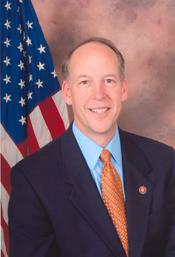
Historical · U.S. House · Oregon · District 2
Greg Walden
Former U.S. Representative · Oregon District 2 · 1999–2021 · Republican
Greg Walden represented Oregon's District 2 in the United States House of Representatives (1999–2021) for the Republican party. The page below collects sourced biographical facts, term history, committee roles, and provenance for Walden.
Bioguide ID: W000791
Key facts
- Full name
- Greg Walden
- State
- Oregon
- District
- District 2
- Party
- Republican
- House service
- 1999–2021
- First House term
- 1999
- Status
- Left office
- Current term ends
- —
- Born
- 1957
- Bioguide ID
- W000791
- Committee assignments
- —
- Dataset version
- 1.20260604
Biographical narrative
897 words · sourced from the Wikipedia REST extract
Greg Walden is a former American politician who served as the U.S. Representative for Oregon's 2nd congressional district from 1999 until 2021. A member of the Republican Party, Walden's tenure in the House of Representatives spanned over two decades, during which he held various leadership roles and focused on issues pertinent to his constituents and the broader national landscape. His political career was marked by significant legislative initiatives, particularly in the areas of energy, communications, and local resource management.
Early life and career
Greg Walden was born on January 10, 1957, in The Dalles, Oregon. He is the son of Elizabeth and Paul Walden, the latter of whom served as a three-term Oregon State Representative. This familial connection to politics likely influenced Walden's own political aspirations. He pursued higher education at the University of Oregon, where he earned a Bachelor of Science degree in 1981. Following his graduation, Walden ventured into the media industry, owning and operating several radio stations, which provided him with a platform for community engagement and communication.
Walden's political career began in earnest when he served as press secretary and chief of staff for Congressman Denny Smith from 1981 to 1987. This role allowed him to gain valuable insights into the workings of Congress and the legislative process. In 1988, he was elected to the Oregon House of Representatives, where he served until 1995. During his time in the state legislature, Walden was appointed to the Oregon State Senate to fill a vacancy, where he eventually rose to the position of assistant majority leader. His political ambitions were briefly interrupted by personal tragedy when he and his wife faced the loss of their son shortly after birth, leading him to reconsider his aspirations for higher office.
After his tenure in the Oregon State Senate, Walden became involved in the campaign for the U.S. House seat previously held by Wes Cooley. He initially supported Cooley's reelection bid but later distanced himself from Cooley due to controversies surrounding Cooley's military service claims. Walden's political maneuvering included announcing his candidacy for the 2nd District seat as an independent, although he ultimately ran as a Republican. In 1998, he won the Republican primary and subsequently the general election, marking the beginning of his long congressional career.
House tenure
Walden's first term in the U.S. House of Representatives began in 1999, and he was re-elected multiple times, serving a total of 11 terms until his departure from Congress in January 2021. Throughout his tenure, he represented a district that included a mix of urban and rural communities, with a political landscape that leaned heavily Republican. Despite facing some electoral challenges, including a notable race in 2018 where he received 56% of the vote, Walden consistently secured his seat in Congress.
During his time in the House, Walden was recognized for his leadership roles within the Republican Party. He was appointed by House Speaker John Boehner to chair the House Majority Transition Committee and later served as the chair of the National Republican Congressional Committee after the 2012 elections. His leadership was characterized by efforts to maintain party unity and continuity during times of transition within the Republican leadership.
In October 2019, Walden announced that he would not seek re-election in 2020, citing various political disagreements, including his stance on issues such as border security and international relations. His decision to retire marked the end of a significant chapter in Oregon's political landscape, as he had been the only Republican representing the state in Congress following the defeat of Senator Gordon Smith in 2008.
Legislative focus and committees
Throughout his congressional career, Walden was actively involved in various legislative initiatives, particularly in the areas of energy, communications, and local resource management. He served on the Committee on Energy and Commerce, where he held significant influence over policies related to these sectors. Within this committee, he chaired the Subcommittee on Communications and Technology and was also a member of the Subcommittee on Energy and Power.
Walden's legislative contributions included founding the Small Brewers Caucus and the Digital Television Caucus, reflecting his commitment to supporting local industries and technological advancements. He was a member of numerous congressional caucuses, including the centrist Republican Main Street Partnership, the Congressional Cement Caucus, and the Congressional Western Caucus, which allowed him to collaborate with colleagues across party lines on various issues.
Among the notable pieces of legislation he sponsored was the Central Oregon Jobs and Water Security Act, which aimed to address land-use and water allocation issues in central Oregon. This legislation was signed into law by President Barack Obama in December 2014. Additionally, he introduced the Federal Communications Commission Process Reform Act, which sought to enhance transparency and public involvement in the FCC's regulatory processes.
Walden's legislative focus often reflected the interests and needs of his constituents, particularly in rural Oregon, where issues such as water management and telecommunications were of paramount importance. His ability to navigate complex legislative landscapes and advocate for his district's needs contributed to his long-standing presence in the House of Representatives.
In summary, Greg Walden's political career was marked by a commitment to public service and representation of Oregon's 2nd congressional district. His extensive tenure in the U.S. House of Representatives allowed him to influence significant legislative initiatives and engage in party leadership, leaving a lasting impact on both his constituents and the broader political landscape.
Notable legislation
Sponsored and co-sponsored legislation for Greg Walden is pending operator curation. The biographical narrative above carries the same provenance trail until per-bill rows are written.
Sources
- [1]https://en.wikipedia.org/wiki/Greg_WaldenWikipedia · retrieved 2026-06-04
Notable quotes
Sourced quotes for Greg Walden are pending operator curation. Narrative-scope provenance remains attached below.
Sources
- [1]https://en.wikipedia.org/wiki/Greg_WaldenWikipedia · retrieved 2026-06-04
Key positions
Curated policy positions for Greg Walden are pending operator review. The biographical narrative above carries the same provenance trail until per-topic positions are written.
Sources
- [1]https://en.wikipedia.org/wiki/Greg_WaldenWikipedia · retrieved 2026-06-04
Terms served
- 1999–2001U.S. House · Term 1 · Republican
- 2001–2003U.S. House · Term 2 · Republican
- 2003–2005U.S. House · Term 3 · Republican
- 2005–2007U.S. House · Term 4 · Republican
- 2007–2009U.S. House · Term 5 · Republican
- 2009–2011U.S. House · Term 6 · Republican
- 2011–2013U.S. House · Term 7 · Republican
- 2013–2015U.S. House · Term 8 · Republican
- 2015–2017U.S. House · Term 9 · Republican
- 2017–2019U.S. House · Term 10 · Republican
- 2019–2021U.S. House · Term 11 · Republican
Sources & provenance
Every attributable claim above carries a per-section [N] marker that resolves to the corresponding URL below. Each entry records the upstream provider, the canonical URL, and the timestamp at which the source was retrieved by the ingest pipeline.
Key facts
- https://bioguide.congress.gov/search/bio/W000791bioguide · retrieved 2026-06-04
- https://walden.house.govhouse.gov · retrieved 2026-06-04
Biographical narrative
- https://en.wikipedia.org/wiki/Greg_Waldenwikipedia · retrieved 2026-06-04
Find your representative
Every U.S. state elects representatives by district. Browse Oregon’s delegation, the full former-representative roster, or explore the role and term length.
Related on The Candidate
- Preceded by Robert SmithEarlier holder of the Oregon District 2 House seat · Republican.Open
- Albin Norblad Jr.Former U.S. Representative · Oregon District 1 · RepublicanOpen
- Andrew ThayerFormer U.S. Representative · Oregon District 1 · DemocraticOpen
- Binger HermannFormer U.S. Representative · Oregon District 1 · RepublicanOpen
- David WuFormer U.S. Representative · Oregon District 1 · DemocraticOpen
- Republican PartyFederal candidates and office holders on the Republican line.Open