
Historical · U.S. House · Oregon · District 4
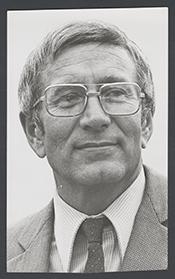
James Weaver
Former U.S. Representative · Oregon District 4 · 1975–1987 · Democratic
James Weaver represented Oregon's District 4 in the United States House of Representatives (1975–1987) for the Democratic party. The page below collects sourced biographical facts, term history, committee roles, and provenance for Weaver.
Bioguide ID: W000227
Key facts
- Full name
- James Weaver
- State
- Oregon
- District
- District 4
- Party
- Democratic
- House service
- 1975–1987
- First House term
- 1975
- Status
- Left office
- Current term ends
- —
- Born
- 1927
- Bioguide ID
- W000227
- Committee assignments
- —
- Dataset version
- 1.20260605
Biographical narrative
871 words · sourced from the Wikipedia REST extract
James H. Weaver was an American businessman and politician who served as a U.S. Representative for Oregon's 4th congressional district from 1975 until 1987. A member of the Democratic Party, Weaver was recognized for his advocacy of environmental protections, particularly those concerning the Pacific Northwest. His tenure in Congress was marked by significant legislative activity, including a notable filibuster that led to a change in House rules regarding amendment procedures.
Early life and career
James Howard Weaver was born on August 8, 1927, in Brookings, South Dakota, to Leo C. and Alice (Flittie) Weaver. He grew up in a family that valued education and service, which influenced his later pursuits. At the age of seventeen, Weaver enlisted in the United States Navy and served during World War II, where he was stationed on an aircraft carrier in the Pacific Theater. This experience not only shaped his character but also instilled in him a sense of duty and commitment to public service.
After the war, Weaver moved to Oregon in 1947, seeking to further his education at the University of Oregon. He graduated in 1952 with a Bachelor of Science degree, laying the groundwork for his future career. Following his graduation, Weaver began working in various capacities that would eventually lead him to politics. He initially joined a publishing company before transitioning to the Oregon Department of Agriculture in 1959, where he served as a staff member. His career continued to evolve as he entered the real estate sector in 1960, ultimately becoming a developer of apartment and office buildings.
Weaver's political engagement began to take shape during this time, as he participated as a delegate in the Democratic National Conventions of 1960 and 1964. His involvement in these significant political events demonstrated his commitment to the Democratic Party and his growing interest in public service.
House tenure
In 1974, Weaver made a significant leap into politics by running for the U.S. House of Representatives, where he sought to represent Oregon's 4th congressional district. He successfully defeated the incumbent Republican congressman John R. Dellenback, marking the beginning of his six terms in Congress. Weaver's election was indicative of the shifting political landscape in Oregon and reflected the growing support for Democratic candidates in the region during the 1970s.
Throughout his time in the House, Weaver was known for his active participation in legislative processes. One of the most notable events of his tenure occurred in 1980 when he conducted a filibuster against the Energy Northwest bill. This filibuster was unique in the modern history of the House of Representatives, as Weaver introduced 113 amendments to the bill. His actions not only drew attention to the issues at hand but also led to the establishment of "The Weaver Rule," which aimed to limit the use of such extensive amendment tactics in future legislative sessions.
In 1986, Weaver sought to advance his political career further by running for the United States Senate. He was selected as the Democratic nominee to challenge the incumbent Republican senator Bob Packwood. However, his candidacy faced significant challenges when he became the subject of an investigation by the United States House Committee on Ethics regarding his campaign finances. Facing scrutiny and the prospect of losing the general election, Weaver ultimately withdrew from the race. His decision to step down led to Oregon State Representative Rick Bauman being chosen as his replacement on the ballot, who subsequently lost to Packwood.
Despite the controversies surrounding his Senate campaign, Weaver completed his final term in the House, where he was succeeded by his aide, Peter DeFazio. Weaver's congressional career spanned over a decade, during which he made substantial contributions to legislative discussions and environmental advocacy.
Legislative focus and committees
Throughout his tenure in the House of Representatives, Weaver's legislative focus was heavily oriented towards environmental issues, particularly those affecting Oregon and the broader Pacific Northwest region. He was a staunch advocate for policies aimed at protecting natural resources and promoting sustainable practices. His commitment to environmental protection was a defining characteristic of his political career and resonated with the values of many constituents in his district.
In addition to his environmental advocacy, Weaver served on various committees during his time in Congress, where he contributed to discussions and decisions on a wide range of issues. His involvement in these committees allowed him to influence legislation and advocate for the interests of his constituents effectively. While specific committee assignments during his tenure are not detailed, it is common for members of Congress to participate in committees that align with their legislative priorities and the needs of their districts.
Weaver's legacy extends beyond his legislative achievements. In recognition of his contributions to environmental conservation, a trail around Oregon's Waldo Lake was renamed the "Jim Weaver Loop Trail" in 2008. This honor reflects the lasting impact of his advocacy on the natural landscape of Oregon and serves as a testament to his commitment to preserving the environment for future generations.
James H. Weaver passed away on October 6, 2020, in Eugene, Oregon, at the age of 93. His life and career remain significant in the context of Oregon's political history, particularly regarding environmental issues and the Democratic Party's evolution in the state.
Notable legislation
Sponsored and co-sponsored legislation for James Weaver is pending operator curation. The biographical narrative above carries the same provenance trail until per-bill rows are written.
Sources
- [1]https://en.wikipedia.org/wiki/Jim_Weaver_(Oregon_politician)Wikipedia · retrieved 2026-06-05
Notable quotes
Sourced quotes for James Weaver are pending operator curation. Narrative-scope provenance remains attached below.
Sources
- [1]https://en.wikipedia.org/wiki/Jim_Weaver_(Oregon_politician)Wikipedia · retrieved 2026-06-05
Key positions
Curated policy positions for James Weaver are pending operator review. The biographical narrative above carries the same provenance trail until per-topic positions are written.
Sources
- [1]https://en.wikipedia.org/wiki/Jim_Weaver_(Oregon_politician)Wikipedia · retrieved 2026-06-05
Terms served
- 1975–1977U.S. House · Term 1 · Democratic
- 1977–1979U.S. House · Term 2 · Democratic
- 1979–1981U.S. House · Term 3 · Democratic
- 1981–1983U.S. House · Term 4 · Democratic
- 1983–1985U.S. House · Term 5 · Democratic
- 1985–1987U.S. House · Term 6 · Democratic
Sources & provenance
Every attributable claim above carries a per-section [N] marker that resolves to the corresponding URL below. Each entry records the upstream provider, the canonical URL, and the timestamp at which the source was retrieved by the ingest pipeline.
Key facts
- https://bioguide.congress.gov/search/bio/W000227bioguide · retrieved 2026-06-05
- https://www.govtrack.us/congress/members/411395govtrack · retrieved 2026-06-05
Biographical narrative
- https://en.wikipedia.org/wiki/Jim_Weaver_(Oregon_politician)wikipedia · retrieved 2026-06-05
Find your representative
Every U.S. state elects representatives by district. Browse Oregon’s delegation, the full former-representative roster, or explore the role and term length.
Related on The Candidate
- Preceded by John DellenbackEarlier holder of the Oregon District 4 House seat · Republican.Open
- Succeeded by Peter DeFazioLater holder of the Oregon District 4 House seat · Democratic.Open
- Albin Norblad Jr.Former U.S. Representative · Oregon District 1 · RepublicanOpen
- Andrew ThayerFormer U.S. Representative · Oregon District 1 · DemocraticOpen
- Binger HermannFormer U.S. Representative · Oregon District 1 · RepublicanOpen
- David WuFormer U.S. Representative · Oregon District 1 · DemocraticOpen