
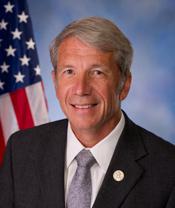
Historical · U.S. House · Oregon · District 5
Kurt Schrader
Former U.S. Representative · Oregon District 5 · 2009–2023 · Democratic
Kurt Schrader represented Oregon's District 5 in the United States House of Representatives (2009–2023) for the Democratic party. The page below collects sourced biographical facts, term history, committee roles, and provenance for Schrader.
Bioguide ID: S001180
Key facts
- Full name
- Kurt Schrader
- State
- Oregon
- District
- District 5
- Party
- Democratic
- House service
- 2009–2023
- First House term
- 2009
- Status
- Left office
- Current term ends
- —
- Born
- 1951
- Bioguide ID
- S001180
- Committee assignments
- —
- Dataset version
- 1.20260604
Biographical narrative
848 words · sourced from the Wikipedia REST extract
Walter Kurt Schrader is an American politician and veterinarian who served as the U.S. Representative for Oregon's 5th congressional district from 2009 until January 3, 2023. A member of the Democratic Party, Schrader's congressional district encompassed a diverse area that included much of Oregon's central coast, the city of Salem, and several southern suburbs of Portland. Prior to his tenure in the U.S. House, Schrader was active in Oregon politics, having served in both the Oregon House of Representatives and the Oregon State Senate. His political career is marked by a moderate to conservative stance within the Democratic Party, which earned him the nickname "Manchin of the House," reflecting his tendency to break from party lines on various issues.
Early life and career
Kurt Schrader was born on October 19, 1951, in Connecticut. He pursued higher education at Cornell University, where he earned a Bachelor of Arts degree in 1973. While at Cornell, he met Martha Northam, and the couple married in 1975. Following his undergraduate studies, Schrader attended the University of Illinois, where he obtained his Doctor of Veterinary Medicine degree in 1977. Shortly thereafter, he and his wife relocated to Oregon, where he established the Clackamas County Veterinary Clinic in Oregon City, marking the beginning of his professional career in veterinary medicine.
In addition to his veterinary practice, Schrader engaged in local governance, serving for 16 years on the Canby Planning Commission. This experience in local politics laid the groundwork for his subsequent entry into state-level politics.
House tenure
Schrader's political career at the state level began in the Oregon House of Representatives, where he served three terms from 1997 to 2008. His initial attempt to secure a seat in the Oregon House occurred in 1994, but he lost by a narrow margin of 38 votes. Undeterred, he successfully ran for a House seat in 1996, defeating his opponent Paul Kraxburger. He was subsequently reelected in 1998 and 2000. In 2002, Schrader transitioned to the Oregon State Senate, winning a seat in the 20th district after a competitive primary against fellow Democrat Kathy Lowe. He faced no Republican opposition in the general election and served in the Senate until he resigned in December 2008 to prepare for his congressional campaign.
In May 2008, Schrader won the Democratic nomination for Oregon's 5th congressional district, which was vacated by Darlene Hooley. He successfully defeated Republican nominee Mike Erickson in the general election, securing 54% of the vote. Over the course of his seven terms in the U.S. House, Schrader faced various electoral challenges. In 2010, he won a closely contested race against Republican Scott Bruun, despite predictions of a potential loss. He continued to win reelection in subsequent years, with notable victories in 2012, 2014, and 2016, often securing over 50% of the vote.
However, Schrader's political fortunes changed in 2022 when he lost the Democratic primary to progressive challenger Jamie McLeod-Skinner. This defeat was significant, as it marked the first time a sitting member of Oregon's Congressional delegation lost a primary challenge since 1980. Despite receiving endorsements from prominent figures, including President Joe Biden, Schrader's loss was attributed to a shift in voter sentiment, particularly in Deschutes County, which had become part of his district following redistricting.
Legislative focus and committees
During his tenure in the U.S. House, Schrader was recognized as a moderate to conservative Democrat. His legislative approach was characterized by a willingness to work across party lines, earning him a reputation as one of the more bipartisan members of Congress. He was ranked as the 50th-most bipartisan House member during the 114th Congress, and notably, he was the most bipartisan member from Oregon according to The Lugar Center and the McCourt School of Public Policy's Bipartisan Index. This ranking was based on his ability to attract co-sponsors from the opposing party for his bills and his willingness to co-sponsor legislation introduced by members of the other party.
Throughout his congressional career, Schrader maintained a voting alignment with President Biden's stated positions, reportedly voting in line with the administration's stance approximately 96.4% of the time as of March 2022. His moderate stance often placed him at odds with more progressive elements within his party. In December 2016, he publicly expressed concerns regarding Nancy Pelosi's leadership, suggesting that her election as Minority Leader could be detrimental to the Democratic Party's future.
Schrader's tenure also included moments of controversy. Following the January 2021 attack on the U.S. Capitol, he referred to potential impeachment proceedings against then-President Donald Trump as a "lynching," a statement that drew significant attention and criticism. His legislative focus included a variety of issues, although specific details about his committee assignments and legislative initiatives during his time in office are not extensively documented.
Kurt Schrader's political career reflects a commitment to public service that spans decades, beginning with local governance and culminating in his role as a U.S. Representative. His moderate approach and willingness to engage with members of both parties have defined his legislative style, even as he faced challenges from within his own party during his final electoral campaign.
Notable legislation
Sponsored and co-sponsored legislation for Kurt Schrader is pending operator curation. The biographical narrative above carries the same provenance trail until per-bill rows are written.
Sources
- [1]https://en.wikipedia.org/wiki/Kurt_SchraderWikipedia · retrieved 2026-06-04
Notable quotes
Sourced quotes for Kurt Schrader are pending operator curation. Narrative-scope provenance remains attached below.
Sources
- [1]https://en.wikipedia.org/wiki/Kurt_SchraderWikipedia · retrieved 2026-06-04
Key positions
Curated policy positions for Kurt Schrader are pending operator review. The biographical narrative above carries the same provenance trail until per-topic positions are written.
Sources
- [1]https://en.wikipedia.org/wiki/Kurt_SchraderWikipedia · retrieved 2026-06-04
Terms served
- 2009–2011U.S. House · Term 1 · Democratic
- 2011–2013U.S. House · Term 2 · Democratic
- 2013–2015U.S. House · Term 3 · Democratic
- 2015–2017U.S. House · Term 4 · Democratic
- 2017–2019U.S. House · Term 5 · Democratic
- 2019–2021U.S. House · Term 6 · Democratic
- 2021–2023U.S. House · Term 7 · Democratic
Sources & provenance
Every attributable claim above carries a per-section [N] marker that resolves to the corresponding URL below. Each entry records the upstream provider, the canonical URL, and the timestamp at which the source was retrieved by the ingest pipeline.
Key facts
- https://bioguide.congress.gov/search/bio/S001180bioguide · retrieved 2026-06-04
- https://schrader.house.govhouse.gov · retrieved 2026-06-04
Biographical narrative
- https://en.wikipedia.org/wiki/Kurt_Schraderwikipedia · retrieved 2026-06-04
Find your representative
Every U.S. state elects representatives by district. Browse Oregon’s delegation, the full former-representative roster, or explore the role and term length.
Related on The Candidate
- Preceded by Darlene HooleyEarlier holder of the Oregon District 5 House seat · Democratic.Open
- Succeeded by Lori Chavez-DeRemerLater holder of the Oregon District 5 House seat · Republican.Open
- Albin Norblad Jr.Former U.S. Representative · Oregon District 1 · RepublicanOpen
- Andrew ThayerFormer U.S. Representative · Oregon District 1 · DemocraticOpen
- Binger HermannFormer U.S. Representative · Oregon District 1 · RepublicanOpen
- David WuFormer U.S. Representative · Oregon District 1 · DemocraticOpen