
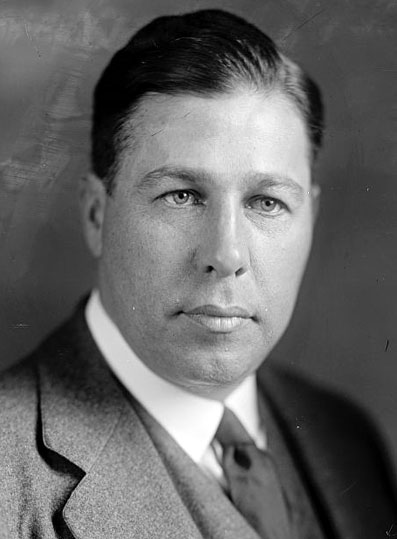
Historical · U.S. House · Oregon · At-Large
Maurice Crumpacker
Former U.S. Representative · Oregon At-Large · 1925–1929 · Republican
Maurice Crumpacker represented Oregon's At-Large in the United States House of Representatives (1925–1929) for the Republican party. The page below collects sourced biographical facts, term history, committee roles, and provenance for Crumpacker.
Bioguide ID: C000959
Key facts
- Full name
- Maurice Crumpacker
- State
- Oregon
- District
- At-Large
- Party
- Republican
- House service
- 1925–1929
- First House term
- 1925
- Status
- Left office
- Current term ends
- —
- Born
- 1886
- Bioguide ID
- C000959
- Committee assignments
- —
- Dataset version
- 1.20260606
Biographical narrative
900 words · sourced from the Wikipedia REST extract
Maurice Crumpacker was an American lawyer and politician who served as a Republican U.S. Representative for Oregon from 1925 until his untimely death in 1927. Crumpacker's career was marked by his military service during World War I, his legal practice in Portland, and his brief but impactful tenure in Congress. His life ended in a tragic incident that raised questions about his mental health and circumstances surrounding his death.
Early life and career
Maurice Edgar Crumpacker was born on December 19, 1886, in Valparaiso, Indiana. He was the son of Edgar D. Crumpacker, who would later serve as a U.S. Congressman. This familial connection to politics likely influenced Maurice's early interests and aspirations. When he was ten years old, his father’s election to the House of Representatives prompted the family to move to Washington, D.C., where Maurice completed his primary education. After returning to Indiana, he graduated from the prestigious Culver Military Academy in 1905, an institution known for its rigorous academic and military training.
Following his graduation, Crumpacker attended the University of Michigan, where he pursued a degree in law. During his time at Michigan, he was also an athlete, playing as a starting right tackle on the university's football team under the renowned coach Fielding H. Yost. Crumpacker graduated from the University of Michigan in 1909 and subsequently enrolled in Harvard Law School, where he furthered his legal education. He was admitted to the bar in 1912, marking the beginning of his professional legal career.
After completing his studies, Crumpacker relocated to Portland, Oregon, where he established his law practice in the same year. This move was significant, as it marked the beginning of his long-term engagement with the state of Oregon, which would become the focal point of his political career.
House tenure
Crumpacker's political career began in earnest when he was appointed as a special deputy district attorney for Multnomah County in 1921. This role provided him with valuable experience in the legal and political landscape of Oregon. In 1922, he sought the Republican nomination for the U.S. Congress but was unsuccessful in that attempt. However, his persistence paid off in 1924 when he won the Republican nomination for Oregon's 3rd congressional district. He was subsequently elected to the House of Representatives, marking the start of his congressional career.
Crumpacker served two terms in the U.S. House, beginning in 1925. During his time in office, he was involved in various legislative activities and contributed to the discussions and decisions that shaped the policies of the era. His tenure in Congress coincided with a period of significant change in American society, as the nation was grappling with the aftermath of World War I and the onset of the Great Depression. Crumpacker was re-elected for a second term, serving in the sixty-ninth and seventieth Congresses. His legislative actions and contributions during this time would be part of his legacy, although specific details regarding his voting record or the bills he sponsored are not documented in the available records.
Legislative focus and committees
While specific details regarding Crumpacker's legislative focus and committee assignments during his time in Congress are not extensively documented, it is understood that he was involved in the political discourse of his time as a member of the Republican Party. His background as a lawyer and his experience in local government likely informed his perspectives on various issues, including those related to law, governance, and public policy.
Crumpacker's time in Congress was cut short by his unexpected death in July 1927. His passing occurred under tragic circumstances while he was traveling with House Speaker Nicholas Longworth on a special train along the West Coast. Crumpacker's behavior during this trip raised concerns among his companions. He was found acting erratically and claimed to have been poisoned, which led to his hospitalization. Medical evaluations indicated that he was under significant stress and exhibited symptoms that suggested a mental health crisis.
Despite these alarming signs, Crumpacker was released from the hospital and later attempted to return to Portland with a fellow traveler. However, during a walk along San Francisco Bay, he unexpectedly jumped into the water and drowned. His death was a shocking event for his family, colleagues, and constituents. Crumpacker left behind a wife, Cully Cook Crumpacker, and three sons, James, Edgar, and Peter. His passing raised questions about the pressures faced by public figures and the importance of mental health awareness, particularly in high-stress environments such as politics.
In the aftermath of his death, Crumpacker's contributions to Oregon and the nation were recognized. He was buried in River View Cemetery in Portland, where he was honored for his service and dedication. His home in Portland, known as the Maurice Crumpacker House, was designed by the notable architect Wade Hampton Pipes and was added to the National Register of Historic Places in 1992, ensuring that his legacy would be remembered in the community he served.
Maurice Crumpacker's life and career reflect the complexities of early 20th-century American politics, the challenges faced by public servants, and the personal struggles that can accompany a life in the public eye. His journey from a young boy in Indiana to a U.S. Congressman in Oregon illustrates the diverse paths individuals can take in pursuit of public service, while his tragic end serves as a reminder of the importance of mental health and support systems for those in demanding roles.
Notable legislation
Sponsored and co-sponsored legislation for Maurice Crumpacker is pending operator curation. The biographical narrative above carries the same provenance trail until per-bill rows are written.
Sources
- [1]https://en.wikipedia.org/wiki/Maurice_E._CrumpackerWikipedia · retrieved 2026-06-06
Notable quotes
Sourced quotes for Maurice Crumpacker are pending operator curation. Narrative-scope provenance remains attached below.
Sources
- [1]https://en.wikipedia.org/wiki/Maurice_E._CrumpackerWikipedia · retrieved 2026-06-06
Key positions
Curated policy positions for Maurice Crumpacker are pending operator review. The biographical narrative above carries the same provenance trail until per-topic positions are written.
Sources
- [1]https://en.wikipedia.org/wiki/Maurice_E._CrumpackerWikipedia · retrieved 2026-06-06
Terms served
- 1925–1927U.S. House · Term 1 · Republican
- 1927–1929U.S. House · Term 2 · Republican
Sources & provenance
Every attributable claim above carries a per-section [N] marker that resolves to the corresponding URL below. Each entry records the upstream provider, the canonical URL, and the timestamp at which the source was retrieved by the ingest pipeline.
Key facts
- https://bioguide.congress.gov/search/bio/C000959bioguide · retrieved 2026-06-06
- https://www.govtrack.us/congress/members/403071govtrack · retrieved 2026-06-06
Biographical narrative
- https://en.wikipedia.org/wiki/Maurice_E._Crumpackerwikipedia · retrieved 2026-06-06
Find your representative
Every U.S. state elects representatives by district. Browse Oregon’s delegation, the full former-representative roster, or explore the role and term length.
Related on The Candidate
- Preceded by Thomas TongueEarlier holder of the Oregon At-Large House seat · Republican.Open
- Albin Norblad Jr.Former U.S. Representative · Oregon District 1 · RepublicanOpen
- Andrew ThayerFormer U.S. Representative · Oregon District 1 · DemocraticOpen
- Binger HermannFormer U.S. Representative · Oregon District 1 · RepublicanOpen
- David WuFormer U.S. Representative · Oregon District 1 · DemocraticOpen
- Republican PartyFederal candidates and office holders on the Republican line.Open