
Historical · U.S. House · Pennsylvania · District 1
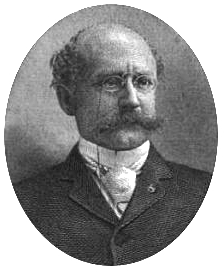
Henry Bingham
Former U.S. Representative · Pennsylvania District 1 · 1879–1913 · Republican
Henry Bingham represented Pennsylvania's District 1 in the United States House of Representatives (1879–1913) for the Republican party. The page below collects sourced biographical facts, term history, committee roles, and provenance for Bingham.
Bioguide ID: B000469
Key facts
- Full name
- Henry Bingham
- State
- Pennsylvania
- District
- District 1
- Party
- Republican
- House service
- 1879–1913
- First House term
- 1879
- Status
- Left office
- Current term ends
- —
- Born
- 1841
- Bioguide ID
- B000469
- Committee assignments
- —
- Dataset version
- 1.20260606
Biographical narrative
926 words · sourced from the Wikipedia REST extract
Henry Bingham was an American politician who served as a Republican member of the U.S. House of Representatives for Pennsylvania's 1st congressional district from 1879 until his death in 1912. A veteran of the American Civil War, Bingham was recognized for his valor with the Medal of Honor for his actions during the war. His long tenure in Congress spanned over three decades, during which he held significant roles, including chairing the Committee on the Post Office and Post Roads.
Early life and career
Henry Bingham was born on December 4, 1841, in Philadelphia, Pennsylvania. He pursued higher education at Jefferson College in Canonsburg, Pennsylvania, graduating in 1862. During his time at college, he became a member of the Phi Kappa Psi fraternity, which is a notable aspect of his early social life. Later in his career, he received an honorary Doctor of Laws (LLD) degree from Washington and Jefferson College in 1902, reflecting his contributions to public service and the community.
Bingham's early career was marked by his enlistment in the Union Army during the American Civil War. He received a commission as a first lieutenant in the 140th Pennsylvania Volunteer Infantry on August 22, 1862. His military service included participation in several significant battles, including the Battle of Gettysburg, where he served as a captain and Judge-Advocate on the staff of Major General Winfield Scott Hancock. During this pivotal battle, he witnessed the infamous Pickett's Charge and was involved in the aftermath, delivering personal effects from a wounded Confederate general to his friend, General Hancock. Bingham himself was wounded during the battle, which underscored the dangers he faced.
Throughout the Civil War, Bingham demonstrated leadership and bravery. He became aide-de-camp to Major General Gouverneur K. Warren and was recognized for his actions during the Battle of the Wilderness on May 6, 1864, where he rallied troops under heavy enemy fire. For this act of valor, he was awarded the Medal of Honor on August 26, 1893. His military career was further marked by multiple injuries and a brief capture during the conflict, but he ultimately returned to civilian life after being mustered out of service on July 2, 1866.
Following the war, Bingham transitioned into public service. He was appointed postmaster of Philadelphia by President Andrew Johnson in March 1867, a position he held until December 1872. After resigning from this role, he accepted a clerkship in the courts of oyer and terminer and quarter sessions of the peace in Philadelphia. His involvement in the Republican Party was significant, as he served as a delegate to multiple Republican National Conventions from 1872 to 1900, indicating his active participation in the political landscape of the time.
House tenure
Bingham's political career in the U.S. House of Representatives began when he was elected as a Republican in 1878. He took office in 1879 and continued to serve until his death in 1912, marking a remarkable tenure of 17 consecutive terms in Congress. His long service is notable not only for its duration but also for the stability and continuity it provided to his constituents in Pennsylvania's 1st congressional district.
During his time in the House, Bingham was involved in various legislative activities and was recognized for his leadership within the Republican Party. He served as the Chairman of the Committee on the Post Office and Post Roads, a role that allowed him to influence significant aspects of postal policy and infrastructure. Additionally, he was a member of the Committee on Expenditures in the Post Office Department, where he contributed to oversight and budgetary matters related to postal services.
Bingham's legislative career was characterized by a commitment to the interests of his constituents and a focus on issues pertinent to the postal service, which was a vital aspect of communication and commerce during that era. His extensive experience in government and his military background likely informed his approach to public service, allowing him to navigate the complexities of legislative processes effectively.
Legislative focus and committees
Throughout his congressional career, Bingham's legislative focus primarily revolved around issues related to the postal service and infrastructure. As Chairman of the Committee on the Post Office and Post Roads, he played a crucial role in shaping policies that affected mail delivery and postal operations across the country. This committee was instrumental in addressing the growing demands of a nation that was rapidly expanding and modernizing its communication systems.
Bingham's involvement in the Committee on Expenditures in the Post Office Department further underscored his commitment to ensuring accountability and efficiency within the postal service. His work on these committees reflected a broader understanding of the importance of reliable communication networks in fostering economic growth and connecting communities.
In addition to his committee roles, Bingham's long tenure allowed him to build relationships with colleagues across party lines, contributing to his effectiveness as a legislator. His military background and experience in public service likely provided him with a unique perspective on governance, enabling him to advocate for policies that served both his constituents and the nation as a whole.
Bingham's legacy extends beyond his legislative accomplishments. He is remembered for his dedication to public service and the impact he had on his community and the nation. Following his death on March 22, 1912, he was laid to rest in Laurel Hill Cemetery in Philadelphia, Pennsylvania. His contributions to American politics and his service during the Civil War continue to be recognized, including the naming of Bingham County in Idaho in his honor, reflecting the lasting influence of his life and career.
Notable legislation
Sponsored and co-sponsored legislation for Henry Bingham is pending operator curation. The biographical narrative above carries the same provenance trail until per-bill rows are written.
Sources
- [1]https://en.wikipedia.org/wiki/Henry_H._BinghamWikipedia · retrieved 2026-06-06
Notable quotes
Sourced quotes for Henry Bingham are pending operator curation. Narrative-scope provenance remains attached below.
Sources
- [1]https://en.wikipedia.org/wiki/Henry_H._BinghamWikipedia · retrieved 2026-06-06
Key positions
Curated policy positions for Henry Bingham are pending operator review. The biographical narrative above carries the same provenance trail until per-topic positions are written.
Sources
- [1]https://en.wikipedia.org/wiki/Henry_H._BinghamWikipedia · retrieved 2026-06-06
Terms served
- 1879–1881U.S. House · Term 1 · Republican
- 1881–1883U.S. House · Term 2 · Republican
- 1883–1885U.S. House · Term 3 · Republican
- 1885–1887U.S. House · Term 4 · Republican
- 1887–1889U.S. House · Term 5 · Republican
- 1889–1891U.S. House · Term 6 · Republican
- 1891–1893U.S. House · Term 7 · Republican
- 1893–1895U.S. House · Term 8 · Republican
- 1895–1897U.S. House · Term 9 · Republican
- 1897–1899U.S. House · Term 10 · Republican
- 1899–1901U.S. House · Term 11 · Republican
- 1901–1903U.S. House · Term 12 · Republican
- 1903–1905U.S. House · Term 13 · Republican
- 1905–1907U.S. House · Term 14 · Republican
- 1907–1909U.S. House · Term 15 · Republican
- 1909–1911U.S. House · Term 16 · Republican
- 1911–1913U.S. House · Term 17 · Republican
Sources & provenance
Every attributable claim above carries a per-section [N] marker that resolves to the corresponding URL below. Each entry records the upstream provider, the canonical URL, and the timestamp at which the source was retrieved by the ingest pipeline.
Key facts
- https://bioguide.congress.gov/search/bio/B000469bioguide · retrieved 2026-06-06
- https://www.govtrack.us/congress/members/401450govtrack · retrieved 2026-06-06
Biographical narrative
- https://en.wikipedia.org/wiki/Henry_H._Binghamwikipedia · retrieved 2026-06-06
Find your representative
Every U.S. state elects representatives by district. Browse Pennsylvania’s delegation, the full former-representative roster, or explore the role and term length.
Related on The Candidate
- Preceded by Chapman FreemanEarlier holder of the Pennsylvania District 1 House seat · Republican.Open
- Succeeded by Harry RansleyLater holder of the Pennsylvania District 1 House seat · Republican.Open
- Adam SeybertFormer U.S. Representative · Pennsylvania District 1 · RepublicanOpen
- Benjamin SayFormer U.S. Representative · Pennsylvania District 1 · RepublicanOpen
- Republican PartyFederal candidates and office holders on the Republican line.Open
- Representatives from PennsylvaniaEvery former U.S. Representative who has represented Pennsylvania.Open