
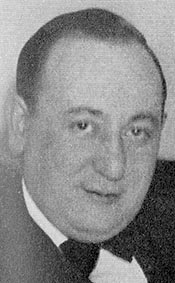
Historical · U.S. House · Pennsylvania · District 1
Leon Sacks
Former U.S. Representative · Pennsylvania District 1 · 1937–1943 · Democratic
Leon Sacks represented Pennsylvania's District 1 in the United States House of Representatives (1937–1943) for the Democratic party. The page below collects sourced biographical facts, term history, committee roles, and provenance for Sacks.
Bioguide ID: S000008
Key facts
- Full name
- Leon Sacks
- State
- Pennsylvania
- District
- District 1
- Party
- Democratic
- House service
- 1937–1943
- First House term
- 1937
- Status
- Left office
- Current term ends
- —
- Born
- 1902
- Bioguide ID
- S000008
- Committee assignments
- —
- Dataset version
- 1.20260605
Biographical narrative
924 words · sourced from the Wikipedia REST extract
Leon Sacks was an American lawyer and politician who served as a Democratic member of the U.S. House of Representatives for Pennsylvania's 1st congressional district from 1937 until 1943. His tenure in Congress was marked by the tumultuous backdrop of the Great Depression and World War II, during which he contributed to legislative efforts that reflected the challenges and priorities of the era. Following his congressional service, Sacks continued to engage in public service and community affairs until his death in 1972.
Early life and career
Leon Sacks was born on October 7, 1902, in Philadelphia, Pennsylvania, to parents who were immigrants from Russia. His upbringing in a Jewish immigrant family in a major urban center likely influenced his perspectives on community and public service. Sacks pursued higher education at the University of Pennsylvania, where he graduated from the Wharton School in 1923, a prestigious institution known for its business programs. He furthered his education by attending the law department of the same university, earning his law degree in 1926.
After completing his education, Sacks began his legal career in Philadelphia, establishing himself as a practicing attorney in 1926. His legal expertise and commitment to public service led to his appointment as deputy Attorney General of Pennsylvania in February 1935. In this role, he served until January 1937, gaining valuable experience in the state’s legal and political landscape. His involvement in state politics continued when he was elected to the Democratic State Committee in 1936, a position he held until 1942. This early political engagement laid the groundwork for his subsequent election to the U.S. Congress.
House tenure
Sacks's political career at the federal level began when he was elected as a Democrat to the 75th United States Congress in 1936. His election came during a period when the Democratic Party was gaining traction nationally, largely due to the economic challenges posed by the Great Depression. Sacks was subsequently re-elected to two additional terms in Congress, serving through the 76th and 77th Congresses. His legislative work during this time was shaped by the pressing issues of the day, including economic recovery efforts and the impending global conflict of World War II.
Throughout his time in the House, Sacks was involved in various legislative initiatives that aimed to address the needs of his constituents and the broader American public. However, his congressional career came to an end when he was an unsuccessful candidate for re-election in 1942. This defeat marked a significant transition in his professional life, as he would soon pivot from politics to military service.
Legislative focus and committees
During his tenure in the U.S. House of Representatives, Sacks participated in a range of legislative activities that reflected the priorities of his party and the needs of his constituents. While specific details of his legislative accomplishments are not extensively documented, it is known that he served during a critical time in American history. The Great Depression had a profound impact on the nation, and many of the policies and programs initiated during this period were aimed at economic recovery and social welfare.
Sacks's work in Congress coincided with the New Deal, a series of programs and reforms implemented by President Franklin D. Roosevelt to combat the economic crisis. As a member of the Democratic Party, Sacks likely supported various initiatives designed to provide relief to the unemployed, stimulate economic growth, and reform the financial system. His legal background may have informed his approach to legislation, particularly in areas related to labor rights, social justice, and civil rights.
In addition to his legislative responsibilities, Sacks was involved in various committees during his time in the House. These committees played a crucial role in shaping policy and overseeing the implementation of federal programs. While the specific committees on which he served are not detailed in the available records, it is common for members of Congress to engage in committees that align with their interests and expertise. Given his legal background, Sacks may have been particularly suited for committees focused on legal and judicial matters, as well as those addressing social issues.
After leaving Congress, Sacks continued to serve his country in a different capacity. He enlisted in the Army Air Forces during World War II, where he held the rank of lieutenant colonel. His military service lasted from January 4, 1943, to January 10, 1946, during which he contributed to the war effort in various capacities. Following his military service, Sacks returned to his legal practice, continuing his career as an attorney in Philadelphia.
In addition to his legal work, Sacks remained active in public service. He served on the State Veterans Commission from 1951 to 1969, demonstrating his ongoing commitment to veterans' issues and support for those who had served in the military. His leadership extended to the role of chairman of the registration commission of Philadelphia from 1952 to 1965, where he oversaw electoral processes and voter registration efforts in the city. Furthermore, he was a member of the Military Reservations Commission from 1957 to 1967, contributing to the management and oversight of military installations.
Leon Sacks passed away on March 11, 1972, in Philadelphia at the age of 69. His life and career reflect the journey of a public servant dedicated to his community and country, navigating the complexities of law, politics, and military service during a pivotal era in American history. His contributions to the legal and political landscape of Pennsylvania, as well as his involvement in veteran affairs, underscore his commitment to public service throughout his life.
Notable legislation
Sponsored and co-sponsored legislation for Leon Sacks is pending operator curation. The biographical narrative above carries the same provenance trail until per-bill rows are written.
Sources
- [1]https://en.wikipedia.org/wiki/Leon_SacksWikipedia · retrieved 2026-06-05
Notable quotes
Sourced quotes for Leon Sacks are pending operator curation. Narrative-scope provenance remains attached below.
Sources
- [1]https://en.wikipedia.org/wiki/Leon_SacksWikipedia · retrieved 2026-06-05
Key positions
Curated policy positions for Leon Sacks are pending operator review. The biographical narrative above carries the same provenance trail until per-topic positions are written.
Sources
- [1]https://en.wikipedia.org/wiki/Leon_SacksWikipedia · retrieved 2026-06-05
Terms served
- 1937–1939U.S. House · Term 1 · Democratic
- 1939–1941U.S. House · Term 2 · Democratic
- 1941–1943U.S. House · Term 3 · Democratic
Sources & provenance
Every attributable claim above carries a per-section [N] marker that resolves to the corresponding URL below. Each entry records the upstream provider, the canonical URL, and the timestamp at which the source was retrieved by the ingest pipeline.
Key facts
- https://bioguide.congress.gov/search/bio/S000008bioguide · retrieved 2026-06-05
- https://www.govtrack.us/congress/members/409528govtrack · retrieved 2026-06-05
Biographical narrative
- https://en.wikipedia.org/wiki/Leon_Sackswikipedia · retrieved 2026-06-05
Find your representative
Every U.S. state elects representatives by district. Browse Pennsylvania’s delegation, the full former-representative roster, or explore the role and term length.
Related on The Candidate
- Preceded by Harry RansleyEarlier holder of the Pennsylvania District 1 House seat · Republican.Open
- Succeeded by James GallagherLater holder of the Pennsylvania District 1 House seat · Republican.Open
- Adam SeybertFormer U.S. Representative · Pennsylvania District 1 · RepublicanOpen
- Benjamin SayFormer U.S. Representative · Pennsylvania District 1 · RepublicanOpen
- Chapman FreemanFormer U.S. Representative · Pennsylvania District 1 · RepublicanOpen
- Democratic PartyFederal candidates and office holders on the Democratic line.Open