
Historical · U.S. House · Pennsylvania · District 1
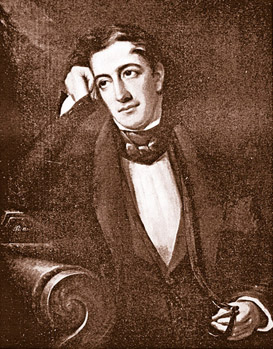
Lewis Levin
Former U.S. Representative · Pennsylvania District 1 · 1845–1851 · American
Lewis Levin represented Pennsylvania's District 1 in the United States House of Representatives (1845–1851) for the American party. The page below collects sourced biographical facts, term history, committee roles, and provenance for Levin.
Bioguide ID: L000262
Key facts
- Full name
- Lewis Levin
- State
- Pennsylvania
- District
- District 1
- Party
- American
- House service
- 1845–1851
- First House term
- 1845
- Status
- Left office
- Current term ends
- —
- Born
- 1808
- Bioguide ID
- L000262
- Committee assignments
- —
- Dataset version
- 1.20260606
Biographical narrative
1,018 words · sourced from the Wikipedia REST extract
Lewis Levin was an American politician and newspaper editor who served as a U.S. Representative for Pennsylvania's 1st congressional district from 1845 to 1851. A founding member of the American Party, Levin was known for his strong anti-Catholic sentiments and nativist ideology. He was the second person of Jewish descent to be elected to the United States Congress, following David Levy Yulee. Levin's political career was marked by his involvement in controversial social issues, particularly his opposition to Catholic political influence, which culminated in significant civil unrest during his time in office.
Early life and career
Lewis Levin was born on November 10, 1808, in Charleston, South Carolina, to Jewish parents who had emigrated from England. His early education took place at South Carolina College, which later became known as the University of South Carolina. However, Levin did not complete his degree. Following his time in college, he worked in a dry goods store in Columbia, South Carolina, before transitioning to a role as a schoolmaster in Cincinnati, Ohio. His teaching career was short-lived, as he briefly taught in Woodville, Mississippi, but left the area after sustaining injuries in a duel.
Levin's life took him through various locations, including Vicksburg, Mississippi; Nashville, Tennessee; and Baltimore, Maryland. During this period, he began to refer to himself as L.C. Levin, Esq., and attempted to practice law. However, there is limited information regarding his formal legal training or whether he successfully passed the bar examination.
By 1838, Levin had settled in Philadelphia, where he began to gain public attention through his lectures on temperance and the dangers of alcohol consumption. He founded and edited a publication titled the Temperance Advocate and Literary Repository, which focused on promoting temperance and critiquing the liquor industry. In 1842, he organized a large public event known as the "bonfire of booze," aimed at drawing attention to his campaign against taverns and advocating for local control over liquor licensing.
Levin's anti-alcohol activism served as a precursor to his later focus on anti-Catholic sentiments. As the editor of The Daily Sun, he became increasingly vocal against what he perceived as the growing political power of Catholics in America. His opposition was sparked by a ruling in 1843 that allowed Catholic children to be excused from Bible-reading classes in public schools, as the Protestant King James Version was being used. This ruling galvanized Levin and others to form a political movement that would eventually be known as the American Republican Party, later referred to as the Native American Party.
House tenure
In the wake of the political climate shaped by his activism, Levin ran for a seat in the U.S. House of Representatives and was elected in 1844. His campaign platform included proposals to extend the naturalization period for immigrants to twenty-one years, to restrict political office to native-born citizens, and to reject foreign influence in American institutions. Levin's election marked a significant moment in American political history, as he became the first Jewish member elected to the United States Congress.
During his time in Congress, Levin was re-elected in 1846 and 1848, serving a total of three terms. He held the position of chairman of the United States House Committee on Engraving during the Thirtieth Congress. His tenure in the House was characterized by his continued advocacy for the nativist agenda, which sought to limit the influence of immigrants, particularly Catholics, in American society.
Levin's political career was not without controversy. Following the violent Philadelphia nativist riots in 1844, which were partly incited by his rhetoric, he faced legal challenges. He was arrested alongside a colleague for inciting riots and treason, although the case did not proceed to trial. The riots resulted in significant destruction and loss of life, highlighting the extreme tensions present in society at the time.
After leaving Congress in 1851, Levin remained active in nativist politics, aligning himself with the Know-Nothing movement. He sought election to the U.S. Senate, which was then chosen by state legislatures rather than through popular vote. However, his political ambitions were marred by allegations of bribery involving members of the Pennsylvania Assembly, leading to a subpoena in 1855 as part of a state investigation.
Levin's influence extended beyond Pennsylvania, as he and other nativists played a role in shaping the outcome of the 1852 Presidential election, which favored Democrat Franklin Pierce over Whig candidate General Winfield Scott. The latter's family connections to Catholicism were leveraged against him by Levin and his allies. Despite his declining health, Levin remained an active figure in political rallies, speaking out against the emerging Republican Party and its nominee, John C. Frémont, in 1856.
Legislative focus and committees
Throughout his time in the House of Representatives, Levin's legislative focus was heavily influenced by his nativist beliefs and his opposition to Catholic influence in American politics. He was a prominent figure in the American Party, which sought to promote the interests of native-born Americans and limit the rights and privileges of immigrants, particularly those of Catholic faith. His advocacy for extending the naturalization period and restricting political office to native-born citizens reflected a broader nativist sentiment that characterized the political landscape of the time.
Levin's role as chairman of the United States House Committee on Engraving allowed him to influence legislative matters related to the production of currency and other official documents. However, his primary legacy remains tied to his involvement in the nativist movement and the social unrest that accompanied it. His speeches and public appearances often incited fear and hostility towards immigrant communities, particularly Irish Catholics, which contributed to the violent confrontations that marked his era.
The culmination of Levin's political career was marred by personal challenges, including a decline in his mental health. In the years following his departure from Congress, he faced significant difficulties, ultimately leading to his commitment to an asylum. Levin passed away on March 14, 1860, in Philadelphia, leaving behind a complex legacy intertwined with the nativist and anti-Catholic movements of the mid-19th century. His life and career reflect the tumultuous nature of American politics during a period of significant social change and conflict.
Notable legislation
Sponsored and co-sponsored legislation for Lewis Levin is pending operator curation. The biographical narrative above carries the same provenance trail until per-bill rows are written.
Sources
- [1]https://en.wikipedia.org/wiki/Lewis_Charles_LevinWikipedia · retrieved 2026-06-06
Notable quotes
Sourced quotes for Lewis Levin are pending operator curation. Narrative-scope provenance remains attached below.
Sources
- [1]https://en.wikipedia.org/wiki/Lewis_Charles_LevinWikipedia · retrieved 2026-06-06
Key positions
Curated policy positions for Lewis Levin are pending operator review. The biographical narrative above carries the same provenance trail until per-topic positions are written.
Sources
- [1]https://en.wikipedia.org/wiki/Lewis_Charles_LevinWikipedia · retrieved 2026-06-06
Terms served
- 1845–1847U.S. House · Term 1 · American
- 1847–1849U.S. House · Term 2 · American
- 1849–1851U.S. House · Term 3 · American
Sources & provenance
Every attributable claim above carries a per-section [N] marker that resolves to the corresponding URL below. Each entry records the upstream provider, the canonical URL, and the timestamp at which the source was retrieved by the ingest pipeline.
Key facts
- https://bioguide.congress.gov/search/bio/L000262bioguide · retrieved 2026-06-06
- https://www.govtrack.us/congress/members/406764govtrack · retrieved 2026-06-06
Biographical narrative
- https://en.wikipedia.org/wiki/Lewis_Charles_Levinwikipedia · retrieved 2026-06-06
Find your representative
Every U.S. state elects representatives by district. Browse Pennsylvania’s delegation, the full former-representative roster, or explore the role and term length.
Related on The Candidate
- Preceded by Lemuel PaynterEarlier holder of the Pennsylvania District 1 House seat · Democratic.Open
- Succeeded by Thomas FlorenceLater holder of the Pennsylvania District 1 House seat · Democratic.Open
- Adam SeybertFormer U.S. Representative · Pennsylvania District 1 · RepublicanOpen
- Benjamin SayFormer U.S. Representative · Pennsylvania District 1 · RepublicanOpen
- Chapman FreemanFormer U.S. Representative · Pennsylvania District 1 · RepublicanOpen
- Harry RansleyFormer U.S. Representative · Pennsylvania District 1 · RepublicanOpen