
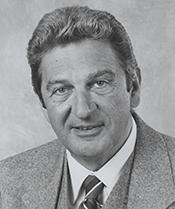
Historical · U.S. House · Pennsylvania · District 1
Thomas Foglietta
Former U.S. Representative · Pennsylvania District 1 · 1981–1997 · Democratic
Thomas Foglietta represented Pennsylvania's District 1 in the United States House of Representatives (1981–1997) for the Democratic party. The page below collects sourced biographical facts, term history, committee roles, and provenance for Foglietta.
Bioguide ID: F000235
Key facts
- Full name
- Thomas Foglietta
- State
- Pennsylvania
- District
- District 1
- Party
- Democratic
- House service
- 1981–1997
- First House term
- 1981
- Status
- Left office
- Current term ends
- —
- Born
- 1928
- Bioguide ID
- F000235
- Committee assignments
- —
- Dataset version
- 1.20260605
Biographical narrative
921 words · sourced from the Wikipedia REST extract
Thomas M. Foglietta was an American politician and diplomat who served as a U.S. Representative for Pennsylvania's 1st congressional district from 1981 until 1997. A member of the Democratic Party, Foglietta's congressional career was marked by his focus on foreign affairs and urban policy, as well as his commitment to preserving historical sites in Philadelphia. After leaving Congress, he was appointed as the United States Ambassador to Italy, where he served until 2001. Foglietta's life was characterized by his deep roots in Philadelphia and his dedication to public service, both locally and internationally.
Early life and career
Thomas Michael Foglietta was born on December 3, 1928, in South Philadelphia, specifically at the intersection of 7th and Clymer Streets. He grew up in a politically active family; his father, Michael Foglietta, was a Republican committeeman and later served as a clerk of quarter sessions and a member of the Philadelphia City Council. This early exposure to politics likely influenced Foglietta's own career path. He graduated from South Catholic High School and went on to earn a bachelor's degree from Saint Joseph's University in Philadelphia in 1949. Following his undergraduate studies, he attended Temple Law School, where he received his Juris Doctor in 1952.
After completing his education, Foglietta entered private legal practice. His political career began in 1955 when he successfully ran for a seat on the Philadelphia City Council, becoming the youngest individual ever elected to that body at the time. He served on the council for two decades, during which he developed a reputation as a dedicated public servant. In 1975, he ran for mayor of Philadelphia but finished third in the race. Following this defeat, Foglietta transitioned to a role as a regional director for the U.S. Department of Labor, further expanding his experience in public service.
House tenure
Foglietta's congressional career began in 1981 when he won election to represent Pennsylvania's 1st Congressional District. He entered the race as an independent candidate and defeated incumbent Congressman Michael "Ozzie" Myers, who had been implicated in the Abscam bribery scandal. After his election, Foglietta switched his party affiliation to Democrat, citing a disconnect with the progressive faction of the Republican Party, which he felt had diminished.
During his time in the House of Representatives, Foglietta focused on several key issues, particularly foreign affairs and urban development. He was an advocate for the preservation of the Philadelphia Navy Yard, which faced closure due to recommendations from the Base Realignment and Closure Commission. His efforts in this area were part of a broader commitment to supporting Philadelphia's economic and historical significance.
Foglietta's tenure was also marked by notable international experiences. In 1985, he accompanied South Korean dissident Kim Dae Jung back to South Korea, an event that became significant due to a violent altercation at Seoul Airport. This experience led to a lifelong friendship between Foglietta and Kim, who later became the President of South Korea. Foglietta's support for democracy in South Korea was recognized in 1999 when he received a human rights award from the South Korean government.
In Congress, Foglietta served on the House Appropriations Committee, where he worked diligently to secure federal funding for the restoration of various historic sites in Philadelphia, including Independence Hall and Washington Square. His commitment to urban policy was further exemplified by his role in founding the Congressional Urban Caucus, a legislative organization aimed at addressing urban issues and promoting policies beneficial to cities.
Foglietta's dedication to public safety was evident in a notable incident on election day in 1984 when he witnessed a purse-snatching incident involving an elderly woman. He intervened and successfully apprehended the suspect, demonstrating his commitment to community safety.
Legislative focus and committees
Throughout his nine terms in the House of Representatives, Foglietta's legislative focus encompassed a range of issues, with a strong emphasis on urban policy, foreign affairs, and historical preservation. His work on the House Appropriations Committee allowed him to influence funding decisions that directly benefited his constituents and the city of Philadelphia. He was particularly known for advocating for federal resources to restore and maintain significant historical landmarks, which he believed were vital to the cultural heritage of the city.
Foglietta's involvement in foreign affairs was not limited to his relationship with South Korea. He was engaged in various international issues, reflecting a broader commitment to global diplomacy. His experiences and connections in international politics would later serve him well during his tenure as Ambassador to Italy.
In addition to his legislative responsibilities, Foglietta was active in promoting urban policy through the Congressional Urban Caucus. This organization aimed to address the unique challenges faced by urban areas, advocating for policies that would enhance economic development, improve infrastructure, and ensure social equity in cities across the United States. His leadership in this caucus underscored his belief in the importance of urban issues and the need for a dedicated legislative focus on these matters.
Foglietta's congressional career concluded in 1997 when he resigned from the House to accept an appointment as the United States Ambassador to Italy, a position he held until 2001. His transition from Congress to diplomacy marked a continuation of his public service, allowing him to represent U.S. interests abroad and strengthen ties between the United States and Italy.
Thomas M. Foglietta passed away on November 13, 2004, at the age of 75, following complications from shoulder surgery. His legacy includes a significant impact on both local and international stages, reflecting a lifelong commitment to public service and the betterment of his community.
Notable legislation
Sponsored and co-sponsored legislation for Thomas Foglietta is pending operator curation. The biographical narrative above carries the same provenance trail until per-bill rows are written.
Sources
- [1]https://en.wikipedia.org/wiki/Thomas_M._FogliettaWikipedia · retrieved 2026-06-05
Notable quotes
Sourced quotes for Thomas Foglietta are pending operator curation. Narrative-scope provenance remains attached below.
Sources
- [1]https://en.wikipedia.org/wiki/Thomas_M._FogliettaWikipedia · retrieved 2026-06-05
Key positions
Curated policy positions for Thomas Foglietta are pending operator review. The biographical narrative above carries the same provenance trail until per-topic positions are written.
Sources
- [1]https://en.wikipedia.org/wiki/Thomas_M._FogliettaWikipedia · retrieved 2026-06-05
Terms served
- 1981–1983U.S. House · Term 1 · Independent
- 1983–1985U.S. House · Term 2 · Democratic
- 1985–1987U.S. House · Term 3 · Democratic
- 1987–1989U.S. House · Term 4 · Democratic
- 1989–1991U.S. House · Term 5 · Democratic
- 1991–1993U.S. House · Term 6 · Democratic
- 1993–1995U.S. House · Term 7 · Democratic
- 1995–1997U.S. House · Term 8 · Democratic
- 1997–1997U.S. House · Term 9 · Democratic
Sources & provenance
Every attributable claim above carries a per-section [N] marker that resolves to the corresponding URL below. Each entry records the upstream provider, the canonical URL, and the timestamp at which the source was retrieved by the ingest pipeline.
Key facts
- https://bioguide.congress.gov/search/bio/F000235bioguide · retrieved 2026-06-05
- https://www.govtrack.us/congress/members/404190govtrack · retrieved 2026-06-05
Biographical narrative
- https://en.wikipedia.org/wiki/Thomas_M._Fogliettawikipedia · retrieved 2026-06-05
Find your representative
Every U.S. state elects representatives by district. Browse Pennsylvania’s delegation, the full former-representative roster, or explore the role and term length.
Related on The Candidate
- Preceded by Ozzie MyersEarlier holder of the Pennsylvania District 1 House seat · Democratic.Open
- Succeeded by Robert BradyLater holder of the Pennsylvania District 1 House seat · Democratic.Open
- Adam SeybertFormer U.S. Representative · Pennsylvania District 1 · RepublicanOpen
- Benjamin SayFormer U.S. Representative · Pennsylvania District 1 · RepublicanOpen
- Chapman FreemanFormer U.S. Representative · Pennsylvania District 1 · RepublicanOpen
- Harry RansleyFormer U.S. Representative · Pennsylvania District 1 · RepublicanOpen