
Historical · U.S. House · Pennsylvania · District 1
Thomas Forrest
Former U.S. Representative · Pennsylvania District 1 · 1819–1823 · Federalist
Thomas Forrest represented Pennsylvania's District 1 in the United States House of Representatives (1819–1823) for the Federalist party. The page below collects sourced biographical facts, term history, committee roles, and provenance for Forrest.
Bioguide ID: F000281
Key facts
- Full name
- Thomas Forrest
- State
- Pennsylvania
- District
- District 1
- Party
- Federalist
- House service
- 1819–1823
- First House term
- 1819
- Status
- Left office
- Current term ends
- —
- Born
- —
- Bioguide ID
- F000281
- Committee assignments
- —
- Dataset version
- 1.20260606
Biographical narrative
965 words · sourced from the Wikipedia REST extract
Thomas Forrest was an American politician who served as a U.S. Representative for Pennsylvania's 1st congressional district during the early 19th century. A member of the Federalist Party, he held office in the 16th and 17th Congresses, contributing to the legislative process during a formative period in American history. In addition to his political career, Forrest was a veteran of the American Revolutionary War, where he served with distinction as an artillery officer. His legacy includes being the first chairman of the House Committee on Agriculture, a role that positioned him at the forefront of agricultural policy in the nascent United States.
Early life and career
Thomas Forrest was born on December 7, 1747, in Philadelphia, which was then part of the Province of Pennsylvania. Growing up in a city that played a pivotal role in the early development of the United States, Forrest was likely influenced by the revolutionary ideas circulating in the colonies during his formative years. His early life and education in Philadelphia would have exposed him to the political and social currents of the time, shaping his future endeavors.
During the American Revolutionary War, Forrest joined the Continental Army, where he was commissioned as a captain in Colonel Thomas Proctor's Pennsylvania Artillery Battalion on October 5, 1776. His military service began shortly after the war's outbreak, and he quickly became involved in significant battles that would define the conflict. Notably, he led a company of artillery at the Battle of Trenton on December 26, 1776. This battle was a crucial turning point in the war, and Forrest's leadership of a 52-man company, equipped with two brass six-pound cannons, contributed to the American victory. His unit's strategic position on high ground allowed them to dominate the battlefield, showcasing his capabilities as a military leader.
Forrest's military career progressed as he was promoted to major on March 3, 1777, and later to lieutenant colonel on December 2, 1778. His rise through the ranks reflected both his dedication and effectiveness as an officer. After several years of service, he resigned from the army on October 7, 1781, as the war was nearing its conclusion. The experiences he gained during the war would later inform his political career and his understanding of the needs of his constituents.
House tenure
Following his military service, Thomas Forrest transitioned into a political career, aligning himself with the Federalist Party, which was one of the first political parties in the United States. The Federalists were known for their support of a strong central government and their advocacy for policies that promoted commerce and industry. Forrest was elected to the 16th Congress, which convened in 1819, marking the beginning of his tenure in the House of Representatives.
During his time in Congress, Forrest was instrumental in the establishment of the House Committee on Agriculture, which was created on May 3, 1820. As the first chairman of this committee, he played a significant role in shaping agricultural policy during a time when agriculture was a critical component of the American economy. The committee's formation underscored the importance of agriculture in the national discourse and reflected the growing recognition of the need for legislative oversight in this sector. Under Forrest's leadership, the committee was composed of seven representatives, and it was tasked with addressing issues related to farming, land use, and agricultural practices, which were vital to the livelihoods of many Americans.
Forrest was re-elected to the 17th Congress, filling a vacancy caused by the resignation of fellow Federalist William Milnor. His continued service in Congress demonstrated his commitment to representing his constituents and addressing the pressing issues of the day. However, his political career faced challenges, and he was ultimately unsuccessful in his bid for re-election in 1822. This defeat marked the end of his congressional tenure, which concluded on March 3, 1823.
Legislative focus and committees
Throughout his time in the House of Representatives, Thomas Forrest's legislative focus was closely aligned with the interests of his constituents and the broader agricultural community. As the first chairman of the House Committee on Agriculture, he was at the forefront of discussions regarding agricultural policy, which was essential for the economic development of the nation. The committee's work involved examining issues related to farming practices, land management, and the promotion of agricultural innovation, all of which were crucial for sustaining the growing population and economy of the United States.
Forrest's leadership in the committee allowed him to advocate for policies that would benefit farmers and agricultural workers, who were integral to the American economy. The establishment of the committee itself was a significant step in recognizing the importance of agriculture as a distinct area of legislative concern, and Forrest's role in its formation highlighted his commitment to addressing the needs of this sector.
In addition to his work on the Agriculture Committee, Forrest's broader legislative contributions would have included participation in debates and discussions on various issues facing the nation during his time in office. The early 19th century was marked by significant changes, including westward expansion, economic development, and the evolving role of the federal government. As a member of the Federalist Party, Forrest would have been involved in shaping policies that aligned with the party's vision for a strong and prosperous nation.
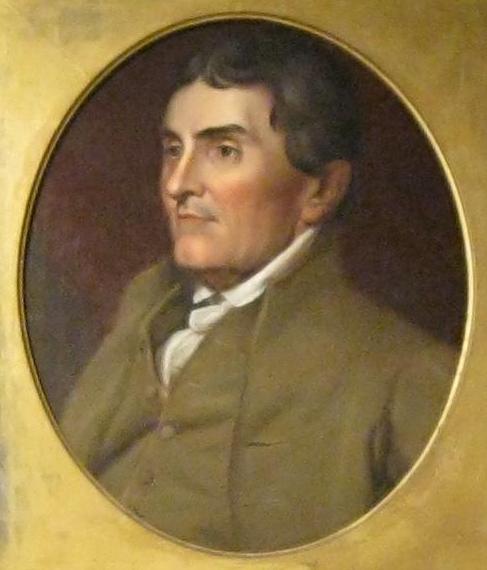
After leaving Congress, Thomas Forrest continued to reside in Pennsylvania, where he remained engaged with his community until his death on March 20, 1825, in Germantown. His contributions to both military and political spheres left a lasting impact, and his portrait by Charles Willson Peale is displayed in Independence National Historical Park in Philadelphia, serving as a reminder of his service to the nation. Forrest's life and career reflect the complexities of early American politics and the vital role of agriculture in shaping the country's development.
Notable legislation
Sponsored and co-sponsored legislation for Thomas Forrest is pending operator curation. The biographical narrative above carries the same provenance trail until per-bill rows are written.
Sources
- [1]https://en.wikipedia.org/wiki/Thomas_Forrest_(politician)Wikipedia · retrieved 2026-06-06
Notable quotes
Sourced quotes for Thomas Forrest are pending operator curation. Narrative-scope provenance remains attached below.
Sources
- [1]https://en.wikipedia.org/wiki/Thomas_Forrest_(politician)Wikipedia · retrieved 2026-06-06
Key positions
Curated policy positions for Thomas Forrest are pending operator review. The biographical narrative above carries the same provenance trail until per-topic positions are written.
Sources
- [1]https://en.wikipedia.org/wiki/Thomas_Forrest_(politician)Wikipedia · retrieved 2026-06-06
Terms served
- 1819–1821U.S. House · Term 1 · Federalist
- 1821–1823U.S. House · Term 2 · Federalist
Sources & provenance
Every attributable claim above carries a per-section [N] marker that resolves to the corresponding URL below. Each entry records the upstream provider, the canonical URL, and the timestamp at which the source was retrieved by the ingest pipeline.
Key facts
- https://bioguide.congress.gov/search/bio/F000281bioguide · retrieved 2026-06-06
- https://www.govtrack.us/congress/members/404231govtrack · retrieved 2026-06-06
Biographical narrative
- https://en.wikipedia.org/wiki/Thomas_Forrest_(politician)wikipedia · retrieved 2026-06-06
Find your representative
Every U.S. state elects representatives by district. Browse Pennsylvania’s delegation, the full former-representative roster, or explore the role and term length.
Related on The Candidate
- Preceded by Adam SeybertEarlier holder of the Pennsylvania District 1 House seat · Republican.Open
- Succeeded by Samuel BreckLater holder of the Pennsylvania District 1 House seat.Open
- Benjamin SayFormer U.S. Representative · Pennsylvania District 1 · RepublicanOpen
- Chapman FreemanFormer U.S. Representative · Pennsylvania District 1 · RepublicanOpen
- Harry RansleyFormer U.S. Representative · Pennsylvania District 1 · RepublicanOpen
- Representatives from PennsylvaniaEvery former U.S. Representative who has represented Pennsylvania.Open