
Historical · U.S. House · Pennsylvania · District 10
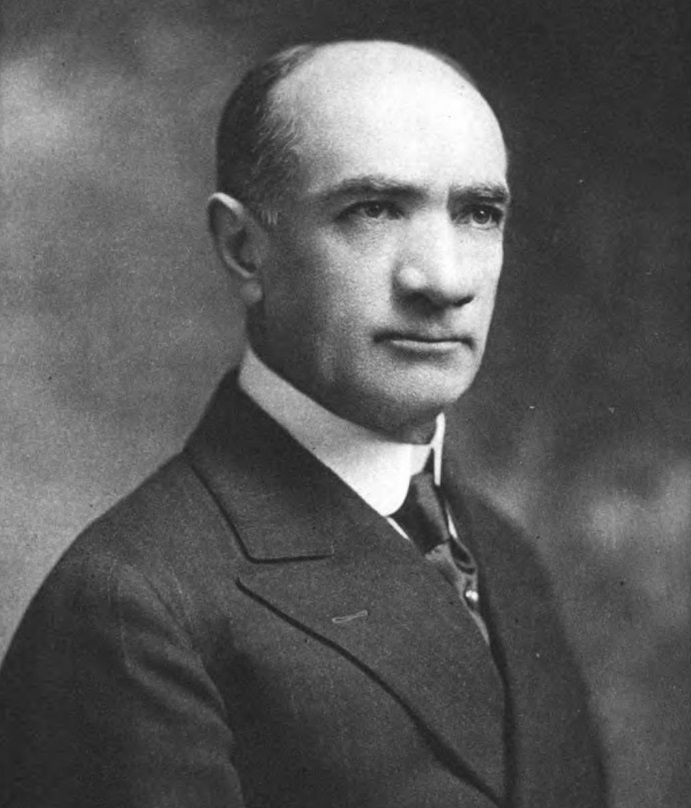
Charles Connell
Former U.S. Representative · Pennsylvania District 10 · 1921–1923 · Republican
Charles Connell represented Pennsylvania's District 10 in the United States House of Representatives (1921–1923) for the Republican party. The page below collects sourced biographical facts, term history, committee roles, and provenance for Connell.
Bioguide ID: C000685
Key facts
- Full name
- Charles Connell
- State
- Pennsylvania
- District
- District 10
- Party
- Republican
- House service
- 1921–1923
- First House term
- 1921
- Status
- Left office
- Current term ends
- —
- Born
- 1864
- Bioguide ID
- C000685
- Committee assignments
- —
- Dataset version
- 1.20260606
Biographical narrative
815 words · sourced from the Wikipedia REST extract
Charles Connell was a Republican politician who served as a U.S. Representative for Pennsylvania's 10th congressional district. His tenure in the House of Representatives began in 1921 and concluded with his death in 1922. Connell's background in business and banking, along with his familial connections to politics, shaped his career and contributions to his community and the nation.
Early life and career
Charles Robert Connell was born on September 22, 1864, in Scranton, Pennsylvania. He was the son of William Connell, who also served as a U.S. congressman, which likely influenced Connell's eventual political aspirations. He received his early education in public schools before graduating from Williston Academy in Easthampton, Massachusetts, in 1884. This educational foundation provided him with the skills and knowledge that would later support his various business endeavors.
Following his education, Connell entered the mercantile sector, working alongside his father in business. His career in commerce expanded as he became involved in banking, where he held several significant positions. He served as the president of Lackawanna Mills, a role that underscored his leadership capabilities in the local economy. Additionally, Connell was the president and treasurer of the Scranton Button Company, a position he maintained from 1888 until his death. His involvement in the banking sector included serving as vice president and director of the Third National Bank and as a director of the South Scranton Bank. Connell's business acumen extended to other industries as well, as he held directorial roles in the Cherry River Boom and Lumber Company, the Richwood Store Company, and the Cherry River Paper Company. His diverse business interests reflect a commitment to the economic development of his community.
Connell was also active in local civic matters, serving on the board of trustees of Forest Hill Cemetery, indicating his engagement with the community beyond his business pursuits. His professional life was complemented by his personal life; he married Lizabeth R. Shafer on September 26, 1889, and the couple had two children, Gladys and Bernard L. Connell's family life and business success contributed to his standing in Scranton, where he would later enter the political arena.
House tenure
Connell's political career began when he was elected as a Republican to the 67th United States Congress in 1921. His election marked the beginning of his service representing Pennsylvania's 10th congressional district. During his time in office, Connell was part of a legislative body that faced numerous challenges and changes, reflecting the broader social and economic dynamics of the early 20th century.
Connell's congressional term was relatively brief, as he served until his death on September 26, 1922. His time in office was characterized by his commitment to the interests of his constituents and his engagement with national issues. Although specific details regarding his legislative initiatives and voting record are not provided, Connell's background in business likely influenced his perspectives on economic policies and local development initiatives.
His tenure concluded with his passing, which left a vacancy in the House of Representatives. Connell's death occurred at his home on Vine Street in Scranton, just days after his 58th birthday. Following his death, he was interred in Forest Hill Cemetery, a site he had been associated with during his lifetime.
Legislative focus and committees
While specific details regarding Connell's legislative focus and committee assignments during his time in Congress are not documented, it can be inferred that his extensive background in business and banking likely informed his approach to various legislative issues. As a member of the Republican Party during a time of significant economic change in the United States, Connell may have been involved in discussions related to economic policy, business regulation, and local infrastructure development.
The early 1920s were a period marked by post-World War I recovery, and the legislative environment was influenced by the need to address economic challenges and support growth. Connell's experience in the private sector would have provided him with insights into the needs of businesses and the importance of fostering a conducive environment for economic activity. His involvement in banking and commerce may have positioned him to advocate for policies that supported financial stability and growth.
Connell's commitment to his constituents would have also shaped his legislative priorities. As a representative of Pennsylvania's 10th district, he would have been expected to address the specific needs and concerns of his local community. This could have included matters related to labor, industry, and infrastructure, reflecting the interests of his constituents in Scranton and the surrounding areas.
In summary, Charles Connell's life and career were marked by a blend of business acumen and public service. His tenure in the U.S. House of Representatives, though brief, was a continuation of his family's legacy in politics and his commitment to his community. Connell's contributions to both the business world and the political landscape of Pennsylvania underscore the interconnectedness of these spheres during a transformative period in American history.
Notable legislation
Sponsored and co-sponsored legislation for Charles Connell is pending operator curation. The biographical narrative above carries the same provenance trail until per-bill rows are written.
Sources
- [1]https://en.wikipedia.org/wiki/Charles_R._ConnellWikipedia · retrieved 2026-06-06
Notable quotes
Sourced quotes for Charles Connell are pending operator curation. Narrative-scope provenance remains attached below.
Sources
- [1]https://en.wikipedia.org/wiki/Charles_R._ConnellWikipedia · retrieved 2026-06-06
Key positions
Curated policy positions for Charles Connell are pending operator review. The biographical narrative above carries the same provenance trail until per-topic positions are written.
Sources
- [1]https://en.wikipedia.org/wiki/Charles_R._ConnellWikipedia · retrieved 2026-06-06
Terms served
- 1921–1923U.S. House · Term 1 · Republican
Sources & provenance
Every attributable claim above carries a per-section [N] marker that resolves to the corresponding URL below. Each entry records the upstream provider, the canonical URL, and the timestamp at which the source was retrieved by the ingest pipeline.
Key facts
- https://bioguide.congress.gov/search/bio/C000685bioguide · retrieved 2026-06-06
- https://www.govtrack.us/congress/members/402811govtrack · retrieved 2026-06-06
Biographical narrative
- https://en.wikipedia.org/wiki/Charles_R._Connellwikipedia · retrieved 2026-06-06
Find your representative
Every U.S. state elects representatives by district. Browse Pennsylvania’s delegation, the full former-representative roster, or explore the role and term length.
Related on The Candidate
- Preceded by John FarrEarlier holder of the Pennsylvania District 10 House seat · Republican.Open
- Succeeded by John MurphyLater holder of the Pennsylvania District 10 House seat · Democratic.Open
- Adam SeybertFormer U.S. Representative · Pennsylvania District 1 · RepublicanOpen
- Benjamin SayFormer U.S. Representative · Pennsylvania District 1 · RepublicanOpen
- Chapman FreemanFormer U.S. Representative · Pennsylvania District 1 · RepublicanOpen
- Harry RansleyFormer U.S. Representative · Pennsylvania District 1 · RepublicanOpen