
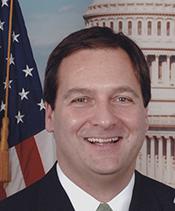
Historical · U.S. House · Pennsylvania · District 10
Christopher Carney
Former U.S. Representative · Pennsylvania District 10 · 2007–2011 · Democratic
Christopher Carney represented Pennsylvania's District 10 in the United States House of Representatives (2007–2011) for the Democratic party. The page below collects sourced biographical facts, term history, committee roles, and provenance for Carney.
Bioguide ID: C001065
Key facts
- Full name
- Christopher Carney
- State
- Pennsylvania
- District
- District 10
- Party
- Democratic
- House service
- 2007–2011
- First House term
- 2007
- Status
- Left office
- Current term ends
- —
- Born
- 1959
- Bioguide ID
- C001065
- Committee assignments
- —
- Dataset version
- 1.20260605
Biographical narrative
918 words · sourced from the Wikipedia REST extract
Christopher P. Carney is a former U.S. Representative who served Pennsylvania's 10th congressional district from 2007 to 2011. A member of the Democratic Party, Carney's career has spanned academia, military service, and public office. He has held various roles, including an associate professor of political science and a counterterrorism analyst, and has been involved in military operations as a commander in the United States Naval Reserve.
Early life and career
Christopher Paul Carney was born on March 2, 1959, in Coggon, Iowa. He pursued higher education, earning a bachelor's degree from Cornell College located in Mount Vernon, Iowa. He continued his studies by obtaining a master's degree from the University of Wyoming and later completed a Ph.D. in political science at the University of Nebraska–Lincoln. Since 1992, Carney has been an associate professor of political science at Penn State Worthington Scranton, where he has contributed to the academic community through teaching and research.
In addition to his academic career, Carney has held significant positions in national security and intelligence. From 2002 to 2004, he served as a counterterrorism analyst for the Bush administration, working under Douglas Feith in the Office of Special Plans and at the Defense Intelligence Agency. His responsibilities included researching connections between al Qaeda and Saddam Hussein, highlighting his involvement in national security matters during a critical period in U.S. history.
Carney's military career began when he was direct commissioned as an Ensign in the United States Naval Reserve in 1995. He rose through the ranks and became a commander, serving multiple tours overseas and being activated for operations Enduring Freedom and Noble Eagle. His military service included a role as Senior Terrorism and Intelligence Advisor at the Pentagon. He received several awards for his service, including the Defense Meritorious Service Medal and multiple Joint Service Achievement Medals.
In September 2007, Carney went on active duty with the Navy for two weeks as a Lieutenant Commander in the reserve, during which he worked on the "Predator" project in Norfolk, Virginia. He was promoted to commander in July 2008, making him one of only two members of the House of Representatives to serve in the military reserve at that time. His military experience also included serving as an interrogator at Guantanamo, a detail he disclosed during his unsuccessful re-election campaign in 2010.
House tenure
Carney's political career in the U.S. House of Representatives began when he was elected to represent Pennsylvania's 10th congressional district in 2006. His election was notable as the district had been held by Republicans since 1961. Carney's campaign capitalized on the controversies surrounding the incumbent Republican representative, Don Sherwood, which included allegations of personal misconduct. Carney's campaign received support from various labor unions and endorsements from prominent political figures, helping him secure a victory.
Carney was sworn into office in January 2007, and during his first term, he was appointed to several key committees. He served on the Committee on Homeland Security, where he was named chairman of the Subcommittee on Management, Investigations, and Oversight, a significant achievement for a freshman congressman. Additionally, he was a member of the Committee on Transportation and Infrastructure, contributing to discussions on highways, transit, and economic development.
Throughout his tenure, Carney focused on various issues, including national security, healthcare, and education. He was active in legislative discussions and participated in votes on significant bills, reflecting his positions on key policy matters.
Legislative focus and committees
During his time in Congress, Carney's legislative focus encompassed several critical areas. He was particularly vocal about Social Security, opposing proposals to privatize the program while expressing openness to the idea of adding private accounts alongside traditional benefits. His stance indicated a commitment to preserving the integrity of Social Security while exploring potential reforms.
Carney was also an advocate for federal investment in stem cell research and supported initiatives aimed at achieving universal healthcare. His legislative record includes voting for the Affordable Health Care for America Act and the Patient Protection and Affordable Care Act, demonstrating his alignment with broader Democratic efforts to expand healthcare access.
In education, Carney voted in favor of the 21st Century Green Schools Act, which aimed to provide grants for the modernization and renovation of public schools. This legislation was part of his broader commitment to improving educational facilities and ensuring that they meet contemporary standards.
Carney's approach to foreign policy, particularly regarding the Iraq War, was a significant aspect of his political identity. He campaigned on the need for a change in direction in Iraq policy, often criticizing the Bush administration's approach. While he voted to reauthorize funding for military action in Iraq, he also opposed measures that would have mandated a rapid withdrawal of U.S. personnel, advocating instead for a focus on achieving success in the ongoing conflict.
His legislative actions during the 2008 financial crisis included voting against the Emergency Economic Stabilization Act while supporting the American Recovery and Reinvestment Act of 2009. This reflected his perspective on economic recovery and the role of government intervention during times of financial distress.
Carney's tenure in the House of Representatives concluded on January 3, 2011, after he was unsuccessful in his re-election bid. His time in office was marked by a commitment to various policy issues, and he left a legacy shaped by his military service, academic background, and political engagement. Following his congressional career, Carney continued to contribute to national security discussions and policy development in various capacities, including serving as a senior policy advisor at Nossaman LLP in Washington, D.C.
Notable legislation
Sponsored and co-sponsored legislation for Christopher Carney is pending operator curation. The biographical narrative above carries the same provenance trail until per-bill rows are written.
Sources
- [1]https://en.wikipedia.org/wiki/Chris_CarneyWikipedia · retrieved 2026-06-05
Notable quotes
Sourced quotes for Christopher Carney are pending operator curation. Narrative-scope provenance remains attached below.
Sources
- [1]https://en.wikipedia.org/wiki/Chris_CarneyWikipedia · retrieved 2026-06-05
Key positions
Curated policy positions for Christopher Carney are pending operator review. The biographical narrative above carries the same provenance trail until per-topic positions are written.
Sources
- [1]https://en.wikipedia.org/wiki/Chris_CarneyWikipedia · retrieved 2026-06-05
Terms served
- 2007–2009U.S. House · Term 1 · Democratic
- 2009–2011U.S. House · Term 2 · Democratic
Sources & provenance
Every attributable claim above carries a per-section [N] marker that resolves to the corresponding URL below. Each entry records the upstream provider, the canonical URL, and the timestamp at which the source was retrieved by the ingest pipeline.
Key facts
- https://bioguide.congress.gov/search/bio/C001065bioguide · retrieved 2026-06-05
- http://carney.house.govhouse.gov · retrieved 2026-06-05
Biographical narrative
- https://en.wikipedia.org/wiki/Chris_Carneywikipedia · retrieved 2026-06-05
Find your representative
Every U.S. state elects representatives by district. Browse Pennsylvania’s delegation, the full former-representative roster, or explore the role and term length.
Related on The Candidate
- Preceded by Don SherwoodEarlier holder of the Pennsylvania District 10 House seat · Republican.Open
- Adam SeybertFormer U.S. Representative · Pennsylvania District 1 · RepublicanOpen
- Benjamin SayFormer U.S. Representative · Pennsylvania District 1 · RepublicanOpen
- Chapman FreemanFormer U.S. Representative · Pennsylvania District 1 · RepublicanOpen
- Harry RansleyFormer U.S. Representative · Pennsylvania District 1 · RepublicanOpen
- Democratic PartyFederal candidates and office holders on the Democratic line.Open