
Historical · U.S. House · Pennsylvania · District 10
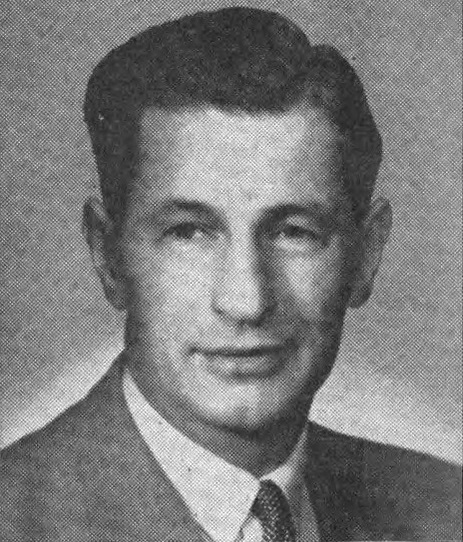
Stanley Prokop
Former U.S. Representative · Pennsylvania District 10 · 1959–1961 · Democratic
Stanley Prokop represented Pennsylvania's District 10 in the United States House of Representatives (1959–1961) for the Democratic party. The page below collects sourced biographical facts, term history, committee roles, and provenance for Prokop.
Bioguide ID: P000549
Key facts
- Full name
- Stanley Prokop
- State
- Pennsylvania
- District
- District 10
- Party
- Democratic
- House service
- 1959–1961
- First House term
- 1959
- Status
- Left office
- Current term ends
- —
- Born
- 1909
- Bioguide ID
- P000549
- Committee assignments
- —
- Dataset version
- 1.20260605
Biographical narrative
995 words · sourced from the Wikipedia REST extract
Stanley Prokop was a Democratic politician who served as a U.S. Representative for Pennsylvania's 10th congressional district from 1959 to 1961. His political career was marked by a brief tenure in Congress, where he succeeded in unseating an incumbent Republican. Following his time in the House of Representatives, Prokop dedicated himself to public service in various capacities, particularly focusing on veterans' affairs. His life spanned significant historical events, including World War II, which shaped his experiences and later influenced his commitment to serving his community.
Early life and career
Stanley Prokop was born on July 29, 1909, in Throop, Pennsylvania, a small town located in Lackawanna County. Growing up in this region, Prokop was exposed to the challenges and opportunities of working-class life, which would later inform his political views and priorities. He pursued higher education at Villanova University in Philadelphia, where he likely developed the foundational skills and knowledge that would serve him in his future endeavors.
With the onset of World War II, Prokop enlisted in the United States Army, beginning his military service as a private. He was assigned to the 30th Infantry Division, a unit that played a significant role in various campaigns during the war. Through his dedication and leadership abilities, he rose to the rank of captain, demonstrating both his commitment to service and his capacity for leadership in challenging circumstances. The experiences he gained during the war not only shaped his character but also instilled in him a deep sense of duty toward his fellow veterans and the country.
After the war, Prokop returned to civilian life and became actively involved in his local community. He served on the North Pocono Joint Board of Education for a decade, contributing to the educational landscape of the area. This role allowed him to engage with local issues and understand the needs of his constituents, which would later prove beneficial in his political career. His involvement in education reflected his belief in the importance of community service and the development of future generations.
In 1958, Prokop decided to take his commitment to public service a step further by entering the political arena. He ran for the United States Congress, challenging the incumbent Republican Congressman Joseph L. Carrigg. Prokop's campaign was successful, and he was elected to represent Pennsylvania's 10th congressional district, marking the beginning of his tenure in the House of Representatives.
House tenure
Stanley Prokop's congressional career began in 1959 when he took office as a U.S. Representative. His election was notable as it represented a shift in political power within the district, as he unseated an incumbent Republican. During his time in Congress, Prokop was part of a legislative body that was grappling with various national issues, including civil rights, economic policies, and the ongoing Cold War.
As a member of the Democratic Party, Prokop aligned himself with the broader goals of his party during this era, which included advocating for social justice and economic opportunity. Although specific details of his legislative activities and votes are not documented in the provided references, it can be inferred that he was involved in the discussions and decisions that characterized the political landscape of the late 1950s.
Prokop's tenure in the House was relatively brief, as he served only one term. In 1960, he faced re-election against William Scranton, a moderate Republican who would later become the governor of Pennsylvania. Prokop was ultimately defeated in this election, marking the end of his time in Congress. His loss reflected the shifting political dynamics of the period, as well as the challenges faced by incumbents in maintaining their positions amidst changing voter sentiments.
Legislative focus and committees
During his time in the House of Representatives, Stanley Prokop's legislative focus and committee assignments are not explicitly detailed in the available references. However, given his background and experiences, it is reasonable to suggest that he may have had an interest in issues related to education, veterans' affairs, and community development. His prior service on the North Pocono Joint Board of Education likely provided him with insights into educational policies and the needs of local schools, which could have influenced his legislative priorities.
Following his defeat in the 1960 election, Prokop continued to serve his community in a different capacity. He was appointed as the director of Veterans' Affairs for Lackawanna County, a position he held for fourteen years. This role allowed him to advocate for the rights and needs of veterans, drawing on his own experiences as a former service member. His commitment to veterans' issues was likely informed by his military service during World War II, and he would have been well-positioned to address the challenges faced by veterans returning to civilian life.
Prokop's work in veterans' affairs was significant, as it underscored his dedication to public service and his desire to support those who had served in the military. His tenure in this role allowed him to make a meaningful impact on the lives of veterans and their families, providing them with the resources and assistance they needed to navigate the complexities of post-war life.
In his later years, Prokop moved to Lake Ariel, Pennsylvania, where he continued to reside until his death on November 11, 1977. His passing on Veterans Day is a poignant reminder of his lifelong commitment to serving others, particularly those who had served in the armed forces. Prokop was interred at St. Catherine Cemetery in Moscow, Pennsylvania, where he rests alongside the community he dedicated much of his life to serving.
In summary, Stanley Prokop's life and career were marked by a commitment to public service, shaped by his experiences as a soldier and educator. His brief tenure in the U.S. House of Representatives and subsequent work in veterans' affairs reflect his dedication to his constituents and the broader community. Through his various roles, Prokop left a lasting impact on the lives of those he served, embodying the values of service and leadership throughout his life.
Notable legislation
Sponsored and co-sponsored legislation for Stanley Prokop is pending operator curation. The biographical narrative above carries the same provenance trail until per-bill rows are written.
Sources
- [1]https://en.wikipedia.org/wiki/Stanley_A._ProkopWikipedia · retrieved 2026-06-05
Notable quotes
Sourced quotes for Stanley Prokop are pending operator curation. Narrative-scope provenance remains attached below.
Sources
- [1]https://en.wikipedia.org/wiki/Stanley_A._ProkopWikipedia · retrieved 2026-06-05
Key positions
Curated policy positions for Stanley Prokop are pending operator review. The biographical narrative above carries the same provenance trail until per-topic positions are written.
Sources
- [1]https://en.wikipedia.org/wiki/Stanley_A._ProkopWikipedia · retrieved 2026-06-05
Terms served
- 1959–1961U.S. House · Term 1 · Democratic
Sources & provenance
Every attributable claim above carries a per-section [N] marker that resolves to the corresponding URL below. Each entry records the upstream provider, the canonical URL, and the timestamp at which the source was retrieved by the ingest pipeline.
Key facts
- https://bioguide.congress.gov/search/bio/P000549bioguide · retrieved 2026-06-05
- https://www.govtrack.us/congress/members/408933govtrack · retrieved 2026-06-05
Biographical narrative
- https://en.wikipedia.org/wiki/Stanley_A._Prokopwikipedia · retrieved 2026-06-05
Find your representative
Every U.S. state elects representatives by district. Browse Pennsylvania’s delegation, the full former-representative roster, or explore the role and term length.
Related on The Candidate
- Preceded by Joseph CarriggEarlier holder of the Pennsylvania District 10 House seat · Republican.Open
- Succeeded by William ScrantonLater holder of the Pennsylvania District 10 House seat · Republican.Open
- Adam SeybertFormer U.S. Representative · Pennsylvania District 1 · RepublicanOpen
- Benjamin SayFormer U.S. Representative · Pennsylvania District 1 · RepublicanOpen
- Chapman FreemanFormer U.S. Representative · Pennsylvania District 1 · RepublicanOpen
- Harry RansleyFormer U.S. Representative · Pennsylvania District 1 · RepublicanOpen