
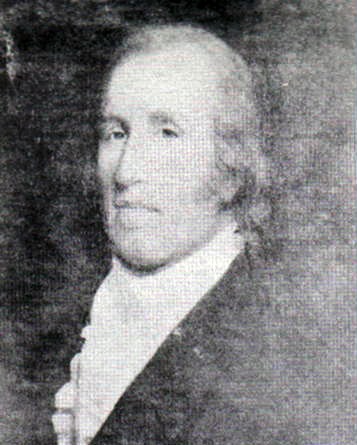
Historical · U.S. House · Pennsylvania · District 10
William Clark
Former U.S. Representative · Pennsylvania District 10 · 1833–1837 · Anti Masonic
William Clark represented Pennsylvania's District 10 in the United States House of Representatives (1833–1837) for the Anti Masonic party. The page below collects sourced biographical facts, term history, committee roles, and provenance for Clark.
Bioguide ID: C000453
Key facts
- Full name
- William Clark
- State
- Pennsylvania
- District
- District 10
- Party
- Anti Masonic
- House service
- 1833–1837
- First House term
- 1833
- Status
- Left office
- Current term ends
- —
- Born
- 1774
- Bioguide ID
- C000453
- Committee assignments
- —
- Dataset version
- 1.20260606
Biographical narrative
901 words · sourced from the Wikipedia REST extract
William Clark was a prominent figure in early 19th-century American politics, serving as a U.S. Representative for Pennsylvania's 10th congressional district. A member of the Anti-Masonic Party, he played a role in the political landscape of his time during two terms in the House of Representatives. His career spanned various public service roles, including significant positions in state government, and he was involved in agricultural pursuits following his congressional tenure. Clark's life and career reflect the complexities of early American governance and the shifting political ideologies of the era.
Early life and career
William Clark was born on February 18, 1774, in Pennsylvania. His early life is marked by the agricultural background typical of many individuals in the region during that period. As a farmer, he would have been familiar with the challenges and opportunities of rural life in Pennsylvania, which was an important agricultural state in the early United States. The skills and values he developed during this time likely influenced his later political career.
Clark's public service began in earnest when he took on roles within the Pennsylvania state government. He served as the secretary of the Pennsylvania land office from 1818 to 1821, a position that involved overseeing land transactions and managing state land resources. This role was significant as it contributed to the development and settlement of Pennsylvania, particularly during a time when land ownership was a critical factor in economic and social mobility.
Following his tenure as secretary, Clark was appointed as the State Treasurer of Pennsylvania, a position he held from 1821 to 1827. In this capacity, he was responsible for managing the state's finances, overseeing revenue collection, and ensuring the proper allocation of funds for various state projects and obligations. His experience in financial management would have provided him with a solid foundation for his later roles in Congress.
In 1828, Clark's career took a national turn when he was appointed Treasurer of the United States, serving from June 4, 1828, until November 1829. This role placed him at the center of the federal government's financial operations, further enhancing his reputation as a capable administrator. His tenure in this position, although relatively brief, was part of a broader narrative of financial governance in the United States during a time of economic growth and political change.
House tenure
William Clark's congressional career began when he was elected as a representative to the Twenty-third Congress, serving from 1833 to 1835. He was subsequently re-elected to the Twenty-fourth Congress, which lasted from 1835 to 1837. As a member of the Anti-Masonic Party, Clark was part of a political movement that emerged in the early 1830s in response to concerns about the influence of Freemasonry in American society and politics. The Anti-Masonic Party was notable for being one of the first third parties in the United States, reflecting a growing sentiment against established political elites and secret societies.
During his time in the House of Representatives, Clark participated in the legislative process at a time when the country was grappling with significant issues, including economic policy, westward expansion, and the evolving role of government. His contributions to debates and legislation would have been influenced by the Anti-Masonic Party's platform, which emphasized transparency in government and opposition to corruption.
Clark's congressional service concluded on March 3, 1837, marking the end of his two terms in the House. Following his departure from Congress, he continued to be involved in public service, including participation in the State constitutional revision commission in 1837. This commission was tasked with reviewing and proposing changes to the state constitution, reflecting the ongoing evolution of governance in Pennsylvania.
Legislative focus and committees
While specific details regarding William Clark's legislative focus and committee assignments during his time in Congress are not extensively documented, it is reasonable to infer that his background in finance and state governance influenced his priorities as a legislator. Given his experience as State Treasurer and U.S. Treasurer, he likely had a keen interest in fiscal policy and economic issues, which were critical concerns for many lawmakers during the 1830s.
The Anti-Masonic Party, of which Clark was a member, was characterized by its opposition to the perceived secrecy and elitism of organizations like the Freemasons. This ideological stance may have shaped his approach to legislation, emphasizing the need for accountability and transparency in government operations. As a representative, he would have been involved in discussions surrounding government reform, public accountability, and the role of civic engagement in the political process.
After his congressional career, Clark returned to his roots in agriculture, engaging in farming activities near Dauphin, Pennsylvania. His decision to return to farming may reflect a desire to reconnect with the land and community that had shaped his early life. Clark passed away on March 28, 1851, and was interred in the English Presbyterian Cemetery, marking the end of a life dedicated to public service and community engagement.
In summary, William Clark's career encompassed a range of roles in both state and federal government, reflecting the interconnected nature of political service in the early United States. His tenure as a U.S. Representative during a formative period in American history highlights the complexities of governance and the evolving political landscape of the time. Through his various roles, Clark contributed to the development of Pennsylvania and the nation, leaving a legacy that is part of the broader narrative of American political history.
Notable legislation
Sponsored and co-sponsored legislation for William Clark is pending operator curation. The biographical narrative above carries the same provenance trail until per-bill rows are written.
Sources
- [1]https://en.wikipedia.org/wiki/William_Clark_(congressman)Wikipedia · retrieved 2026-06-06
Notable quotes
Sourced quotes for William Clark are pending operator curation. Narrative-scope provenance remains attached below.
Sources
- [1]https://en.wikipedia.org/wiki/William_Clark_(congressman)Wikipedia · retrieved 2026-06-06
Key positions
Curated policy positions for William Clark are pending operator review. The biographical narrative above carries the same provenance trail until per-topic positions are written.
Sources
- [1]https://en.wikipedia.org/wiki/William_Clark_(congressman)Wikipedia · retrieved 2026-06-06
Terms served
- 1833–1835U.S. House · Term 1 · Anti Masonic
- 1835–1837U.S. House · Term 2 · Anti Masonic
Sources & provenance
Every attributable claim above carries a per-section [N] marker that resolves to the corresponding URL below. Each entry records the upstream provider, the canonical URL, and the timestamp at which the source was retrieved by the ingest pipeline.
Key facts
- https://bioguide.congress.gov/search/bio/C000453bioguide · retrieved 2026-06-06
- https://www.govtrack.us/congress/members/402591govtrack · retrieved 2026-06-06
Biographical narrative
- https://en.wikipedia.org/wiki/William_Clark_(congressman)wikipedia · retrieved 2026-06-06
Find your representative
Every U.S. state elects representatives by district. Browse Pennsylvania’s delegation, the full former-representative roster, or explore the role and term length.
Related on The Candidate
- Preceded by Adam KingEarlier holder of the Pennsylvania District 10 House seat · Jackson.Open
- Succeeded by Luther ReilyLater holder of the Pennsylvania District 10 House seat · Democratic.Open
- Adam SeybertFormer U.S. Representative · Pennsylvania District 1 · RepublicanOpen
- Benjamin SayFormer U.S. Representative · Pennsylvania District 1 · RepublicanOpen
- Chapman FreemanFormer U.S. Representative · Pennsylvania District 1 · RepublicanOpen
- Harry RansleyFormer U.S. Representative · Pennsylvania District 1 · RepublicanOpen