
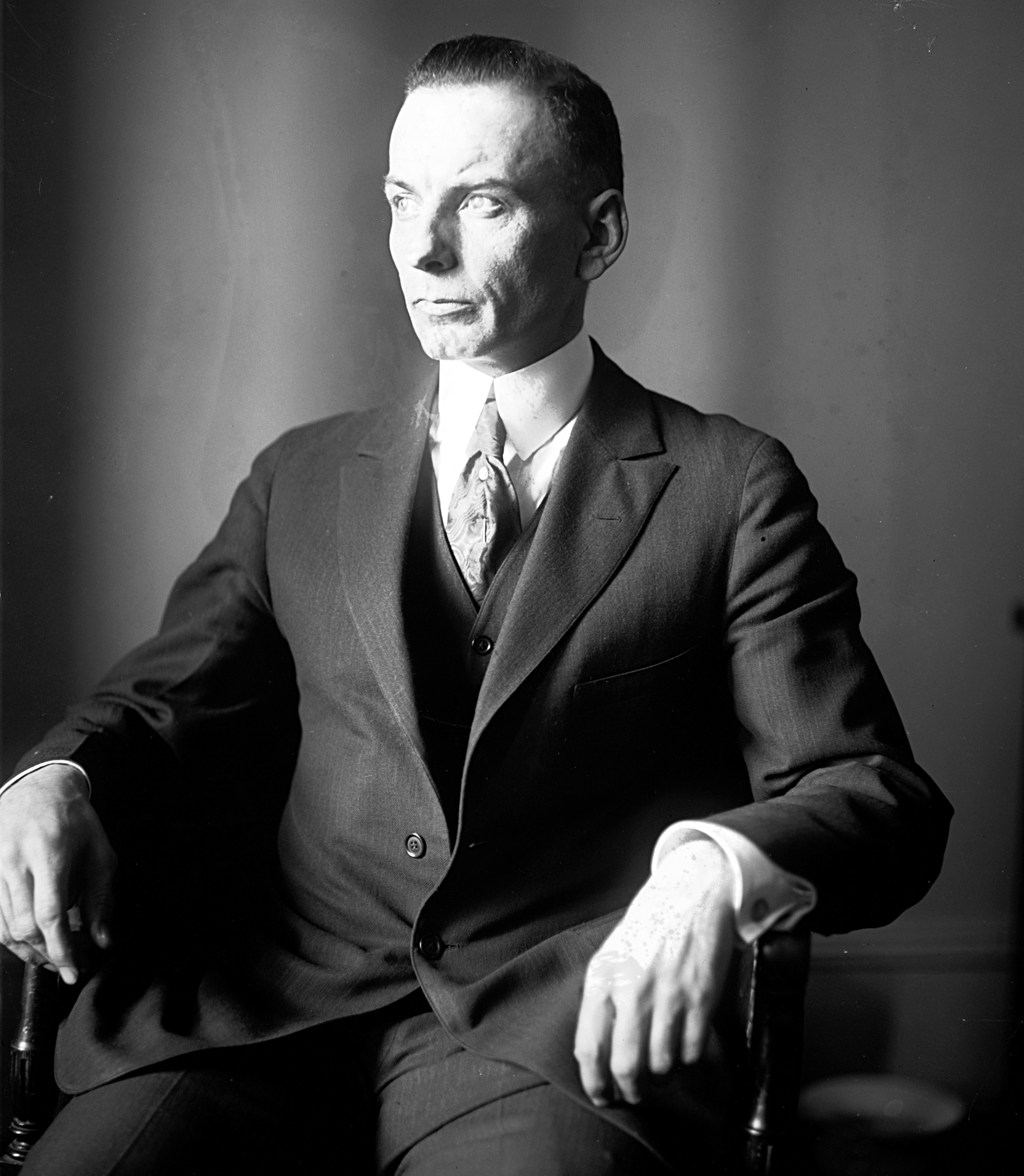
Historical · U.S. House · Pennsylvania · District 11
Clarence Coughlin
Former U.S. Representative · Pennsylvania District 11 · 1921–1923 · Republican
Clarence Coughlin represented Pennsylvania's District 11 in the United States House of Representatives (1921–1923) for the Republican party. The page below collects sourced biographical facts, term history, committee roles, and provenance for Coughlin.
Bioguide ID: C000806
Key facts
- Full name
- Clarence Coughlin
- State
- Pennsylvania
- District
- District 11
- Party
- Republican
- House service
- 1921–1923
- First House term
- 1921
- Status
- Left office
- Current term ends
- —
- Born
- 1883
- Bioguide ID
- C000806
- Committee assignments
- —
- Dataset version
- 1.20260606
Biographical narrative
831 words · sourced from the Wikipedia REST extract
Clarence Coughlin was an American lawyer, educator, and politician who served as a Republican U.S. Representative for Pennsylvania's 11th congressional district from 1921 to 1923. His career spanned various fields, including law, education, and public service, reflecting a commitment to his community and state. Coughlin's political journey began with an unsuccessful bid for Congress in 1912, but he later achieved electoral success, serving in the House of Representatives during a period marked by significant national and local developments.
Early life and career
Clarence Dennis Coughlin was born on July 27, 1883, in Kingston, Pennsylvania. He was the son of James M. Coughlin, who served as the superintendent of the Wilkes-Barre school district. James Coughlin's contributions to education were recognized posthumously, with a school named in his honor. Growing up in a family dedicated to public service and education likely influenced Clarence's own career trajectory.
Coughlin pursued higher education at Wesleyan University in Middletown, Connecticut, and later at Harvard College. His academic background laid a strong foundation for his future endeavors. After completing his studies, he began his professional career as an educator, teaching at Wilkes-Barre High School from 1906 to 1910. This experience in education provided him with insights into the needs and challenges of the community.
In 1910, Coughlin transitioned to the legal profession, studying law and subsequently being admitted to the bar. He practiced law in Luzerne County, Pennsylvania, from 1910 until 1920. During this period, he also ventured into business, engaging in manufacturing, banking, and real estate development in the Wilkes-Barre and Scranton areas. His diverse professional experiences equipped him with a broad understanding of both the legal and economic landscapes of his region.
Coughlin's involvement in public service began to take shape during World War I. In 1918, he served on the committee of public safety for both the state and county, reflecting his commitment to civic responsibility during a time of national crisis. Additionally, he spent six years as a member of the commission tasked with revising Pennsylvania's penal code, contributing to important legal reforms in the state. His leadership capabilities were further demonstrated when he served as chairman of the Republican county committee of Luzerne County from 1915 to 1917, establishing his presence in local politics.
House tenure
Coughlin's political career took a significant turn when he ran for Congress in 1912 under the Progressive Party banner. Although he garnered more votes than the incumbent Republican, Charles Bowman, he ultimately lost the election to Democrat John Casey. This initial setback did not deter him from pursuing a political career.
In 1920, Coughlin successfully ran for the U.S. House of Representatives as a Republican, representing Pennsylvania's 11th congressional district. He was elected to the 67th Congress, where he served from 1921 to 1923. During his tenure, he held the position of chairman of the United States House Committee on Expenditures in the Department of Commerce, a role that involved oversight of budgetary matters within the department. His time in Congress was marked by engagement in various legislative issues, although specific details of his legislative initiatives and accomplishments during this period are not extensively documented.
Coughlin's congressional career was relatively brief, as he was not reelected in 1922. His defeat in the election marked the end of his term in the House, concluding his direct involvement in federal legislative activities. Despite this, his experience in Congress contributed to his understanding of governance and public policy, which would influence his subsequent career.
Legislative focus and committees
During his time in the House of Representatives, Clarence Coughlin's primary focus was on issues related to commerce and government expenditures. As chairman of the House Committee on Expenditures in the Department of Commerce, he was responsible for overseeing the financial operations and budgetary allocations of the department. This role required a keen understanding of fiscal management and the implications of government spending on economic development.
While specific legislative achievements from his term are not detailed, Coughlin's position on the committee placed him at the intersection of economic policy and public accountability. His work in this capacity likely involved scrutinizing expenditures and advocating for responsible fiscal practices, which were particularly relevant during the post-World War I era as the nation sought to stabilize its economy.
After leaving Congress, Coughlin continued his public service career by being appointed as a judge of the Luzerne County Court of Common Pleas in 1925, filling an unexpired term following the death of Judge Woodward. He was subsequently elected to a ten-year term in November 1927, serving until 1937. His judicial role allowed him to apply his legal expertise and experience in governance to the judiciary, further contributing to the legal framework of his community.
Clarence Coughlin passed away on December 15, 1946, in Wilkes-Barre, Pennsylvania, at the age of 63. He is interred in Mount Greenwood Cemetery in Trucksville, Pennsylvania. His life and career reflect a dedication to public service, education, and the legal profession, leaving a legacy within the communities he served.
Notable legislation
Sponsored and co-sponsored legislation for Clarence Coughlin is pending operator curation. The biographical narrative above carries the same provenance trail until per-bill rows are written.
Sources
- [1]https://en.wikipedia.org/wiki/Clarence_D._CoughlinWikipedia · retrieved 2026-06-06
Notable quotes
Sourced quotes for Clarence Coughlin are pending operator curation. Narrative-scope provenance remains attached below.
Sources
- [1]https://en.wikipedia.org/wiki/Clarence_D._CoughlinWikipedia · retrieved 2026-06-06
Key positions
Curated policy positions for Clarence Coughlin are pending operator review. The biographical narrative above carries the same provenance trail until per-topic positions are written.
Sources
- [1]https://en.wikipedia.org/wiki/Clarence_D._CoughlinWikipedia · retrieved 2026-06-06
Terms served
- 1921–1923U.S. House · Term 1 · Republican
Sources & provenance
Every attributable claim above carries a per-section [N] marker that resolves to the corresponding URL below. Each entry records the upstream provider, the canonical URL, and the timestamp at which the source was retrieved by the ingest pipeline.
Key facts
- https://bioguide.congress.gov/search/bio/C000806bioguide · retrieved 2026-06-06
- https://www.govtrack.us/congress/members/402925govtrack · retrieved 2026-06-06
Biographical narrative
- https://en.wikipedia.org/wiki/Clarence_D._Coughlinwikipedia · retrieved 2026-06-06
Find your representative
Every U.S. state elects representatives by district. Browse Pennsylvania’s delegation, the full former-representative roster, or explore the role and term length.
Related on The Candidate
- Preceded by Thomas TempletonEarlier holder of the Pennsylvania District 11 House seat · Republican.Open
- Succeeded by Laurence WatresLater holder of the Pennsylvania District 11 House seat · Republican.Open
- Adam SeybertFormer U.S. Representative · Pennsylvania District 1 · RepublicanOpen
- Benjamin SayFormer U.S. Representative · Pennsylvania District 1 · RepublicanOpen
- Chapman FreemanFormer U.S. Representative · Pennsylvania District 1 · RepublicanOpen
- Harry RansleyFormer U.S. Representative · Pennsylvania District 1 · RepublicanOpen