
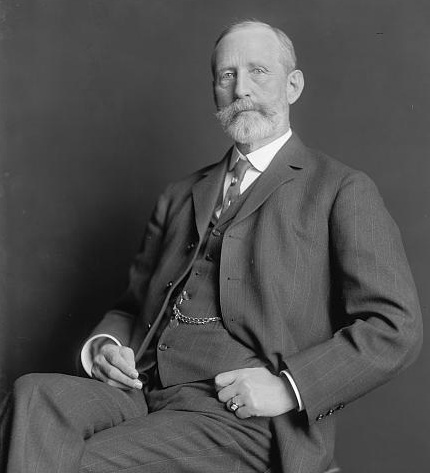
Historical · U.S. House · Pennsylvania · District 11
Henry Palmer
Former U.S. Representative · Pennsylvania District 11 · 1901–1911 · Republican
Henry Palmer represented Pennsylvania's District 11 in the United States House of Representatives (1901–1911) for the Republican party. The page below collects sourced biographical facts, term history, committee roles, and provenance for Palmer.
Bioguide ID: P000040
Key facts
- Full name
- Henry Palmer
- State
- Pennsylvania
- District
- District 11
- Party
- Republican
- House service
- 1901–1911
- First House term
- 1901
- Status
- Left office
- Current term ends
- —
- Born
- 1839
- Bioguide ID
- P000040
- Committee assignments
- —
- Dataset version
- 1.20260606
Biographical narrative
852 words · sourced from the Wikipedia REST extract
Henry Palmer was a Republican politician who served as a U.S. Representative for Pennsylvania's 11th congressional district. His congressional career spanned four terms, beginning in the early 20th century and concluding in 1911. Palmer's professional background included law and public service, and he was involved in significant political and legal events during his tenure. He was also known for his familial connections, particularly as the father of Bradley Palmer, a prominent lawyer with ties to various major corporations.
Early life and career
Henry Wilbur Palmer was born on July 10, 1839, in Clifford Township, Pennsylvania. He was the son of Gideon Palmer, who had relocated from Massachusetts to Pennsylvania in 1836. Palmer's early education took place at Wyoming Seminary in Kingston, Pennsylvania, and the Fort Edward Institute in Fort Edward, New York. He furthered his studies in law at the National Law School in Poughkeepsie, New York, from which he graduated in 1860.
Following his graduation, Palmer was admitted to the bar in Peekskill, New York, and later in Wilkes-Barre, Pennsylvania, in 1861. His legal career began shortly thereafter, as he took on the role of prothonotary's clerk in 1861. During the Civil War, he served in the pay department of the Union Army, stationed in New Orleans from 1862 to 1863. His involvement in public service continued when he participated in the Pennsylvania constitutional convention from 1872 to 1873. Subsequently, he served as the Attorney General of Pennsylvania from 1879 to 1883, where he was responsible for overseeing legal matters for the state.
Palmer's legal and political experiences laid the groundwork for his entry into the U.S. Congress. His political career as a Republican began when he was elected to the Fifty-seventh Congress, marking the start of his tenure in the House of Representatives. His commitment to public service was evident throughout his life, as he continued to practice law even after his congressional terms ended.
House tenure
Henry Palmer's congressional career began in 1901, and he served a total of four terms in the U.S. House of Representatives. He was elected to the Fifty-seventh, Fifty-eighth, and Fifty-ninth Congresses, representing Pennsylvania's 11th congressional district. His legislative activities included significant involvement in the impeachment proceedings against Charles Swayne, a judge of the United States Court for the Northern District of Florida, in 1905. Palmer was appointed as one of the managers by the House of Representatives to oversee these proceedings, reflecting his active engagement in the legislative process.
In addition to his role in impeachment, Palmer was re-elected to the Sixty-first Congress, further solidifying his position as a representative of his constituents. His time in office was marked by the political dynamics of the early 20th century, a period characterized by significant social and economic changes in the United States. Palmer's tenure in Congress concluded on March 3, 1911, after which he returned to his legal practice in Wilkes-Barre, Pennsylvania.
Legislative focus and committees
During his time in the House of Representatives, Henry Palmer's legislative focus encompassed a range of issues pertinent to his constituents and the broader national landscape. As a member of the Republican Party, he aligned with the party's policies and initiatives, which often included matters related to economic development, infrastructure, and governance.
Palmer's involvement in the impeachment proceedings against Judge Charles Swayne highlighted his engagement with judicial accountability and the rule of law. This significant event underscored the importance of maintaining judicial integrity, a concern that resonated with many lawmakers of the time. His role in this high-profile case demonstrated his commitment to upholding legal standards and addressing issues of misconduct within the judiciary.
While specific details regarding the committees on which Palmer served are not provided, it is common for members of Congress to participate in various committees that align with their interests and expertise. These committees typically focus on areas such as finance, judiciary, and public works, among others. Palmer's legal background likely influenced his contributions to discussions and legislation related to legal affairs and governance.
After concluding his congressional service, Palmer continued to practice law until his death on February 15, 1913, in Wilkes-Barre, Pennsylvania. His contributions to both the legal field and public service left a lasting impact on his community and the state of Pennsylvania. He was interred in Hollenback Cemetery, marking the end of a life dedicated to law and politics.
In addition to his professional endeavors, Palmer's family life was also notable. He married Ellen Webster in September 1861, who was recognized as a significant social reformer in her own right. Ellen Palmer was particularly known for her advocacy for fair wages for breaker boys in Luzerne County, Pennsylvania, reflecting a commitment to social justice that paralleled her husband's political career. Together, they had six children, including their eldest son, Bradley Palmer, who became a prominent lawyer in Boston and was involved with several major corporations.
Henry Palmer's life and career exemplify the intertwining of legal practice and public service during a transformative period in American history. His contributions to the U.S. House of Representatives and his commitment to his community remain a part of Pennsylvania's political legacy.
Notable legislation
Sponsored and co-sponsored legislation for Henry Palmer is pending operator curation. The biographical narrative above carries the same provenance trail until per-bill rows are written.
Sources
- [1]https://en.wikipedia.org/wiki/Henry_W._PalmerWikipedia · retrieved 2026-06-06
Notable quotes
Sourced quotes for Henry Palmer are pending operator curation. Narrative-scope provenance remains attached below.
Sources
- [1]https://en.wikipedia.org/wiki/Henry_W._PalmerWikipedia · retrieved 2026-06-06
Key positions
Curated policy positions for Henry Palmer are pending operator review. The biographical narrative above carries the same provenance trail until per-topic positions are written.
Sources
- [1]https://en.wikipedia.org/wiki/Henry_W._PalmerWikipedia · retrieved 2026-06-06
Terms served
- 1901–1903U.S. House · Term 1 · Republican
- 1903–1905U.S. House · Term 2 · Republican
- 1905–1907U.S. House · Term 3 · Republican
- 1909–1911U.S. House · Term 4 · Republican
Sources & provenance
Every attributable claim above carries a per-section [N] marker that resolves to the corresponding URL below. Each entry records the upstream provider, the canonical URL, and the timestamp at which the source was retrieved by the ingest pipeline.
Key facts
- https://bioguide.congress.gov/search/bio/P000040bioguide · retrieved 2026-06-06
- https://www.govtrack.us/congress/members/408450govtrack · retrieved 2026-06-06
Biographical narrative
- https://en.wikipedia.org/wiki/Henry_W._Palmerwikipedia · retrieved 2026-06-06
Find your representative
Every U.S. state elects representatives by district. Browse Pennsylvania’s delegation, the full former-representative roster, or explore the role and term length.
Related on The Candidate
- Preceded by Joseph ScrantonEarlier holder of the Pennsylvania District 11 House seat · Republican.Open
- Succeeded by Charles BowmanLater holder of the Pennsylvania District 11 House seat · Republican.Open
- Adam SeybertFormer U.S. Representative · Pennsylvania District 1 · RepublicanOpen
- Benjamin SayFormer U.S. Representative · Pennsylvania District 1 · RepublicanOpen
- Chapman FreemanFormer U.S. Representative · Pennsylvania District 1 · RepublicanOpen
- Harry RansleyFormer U.S. Representative · Pennsylvania District 1 · RepublicanOpen