
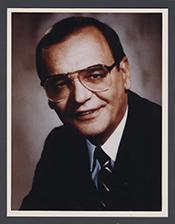
Historical · U.S. House · Pennsylvania · District 11
Paul Kanjorski
Former U.S. Representative · Pennsylvania District 11 · 1985–2011 · Democratic
Paul Kanjorski represented Pennsylvania's District 11 in the United States House of Representatives (1985–2011) for the Democratic party. The page below collects sourced biographical facts, term history, committee roles, and provenance for Kanjorski.
Bioguide ID: K000008
Key facts
- Full name
- Paul Kanjorski
- State
- Pennsylvania
- District
- District 11
- Party
- Democratic
- House service
- 1985–2011
- First House term
- 1985
- Status
- Left office
- Current term ends
- —
- Born
- 1937
- Bioguide ID
- K000008
- Committee assignments
- —
- Dataset version
- 1.20260605
Biographical narrative
907 words · sourced from the Wikipedia REST extract
Paul E. Kanjorski is a former U.S. Representative who served Pennsylvania's 11th congressional district from 1985 until 2011. A member of the Democratic Party, Kanjorski's tenure in Congress spanned 13 terms, during which he represented a district that included cities such as Scranton, Wilkes-Barre, and Hazleton, along with parts of the Pocono Mountains. His background as a lawyer and administrative law judge, combined with his political experience, shaped his legislative priorities and committee assignments throughout his career.
Early life and career
Paul E. Kanjorski was born on April 2, 1937, in Nanticoke, Pennsylvania, a city located near Wilkes-Barre. He is of Polish-American descent and grew up in a family that valued education and civic engagement. Kanjorski attended public schools in his early years before transferring to Wyoming Seminary, a private college preparatory institution in Kingston, Pennsylvania. He completed his high school education at the Capitol Page School in Washington, D.C., where he became a congressional page at the age of 15. Initially appointed by Republican leaders, he later worked on the Democratic side of the House, gaining firsthand experience in the legislative process. Notably, he witnessed the 1954 U.S. Capitol shooting incident and assisted in bringing stretchers into the chamber for the injured.
Kanjorski pursued higher education at Temple University in Philadelphia from 1957 to 1961. During this time, he briefly served in the United States Army Reserves from 1960 to 1961. Following his undergraduate studies, he attended the Dickinson School of Law in Carlisle, Pennsylvania, where he earned his law degree and subsequently passed the Pennsylvania bar exam in 1966. Kanjorski's educational journey was marked by his struggle with dyslexia, which he later described as a challenge that compelled him to develop strong memory skills.
Before entering politics, Kanjorski practiced law in Wilkes-Barre, focusing on cases that involved coal miners and their families seeking black lung benefits. His legal career also included roles as a city solicitor and as an administrative law judge for workers' compensation in Pennsylvania. In addition to his legal work, Kanjorski engaged in community service, notably advocating for victims of Hurricane Agnes, which devastated the Wyoming Valley in 1972. His early career laid the foundation for his later political ambitions, as he developed a strong connection to the issues affecting his constituents.
House tenure
Kanjorski was first elected to the U.S. House of Representatives in 1984, beginning his term in January 1985. Over the course of his 13 terms, he became a prominent figure in Pennsylvania politics, particularly in the northeastern region of the state. His district, the 11th, encompassed a diverse array of communities, including urban centers and rural areas, which influenced his legislative priorities.
During his time in Congress, Kanjorski served on several important committees, including the Committee on Financial Services, where he played a significant role in shaping financial legislation. He was the chairman of the Subcommittee on Capital Markets, Insurance, and Government-Sponsored Enterprises, and also served on the Subcommittee on Financial Institutions and Consumer Credit, as well as the Subcommittee on Housing and Community Opportunity. Additionally, he was a member of the Committee on Oversight and Government Reform, where he contributed to discussions on government management and procurement.
Kanjorski's legislative career was marked by a focus on issues pertinent to his constituents, particularly in areas such as infrastructure, economic development, and labor rights. He often worked behind the scenes to advocate for funding and appropriations that would benefit his district. His commitment to these issues was evident in his support for various initiatives aimed at improving the economic landscape of northeastern Pennsylvania.
Legislative focus and committees
Throughout his congressional career, Kanjorski maintained a strong focus on financial services and economic issues. His long-standing membership on the Financial Services Committee allowed him to influence key legislation affecting banking, insurance, and consumer protection. He was involved in the crafting of significant legislation, including the Dodd-Frank Wall Street Reform and Consumer Protection Act, which aimed to address the regulatory failures that contributed to the 2008 financial crisis. Kanjorski's expertise in financial matters positioned him as a critical player in discussions surrounding economic reform.
Kanjorski's political positions reflected a blend of moderate and conservative views, particularly on social issues. He opposed gun control measures and held a moderate stance on abortion, while being a strong advocate for labor rights. His opposition to the Iraq War was a notable aspect of his political identity, aligning him with many constituents who were critical of U.S. military involvement abroad. In 2007, he voted with fellow Democrats to initiate the redeployment of U.S. forces from Iraq, although the measure ultimately did not pass.
In addition to his legislative work, Kanjorski faced scrutiny over earmarks he secured for projects in his district. One notable controversy involved funding for water jet cutter research at Cornerstone Technologies, a company linked to his family. This situation raised questions about the appropriateness of earmarking funds for projects associated with relatives, leading to public discussions about ethics in government.
Kanjorski's tenure in Congress concluded on January 3, 2011, after he chose not to seek re-election. His final votes included a notable opposition to the Tax Relief, Unemployment Insurance Reauthorization, and Job Creation Act of 2010, reflecting his concerns over extending tax cuts for wealthier Americans. Throughout his time in office, Kanjorski was known for his behind-the-scenes influence and dedication to the needs of his constituents, leaving a legacy shaped by his extensive legislative experience and commitment to public service.
Notable legislation
Sponsored and co-sponsored legislation for Paul Kanjorski is pending operator curation. The biographical narrative above carries the same provenance trail until per-bill rows are written.
Sources
- [1]https://en.wikipedia.org/wiki/Paul_KanjorskiWikipedia · retrieved 2026-06-05
Notable quotes
Sourced quotes for Paul Kanjorski are pending operator curation. Narrative-scope provenance remains attached below.
Sources
- [1]https://en.wikipedia.org/wiki/Paul_KanjorskiWikipedia · retrieved 2026-06-05
Key positions
Curated policy positions for Paul Kanjorski are pending operator review. The biographical narrative above carries the same provenance trail until per-topic positions are written.
Sources
- [1]https://en.wikipedia.org/wiki/Paul_KanjorskiWikipedia · retrieved 2026-06-05
Terms served
- 1985–1987U.S. House · Term 1 · Democratic
- 1987–1989U.S. House · Term 2 · Democratic
- 1989–1991U.S. House · Term 3 · Democratic
- 1991–1993U.S. House · Term 4 · Democratic
- 1993–1995U.S. House · Term 5 · Democratic
- 1995–1997U.S. House · Term 6 · Democratic
- 1997–1999U.S. House · Term 7 · Democratic
- 1999–2001U.S. House · Term 8 · Democratic
- 2001–2003U.S. House · Term 9 · Democratic
- 2003–2005U.S. House · Term 10 · Democratic
- 2005–2007U.S. House · Term 11 · Democratic
- 2007–2009U.S. House · Term 12 · Democratic
- 2009–2011U.S. House · Term 13 · Democratic
Sources & provenance
Every attributable claim above carries a per-section [N] marker that resolves to the corresponding URL below. Each entry records the upstream provider, the canonical URL, and the timestamp at which the source was retrieved by the ingest pipeline.
Key facts
- https://bioguide.congress.gov/search/bio/K000008bioguide · retrieved 2026-06-05
- http://kanjorski.house.govhouse.gov · retrieved 2026-06-05
Biographical narrative
- https://en.wikipedia.org/wiki/Paul_Kanjorskiwikipedia · retrieved 2026-06-05
Find your representative
Every U.S. state elects representatives by district. Browse Pennsylvania’s delegation, the full former-representative roster, or explore the role and term length.
Related on The Candidate
- Preceded by Frank HarrisonEarlier holder of the Pennsylvania District 11 House seat · Democratic.Open
- Succeeded by Lou BarlettaLater holder of the Pennsylvania District 11 House seat · Republican.Open
- Adam SeybertFormer U.S. Representative · Pennsylvania District 1 · RepublicanOpen
- Benjamin SayFormer U.S. Representative · Pennsylvania District 1 · RepublicanOpen
- Chapman FreemanFormer U.S. Representative · Pennsylvania District 1 · RepublicanOpen
- Harry RansleyFormer U.S. Representative · Pennsylvania District 1 · RepublicanOpen