
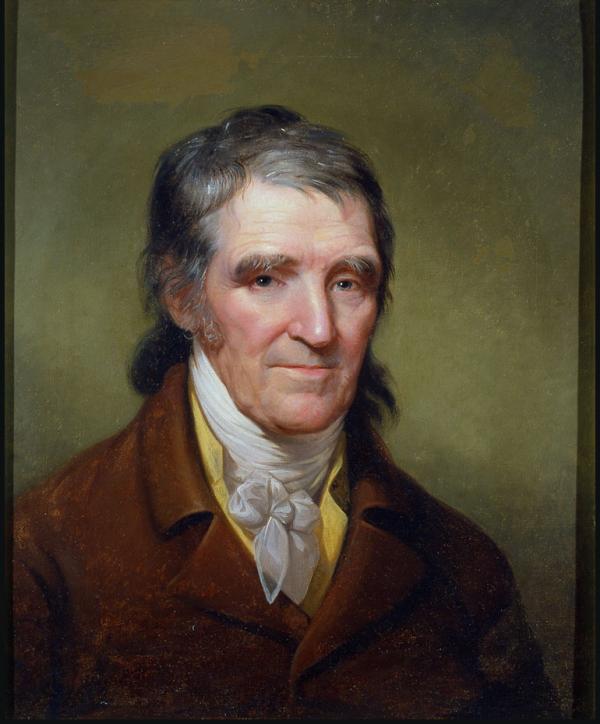
Historical · U.S. House · Pennsylvania · District 11
William Findley
Former U.S. Representative · Pennsylvania District 11 · 1791–1817 · Republican
William Findley represented Pennsylvania's District 11 in the United States House of Representatives (1791–1817) for the Republican party. The page below collects sourced biographical facts, term history, committee roles, and provenance for Findley.
Bioguide ID: F000124
Key facts
- Full name
- William Findley
- State
- Pennsylvania
- District
- District 11
- Party
- Republican
- House service
- 1791–1817
- First House term
- 1791
- Status
- Left office
- Current term ends
- —
- Born
- —
- Bioguide ID
- F000124
- Committee assignments
- —
- Dataset version
- 1.20260606
Biographical narrative
1,037 words · sourced from the Wikipedia REST extract
William Findley was a prominent Irish-born American politician and farmer who served as a U.S. Representative for Pennsylvania's 11th congressional district. His political career spanned from 1791 to 1817, during which he became known for his advocacy of states' rights and his opposition to slavery. Findley was a significant figure in early American politics, recognized for his long tenure in the House of Representatives, where he became the first individual to hold the honorary title "Father of the House." He was also a member of the American Philosophical Society and contributed to the political discourse of his time through various writings.
Early life and career
William Findley was born around 1741 in Ulster, Ireland, and emigrated to Pennsylvania in 1763. After settling in the region, he purchased a farm in Cumberland County in 1768, where he began his family life. In addition to farming, Findley worked as a weaver and owned slaves, reflecting the complex social and economic structures of the time. His involvement in the American Revolution was marked by his service on the Cumberland County Committee of Observation, where he played an active role in local governance. He enlisted in the local militia, eventually rising to the rank of captain in the Seventh Company of the Eighth Battalion of Cumberland County Associators.
In 1783, Findley relocated his family across the Allegheny Mountains to Westmoreland County, Pennsylvania. His political career began shortly after his arrival, as he was elected to the Council of Censors, a body tasked with evaluating the need for revisions to the radical Pennsylvania Constitution of 1776. Findley's political stance was characterized by a willingness to express his interests openly, contrasting with the more reserved approach favored by many of his contemporaries. He became known for his vocal opposition to the Bank of North America, the first central bank of the United States, and he criticized its founder, Robert Morris, for alleged self-enrichment.
Findley's political influence continued to grow as he served in the Ninth through Twelfth General Assemblies and on the Supreme Executive Council of Pennsylvania. He was a notable figure in the Pennsylvania convention that ratified the federal Constitution, where he represented the Anti-Federalist perspective. Despite facing ridicule from some of the more affluent delegates, Findley demonstrated his knowledge and commitment to the issues at hand, notably defending his views on jury trials with references to established legal texts.
In 1789, Findley played a significant role in drafting a new Constitution for Pennsylvania. He was active in the political discourse of the time, writing under the pseudonym "An Officer of the Late Continental Army" to express his views on the Constitution and other pressing issues. After serving in the Pennsylvania House of Representatives, he was elected to the U.S. House of Representatives in 1791, marking the beginning of his lengthy congressional career.
House tenure
William Findley's tenure in the U.S. House of Representatives began in 1791 and continued until 1817, encompassing a total of 11 terms. Initially elected as a member of the Second Congress, he represented the interests of his constituents from the western part of Pennsylvania. Throughout his congressional career, Findley aligned himself with the Jeffersonian Republican Party, advocating for states' rights and opposing the financial policies of the Federalist administration, particularly those proposed by Treasury Secretary Alexander Hamilton.
Findley was known for his role in calming tensions during the Whiskey Insurrection of 1794, a significant uprising against federal taxation on distilled spirits. His ability to mediate and address the concerns of his constituents during this tumultuous period highlighted his commitment to representing the interests of the western Pennsylvania populace. In addition to his opposition to slavery, Findley was a staunch advocate for the rights of individuals and communities, often voicing concerns about the overreach of federal authority.
After declining a nomination for the Sixth Congress, Findley shifted his focus to state politics, where he was elected to the Pennsylvania State Senate. However, he returned to the U.S. House for the Eighth Congress and continued to serve through the Fourteenth Congress, navigating the complexities of American politics during the early 19th century, including the Burr conspiracy, the embargo, and the War of 1812.
By the end of his congressional career, Findley had established himself as a senior member of the House, earning the title "Father of the House" in 1811 due to his extensive service. His long-standing commitment to public service and his ability to adapt to the changing political landscape of the time made him a respected figure among his peers.
Legislative focus and committees
Throughout his time in the House of Representatives, William Findley focused on several key issues that reflected the concerns of his constituents and his political philosophy. His opposition to the financial policies of the Federalists was a defining aspect of his legislative agenda. He consistently advocated for the rights of states and localities, emphasizing the importance of limiting federal power in favor of greater autonomy for individual states.
Findley's opposition to slavery was also a notable aspect of his political stance, distinguishing him from many of his contemporaries in the early American political landscape. His commitment to human rights and individual liberties resonated with the values of the Jeffersonian Republicans, with whom he aligned himself throughout his career.
In addition to his legislative work, Findley contributed to the political discourse of his time through his writings. His notable works include "History of the Insurrection in the Four Western Counties of Pennsylvania in the Year M.DCC.XCIV," which provided a detailed account of the Whiskey Insurrection, and "Observations on the Two Sons of Oil." These writings reflected his engagement with the political issues of his day and his desire to inform and educate the public on matters of governance and policy.
Findley's legacy is characterized by his long service in the House of Representatives, his role as a voice for the western Pennsylvania constituency, and his contributions to the early political landscape of the United States. He passed away on April 5, 1821, in his home along the Loyalhanna Creek, leaving behind a significant impact on the political history of Pennsylvania and the nation. His burial took place in Latrobe's Unity Cemetery, marking the end of a notable career in public service.
Notable legislation
Sponsored and co-sponsored legislation for William Findley is pending operator curation. The biographical narrative above carries the same provenance trail until per-bill rows are written.
Sources
- [1]https://en.wikipedia.org/wiki/William_FindleyWikipedia · retrieved 2026-06-06
Notable quotes
Sourced quotes for William Findley are pending operator curation. Narrative-scope provenance remains attached below.
Sources
- [1]https://en.wikipedia.org/wiki/William_FindleyWikipedia · retrieved 2026-06-06
Key positions
Curated policy positions for William Findley are pending operator review. The biographical narrative above carries the same provenance trail until per-topic positions are written.
Sources
- [1]https://en.wikipedia.org/wiki/William_FindleyWikipedia · retrieved 2026-06-06
Terms served
- 1791–1793U.S. House · Term 1 · Anti-Administration
- 1793–1795U.S. House · Term 2 · Anti-Administration
- 1795–1797U.S. House · Term 3 · Republican
- 1797–1799U.S. House · Term 4 · Republican
- 1803–1805U.S. House · Term 5 · Republican
- 1805–1807U.S. House · Term 6 · Republican
- 1807–1809U.S. House · Term 7 · Republican
- 1809–1811U.S. House · Term 8 · Republican
- 1811–1813U.S. House · Term 9 · Republican
- 1813–1815U.S. House · Term 10 · Republican
- 1815–1817U.S. House · Term 11 · Republican
Sources & provenance
Every attributable claim above carries a per-section [N] marker that resolves to the corresponding URL below. Each entry records the upstream provider, the canonical URL, and the timestamp at which the source was retrieved by the ingest pipeline.
Key facts
- https://bioguide.congress.gov/search/bio/F000124bioguide · retrieved 2026-06-06
- https://www.govtrack.us/congress/members/412125govtrack · retrieved 2026-06-06
Biographical narrative
- https://en.wikipedia.org/wiki/William_Findleywikipedia · retrieved 2026-06-06
Find your representative
Every U.S. state elects representatives by district. Browse Pennsylvania’s delegation, the full former-representative roster, or explore the role and term length.
Related on The Candidate
- Succeeded by David MarchandLater holder of the Pennsylvania District 11 House seat · Republican.Open
- Adam SeybertFormer U.S. Representative · Pennsylvania District 1 · RepublicanOpen
- Benjamin SayFormer U.S. Representative · Pennsylvania District 1 · RepublicanOpen
- Chapman FreemanFormer U.S. Representative · Pennsylvania District 1 · RepublicanOpen
- Harry RansleyFormer U.S. Representative · Pennsylvania District 1 · RepublicanOpen
- Republican PartyFederal candidates and office holders on the Republican line.Open