
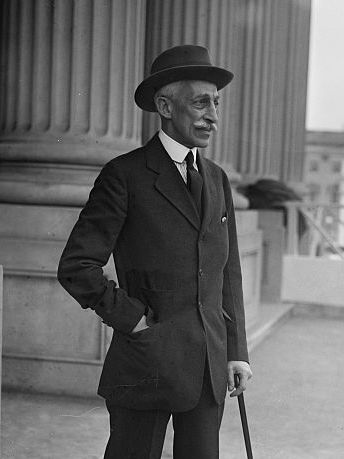
Historical · U.S. House · Pennsylvania · District 12
Edmund Carpenter
Former U.S. Representative · Pennsylvania District 12 · 1925–1927 · Republican
Edmund Carpenter represented Pennsylvania's District 12 in the United States House of Representatives (1925–1927) for the Republican party. The page below collects sourced biographical facts, term history, committee roles, and provenance for Carpenter.
Bioguide ID: C000168
Key facts
- Full name
- Edmund Carpenter
- State
- Pennsylvania
- District
- District 12
- Party
- Republican
- House service
- 1925–1927
- First House term
- 1925
- Status
- Left office
- Current term ends
- —
- Born
- 1865
- Bioguide ID
- C000168
- Committee assignments
- —
- Dataset version
- 1.20260606
Biographical narrative
835 words · sourced from the Wikipedia REST extract
Edmund Carpenter was a Republican politician who served as a member of the U.S. House of Representatives for Pennsylvania's 12th congressional district. His tenure in Congress spanned from 1925 to 1927, during which he participated in the Sixty-ninth Congress. Born in 1865 in Wilkes-Barre, Pennsylvania, Carpenter had a diverse background that included military service and interests in manufacturing. After his congressional career, he returned to his business pursuits until his death in 1952.
Early life and career
Edmund Nelson Carpenter was born on June 27, 1865, in Wilkes-Barre, Pennsylvania. He was the son of Benjamin Gardner Carpenter and Sarah Ann Feld, and he was one of five children in the family. His lineage traces back to William Carpenter, an immigrant from England who settled in Rehoboth, Massachusetts, in the mid-1630s. This heritage reflects a long-standing connection to American history and the early colonial period.
Carpenter pursued his education at the Wyoming Seminary, a well-known preparatory school located in Kingston, Pennsylvania. His academic background laid the groundwork for his future endeavors. He developed an interest in the mining industry and the manufacturing of sheet-metal products, which would later inform his professional pursuits.
In 1893, Carpenter enlisted in the Pennsylvania National Guard, where he began his military career as a private. His dedication and leadership abilities allowed him to rise through the ranks, ultimately achieving the rank of major. During the Spanish-American War, he served as a first lieutenant and quartermaster in the Ninth Regiment of the Pennsylvania Volunteer Infantry. His military service not only contributed to his personal development but also provided him with experiences that would later influence his public service.
Despite his military background, Carpenter's early political career faced challenges. He made an unsuccessful bid for election in 1918, which did not deter him from continuing his involvement in public life. Instead, he returned to his manufacturing interests, where he likely gained valuable insights into the economic issues that would later inform his legislative priorities.
House tenure
Edmund Carpenter's political career took a significant turn when he was elected as a Republican to the Sixty-ninth Congress, representing Pennsylvania's 12th congressional district. His term in the House of Representatives began in 1925, a period marked by significant political and economic changes in the United States. Carpenter's election to Congress reflected the political dynamics of the time, as the Republican Party was a dominant force in Pennsylvania and nationally.
During his time in Congress, Carpenter engaged with various legislative matters and participated in the broader discussions that shaped the nation during the mid-1920s. His tenure, however, was relatively brief, as he faced challenges in securing re-election. In 1926, he was an unsuccessful candidate for a second term, which marked the end of his congressional career. Following his departure from the House, Carpenter returned to his manufacturing pursuits, a field in which he had considerable experience and expertise.
Carpenter's single term in Congress is notable for its context within the broader political landscape of the time. The mid-1920s were characterized by economic prosperity in the United States, often referred to as the "Roaring Twenties." This era saw significant advancements in industry and technology, which likely influenced Carpenter's legislative focus and priorities during his time in office.
Legislative focus and committees
While specific details regarding Carpenter's legislative initiatives and committee assignments are not extensively documented, his background in manufacturing and military service likely informed his approach to various issues. As a member of the Republican Party, he would have aligned with the party's general platform, which during this period emphasized economic growth, business interests, and a limited role for government in the economy.
Carpenter's experience in the manufacturing sector may have led him to advocate for policies that supported industrial growth and job creation. The 1920s were a time of significant industrial expansion in the United States, and representatives from manufacturing backgrounds often played key roles in shaping legislation that affected economic policies. Carpenter's insights into the challenges faced by manufacturers and workers in his district would have been valuable in discussions surrounding labor laws, trade policies, and economic regulation.
Additionally, Carpenter's military background may have influenced his perspectives on defense and veterans' affairs. Members of Congress with military experience often bring unique insights into issues related to national security and the welfare of veterans, which could have been relevant during his time in office.
After leaving Congress, Carpenter continued to engage with the manufacturing sector, indicating that his interests remained aligned with the economic issues that had shaped his political career. His return to business pursuits suggests a commitment to the economic development of his community and the state of Pennsylvania.
Edmund Carpenter passed away on November 4, 1952, in Philadelphia, Pennsylvania. His final resting place is in Hollenback Cemetery in Wilkes-Barre, where he is remembered as a figure who contributed to both the military and political landscapes of his time. His life and career reflect the complexities of early 20th-century American politics and the interplay between personal background, public service, and economic interests.
Notable legislation
Sponsored and co-sponsored legislation for Edmund Carpenter is pending operator curation. The biographical narrative above carries the same provenance trail until per-bill rows are written.
Sources
- [1]https://en.wikipedia.org/wiki/Edmund_N._CarpenterWikipedia · retrieved 2026-06-06
Notable quotes
Sourced quotes for Edmund Carpenter are pending operator curation. Narrative-scope provenance remains attached below.
Sources
- [1]https://en.wikipedia.org/wiki/Edmund_N._CarpenterWikipedia · retrieved 2026-06-06
Key positions
Curated policy positions for Edmund Carpenter are pending operator review. The biographical narrative above carries the same provenance trail until per-topic positions are written.
Sources
- [1]https://en.wikipedia.org/wiki/Edmund_N._CarpenterWikipedia · retrieved 2026-06-06
Terms served
- 1925–1927U.S. House · Term 1 · Republican
Sources & provenance
Every attributable claim above carries a per-section [N] marker that resolves to the corresponding URL below. Each entry records the upstream provider, the canonical URL, and the timestamp at which the source was retrieved by the ingest pipeline.
Key facts
- https://bioguide.congress.gov/search/bio/C000168bioguide · retrieved 2026-06-06
- https://www.govtrack.us/congress/members/402316govtrack · retrieved 2026-06-06
Biographical narrative
- https://en.wikipedia.org/wiki/Edmund_N._Carpenterwikipedia · retrieved 2026-06-06
Find your representative
Every U.S. state elects representatives by district. Browse Pennsylvania’s delegation, the full former-representative roster, or explore the role and term length.
Related on The Candidate
- Preceded by John ReberEarlier holder of the Pennsylvania District 12 House seat · Republican.Open
- Succeeded by Charles TurpinLater holder of the Pennsylvania District 12 House seat · Republican.Open
- Adam SeybertFormer U.S. Representative · Pennsylvania District 1 · RepublicanOpen
- Benjamin SayFormer U.S. Representative · Pennsylvania District 1 · RepublicanOpen
- Chapman FreemanFormer U.S. Representative · Pennsylvania District 1 · RepublicanOpen
- Harry RansleyFormer U.S. Representative · Pennsylvania District 1 · RepublicanOpen