
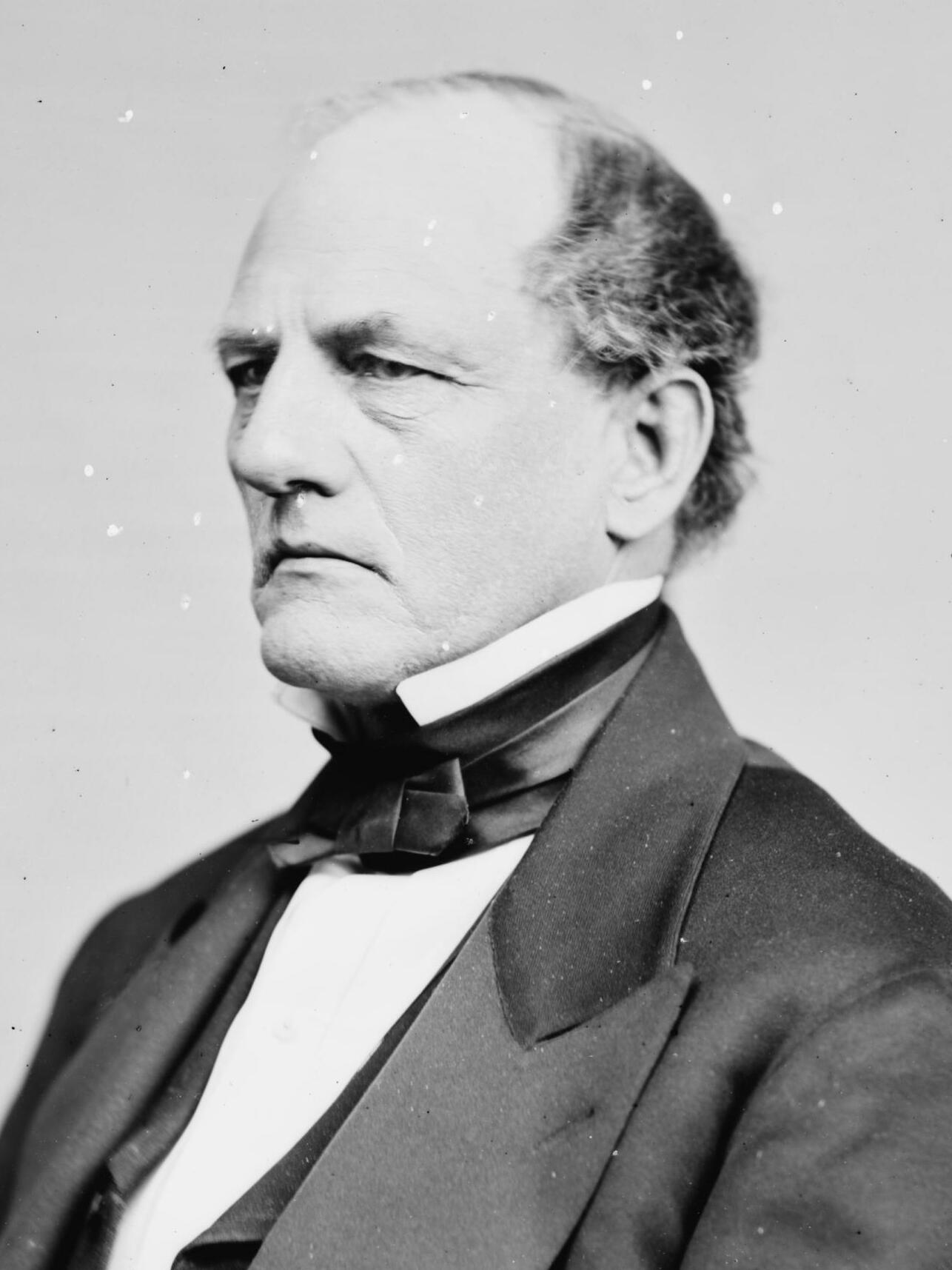
Historical · U.S. House · Pennsylvania · District 12
George Woodward
Former U.S. Representative · Pennsylvania District 12 · 1867–1871 · Democratic
George Woodward represented Pennsylvania's District 12 in the United States House of Representatives (1867–1871) for the Democratic party. The page below collects sourced biographical facts, term history, committee roles, and provenance for Woodward.
Bioguide ID: W000730
Key facts
- Full name
- George Woodward
- State
- Pennsylvania
- District
- District 12
- Party
- Democratic
- House service
- 1867–1871
- First House term
- 1867
- Status
- Left office
- Current term ends
- —
- Born
- 1809
- Bioguide ID
- W000730
- Committee assignments
- —
- Dataset version
- 1.20260606
Biographical narrative
832 words · sourced from the Wikipedia REST extract
George Woodward was a prominent figure in Pennsylvania's legal and political landscape during the 19th century. A member of the Democratic Party, he served as a U.S. Representative for Pennsylvania's 12th congressional district from 1867 to 1871. In addition to his congressional service, Woodward held significant judicial positions, including as an associate justice and later chief justice of the Supreme Court of Pennsylvania. His career was marked by various political endeavors, including candidacies for higher office and participation in state constitutional conventions.
Early life and career
George Woodward was born on March 26, 1809, in Bethany, Pennsylvania. His early education took place at Geneva College, which is now known as Hobart and William Smith Colleges, located in Geneva, New York. He furthered his studies at Wilkes-Barre Academy in Wilkes-Barre, Pennsylvania. Following his education, Woodward pursued a career in law, gaining admission to the bar in 1830. He began his legal practice in Wilkes-Barre, where he established himself as a competent attorney.
Woodward's involvement in public service began early in his career. In 1837, he was a delegate to the State constitutional convention, contributing to the development of Pennsylvania's legal framework. His judicial career commenced when he was appointed as president judge of the fourth judicial district, a position he held from 1841 to 1851. This role allowed him to gain valuable experience in the judiciary and to influence legal proceedings in his district.
In 1844, Woodward sought to elevate his political career by running for the United States Senate, although he was unsuccessful in this endeavor. His aspirations continued when, in 1845, President James K. Polk nominated him for the position of associate justice of the Supreme Court of the United States. However, his nomination was not confirmed by the Senate, which voted against him, largely due to concerns regarding his nativist views.
Woodward's judicial career advanced when he was appointed as an associate judge of the Supreme Court of Pennsylvania, serving from 1852 until 1863. He was subsequently elevated to the position of chief justice, a role he held from 1863 until 1867. During this period, he played a significant role in shaping Pennsylvania's judicial landscape.
Despite his accomplishments, Woodward faced challenges in his political career. He ran unsuccessfully for governor in 1863, which marked a setback in his ambitions for higher office. Nevertheless, his legal expertise and political connections continued to serve him well as he transitioned into a new phase of his career.
House tenure
George Woodward's tenure in the U.S. House of Representatives began when he was elected as a Democrat to the Fortieth Congress, filling a vacancy created by the death of Charles Denison. This election marked his entry into federal politics, where he represented Pennsylvania's 12th congressional district. His congressional term commenced in 1867, and he was subsequently reelected to the Forty-first Congress.
During his time in the House, Woodward participated in various legislative activities and contributed to discussions on key issues of the day. His experience in the judiciary likely informed his approach to legislation and governance. However, he chose not to seek renomination in 1870, concluding his congressional career after serving two terms. His decision to step away from the House marked a transition in his professional life, as he returned to legal practice in Philadelphia prior to the end of his congressional service.
Legislative focus and committees
While specific details regarding Woodward's legislative focus and committee assignments during his time in the House are not extensively documented, his background as a lawyer and a judge suggests that he may have been particularly interested in issues related to law, justice, and governance. His experience in the judiciary would have provided him with insights into the legal implications of proposed legislation and the functioning of the federal government.
As a member of the Democratic Party, Woodward likely aligned with the party's platform and priorities during the Reconstruction era, a time of significant political and social change in the United States. His participation as a delegate to the 1868 Democratic National Convention indicates his active engagement in party politics and his commitment to the Democratic cause.
After leaving Congress, Woodward continued to be involved in public service. He was a delegate to the State constitutional convention in 1873, reflecting his ongoing interest in shaping Pennsylvania's legal and political framework. His later years included travel abroad in 1874, which provided him with opportunities to broaden his perspectives before his death in Rome, Italy, on May 10, 1875.
Woodward's legacy includes not only his contributions to the legal and political spheres but also his family. His son, George A. Woodward, achieved recognition as a brigadier general in the United States Army, further extending the family's influence in American public life.
In summary, George Woodward's career spanned various roles in law and politics, marked by significant judicial appointments and a tenure in the U.S. House of Representatives. His contributions to Pennsylvania's legal system and his involvement in national politics reflect the complexities of 19th-century American governance.
Notable legislation
Sponsored and co-sponsored legislation for George Woodward is pending operator curation. The biographical narrative above carries the same provenance trail until per-bill rows are written.
Sources
- [1]https://en.wikipedia.org/wiki/George_Washington_WoodwardWikipedia · retrieved 2026-06-06
Notable quotes
Sourced quotes for George Woodward are pending operator curation. Narrative-scope provenance remains attached below.
Sources
- [1]https://en.wikipedia.org/wiki/George_Washington_WoodwardWikipedia · retrieved 2026-06-06
Key positions
Curated policy positions for George Woodward are pending operator review. The biographical narrative above carries the same provenance trail until per-topic positions are written.
Sources
- [1]https://en.wikipedia.org/wiki/George_Washington_WoodwardWikipedia · retrieved 2026-06-06
Terms served
- 1867–1869U.S. House · Term 1 · Democratic
- 1869–1871U.S. House · Term 2 · Democratic
Sources & provenance
Every attributable claim above carries a per-section [N] marker that resolves to the corresponding URL below. Each entry records the upstream provider, the canonical URL, and the timestamp at which the source was retrieved by the ingest pipeline.
Key facts
- https://bioguide.congress.gov/search/bio/W000730bioguide · retrieved 2026-06-06
- https://www.govtrack.us/congress/members/411882govtrack · retrieved 2026-06-06
Biographical narrative
- https://en.wikipedia.org/wiki/George_Washington_Woodwardwikipedia · retrieved 2026-06-06
Find your representative
Every U.S. state elects representatives by district. Browse Pennsylvania’s delegation, the full former-representative roster, or explore the role and term length.
Related on The Candidate
- Preceded by George ScrantonEarlier holder of the Pennsylvania District 12 House seat · Republican.Open
- Succeeded by Lazarus ShoemakerLater holder of the Pennsylvania District 12 House seat · Republican.Open
- Adam SeybertFormer U.S. Representative · Pennsylvania District 1 · RepublicanOpen
- Benjamin SayFormer U.S. Representative · Pennsylvania District 1 · RepublicanOpen
- Chapman FreemanFormer U.S. Representative · Pennsylvania District 1 · RepublicanOpen
- Harry RansleyFormer U.S. Representative · Pennsylvania District 1 · RepublicanOpen