
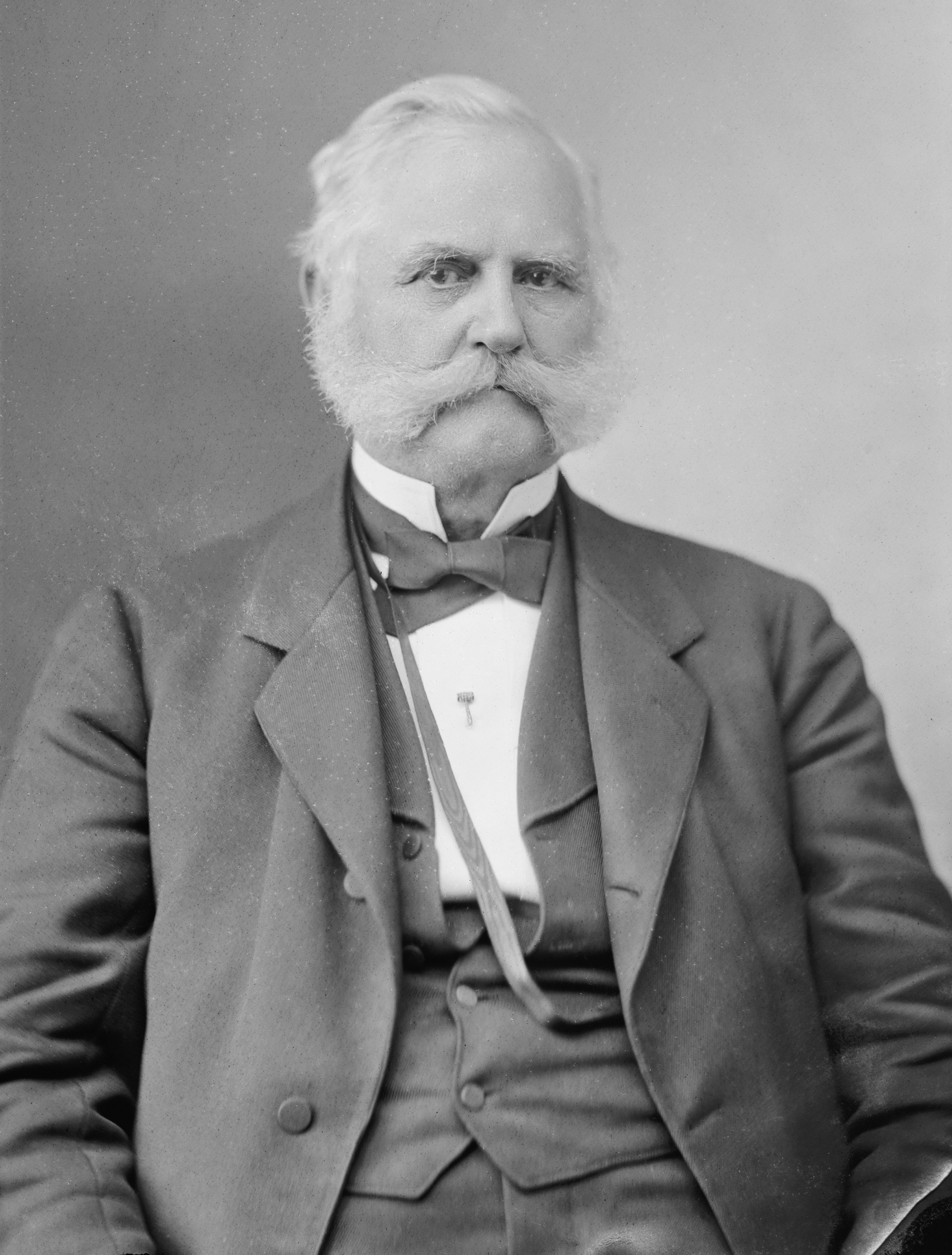
Historical · U.S. House · Pennsylvania · District 12
Hendrick Wright
Former U.S. Representative · Pennsylvania District 12 · 1853–1881 · National Greenbacker
Hendrick Wright represented Pennsylvania's District 12 in the United States House of Representatives (1853–1881) for the National Greenbacker party. The page below collects sourced biographical facts, term history, committee roles, and provenance for Wright.
Bioguide ID: W000761
Key facts
- Full name
- Hendrick Wright
- State
- Pennsylvania
- District
- District 12
- Party
- National Greenbacker
- House service
- 1853–1881
- First House term
- 1853
- Status
- Left office
- Current term ends
- —
- Born
- 1808
- Bioguide ID
- W000761
- Committee assignments
- —
- Dataset version
- 1.20260606
Biographical narrative
887 words · sourced from the Wikipedia REST extract
Hendrick Wright was a U.S. Representative from Pennsylvania, serving in the House of Representatives during the mid to late 19th century. A member of the National Greenbacker Party, Wright's political career spanned several decades, during which he held various positions, including that of district attorney and state legislator. His tenure in Congress included significant involvement in labor issues and economic policies, reflecting the tumultuous social landscape of the era.
Early life and career
Hendrick Bradley Wright was born on April 24, 1808, in Plymouth, Pennsylvania. He was the son of Joseph Wright, who worked as a farmer and coal mine operator. Wright's early education took place at the Wilkes-Barre Grammar School, followed by his attendance at Dickinson College in Carlisle, Pennsylvania. In 1831, he left Dickinson to pursue a legal career, studying law and subsequently gaining admission to the Luzerne County bar. He began his legal practice in Wilkes-Barre, where he established himself in the local legal community.
Wright's political career began in earnest when he was appointed as the district attorney for Luzerne County in 1834. This role marked the beginning of his involvement in public service and laid the groundwork for his future political endeavors. He served in the Pennsylvania House of Representatives from 1841 to 1843, where he was elected as Speaker during his final year in office. His participation in state politics allowed him to build a network and gain recognition within the Democratic Party.
Throughout the 1840s and 1850s, Wright was active in various Democratic National Conventions, attending multiple sessions from 1844 to 1876. His involvement in these conventions highlighted his commitment to the Democratic Party and his influence within its ranks. Despite an unsuccessful bid for a seat in the U.S. House of Representatives in 1850, Wright's political aspirations remained strong.
House tenure
Wright's congressional career began when he was elected as a Democrat to the Thirty-third Congress in 1852. However, he faced challenges in securing reelection, losing his seat in 1854. His political fortunes changed when he was elected to the Thirty-seventh Congress to fill a vacancy caused by the death of fellow Congressman George W. Scranton. Wright's subsequent election to the Forty-fifth Congress marked a significant point in his career, during which he served as chairman of the United States House Committee on Manufactures.
Wright's tenure in the House was characterized by his engagement with pressing issues of the time, particularly those related to labor and economic conditions. Notably, during the Great Railroad Strike of 1877, he publicly opposed the use of state and federal troops to suppress the strike in his district. His stance reflected a broader concern for the rights of workers and the impact of industrialization on labor relations. Wright's comments during this period indicated his awareness of the growing power of labor movements and the potential consequences of government intervention in labor disputes.
In addition to his legislative responsibilities, Wright's political alignment shifted over time. After serving as a Democrat, he was reelected to the Forty-sixth Congress as a member of the National Greenbacker Party. This transition illustrated his evolving views on economic issues, particularly those related to currency and monetary policy. The Greenbackers were known for advocating for the issuance of paper money to stimulate the economy and support working-class interests.
Despite his efforts and contributions, Wright faced electoral challenges later in his career. He was unsuccessful in his bid for reelection in 1880 and sought the Greenback nomination for President that same year, but he lost to James Weaver. His political career concluded with his departure from Congress on March 3, 1881.
Legislative focus and committees
Throughout his time in the U.S. House of Representatives, Hendrick Wright was involved in various legislative initiatives, particularly those related to manufacturing and economic policy. As chairman of the House Committee on Manufactures during the Forty-fifth Congress, he played a significant role in shaping policies that affected the manufacturing sector. His leadership in this committee underscored his commitment to addressing the needs and challenges faced by industries during a period of rapid economic change.
Wright's legislative focus was also influenced by the social dynamics of his time, particularly the labor movements that emerged in response to industrialization. His opposition to the use of military force during the Great Railroad Strike of 1877 highlighted his concern for the rights of workers and the importance of addressing their grievances through dialogue rather than repression. This stance positioned him as a representative of labor interests within the political landscape of the era.
In addition to his work on the Committee on Manufactures, Wright's participation in various congressional sessions allowed him to engage with a wide range of issues, from economic policy to social justice. His experience in state politics and his legal background contributed to his understanding of the complexities of governance and the need for effective legislation to address the challenges facing his constituents.
Wright's career in Congress concluded with his departure on March 3, 1881. He passed away later that year on September 2, 1881, in Wilkes-Barre, Pennsylvania. He was laid to rest in Hollenback Cemetery, leaving behind a legacy as a dedicated public servant who navigated the complexities of 19th-century American politics. His contributions to labor rights and economic policy continue to be recognized as part of the broader narrative of American legislative history.
Notable legislation
Sponsored and co-sponsored legislation for Hendrick Wright is pending operator curation. The biographical narrative above carries the same provenance trail until per-bill rows are written.
Sources
- [1]https://en.wikipedia.org/wiki/Hendrick_B._WrightWikipedia · retrieved 2026-06-06
Notable quotes
Sourced quotes for Hendrick Wright are pending operator curation. Narrative-scope provenance remains attached below.
Sources
- [1]https://en.wikipedia.org/wiki/Hendrick_B._WrightWikipedia · retrieved 2026-06-06
Key positions
Curated policy positions for Hendrick Wright are pending operator review. The biographical narrative above carries the same provenance trail until per-topic positions are written.
Sources
- [1]https://en.wikipedia.org/wiki/Hendrick_B._WrightWikipedia · retrieved 2026-06-06
Terms served
- 1853–1855U.S. House · Term 1 · Democratic
- 1861–1863U.S. House · Term 2 · Democratic
- 1877–1879U.S. House · Term 3 · Democratic
- 1879–1881U.S. House · Term 4 · National Greenbacker
Sources & provenance
Every attributable claim above carries a per-section [N] marker that resolves to the corresponding URL below. Each entry records the upstream provider, the canonical URL, and the timestamp at which the source was retrieved by the ingest pipeline.
Key facts
- https://bioguide.congress.gov/search/bio/W000761bioguide · retrieved 2026-06-06
- https://www.govtrack.us/congress/members/411910govtrack · retrieved 2026-06-06
Biographical narrative
- https://en.wikipedia.org/wiki/Hendrick_B._Wrightwikipedia · retrieved 2026-06-06
Find your representative
Every U.S. state elects representatives by district. Browse Pennsylvania’s delegation, the full former-representative roster, or explore the role and term length.
Related on The Candidate
- Preceded by Almon ReadEarlier holder of the Pennsylvania District 12 House seat · Democratic.Open
- Succeeded by Charles BrummLater holder of the Pennsylvania District 12 House seat · Republican.Open
- Adam SeybertFormer U.S. Representative · Pennsylvania District 1 · RepublicanOpen
- Benjamin SayFormer U.S. Representative · Pennsylvania District 1 · RepublicanOpen
- Chapman FreemanFormer U.S. Representative · Pennsylvania District 1 · RepublicanOpen
- Harry RansleyFormer U.S. Representative · Pennsylvania District 1 · RepublicanOpen