
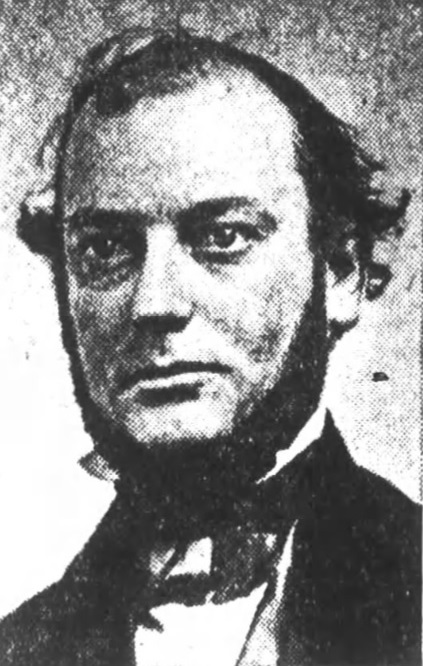
Historical · U.S. House · Pennsylvania · District 12
Henry Fuller
Former U.S. Representative · Pennsylvania District 12 · 1851–1857 · Ind. Republican-Democrat
Henry Fuller represented Pennsylvania's District 12 in the United States House of Representatives (1851–1857) for the Ind. Republican-Democrat party. The page below collects sourced biographical facts, term history, committee roles, and provenance for Fuller.
Bioguide ID: F000410
Key facts
- Full name
- Henry Fuller
- State
- Pennsylvania
- District
- District 12
- Party
- Ind. Republican-Democrat
- House service
- 1851–1857
- First House term
- 1851
- Status
- Left office
- Current term ends
- —
- Born
- 1820
- Bioguide ID
- F000410
- Committee assignments
- —
- Dataset version
- 1.20260606
Biographical narrative
971 words · sourced from the Wikipedia REST extract
Henry Fuller was a notable figure in American politics during the mid-19th century, serving as a U.S. Representative for Pennsylvania's 12th congressional district. His political career was marked by his affiliation with the Whig Party, a significant political force in the United States during his time. Fuller’s tenure in the House of Representatives spanned two terms, during which he engaged in the legislative processes of a nation grappling with complex issues, including sectional tensions leading up to the Civil War. After his congressional service, he returned to his legal practice until his death in 1860.
Early life and career
Henry Fuller was born on January 3, 1820, in Bethany, Pennsylvania. His early education laid the foundation for his future endeavors, culminating in his graduation from Princeton College in 1839. This prestigious institution provided him with a rigorous academic environment that would prepare him for a career in law and public service. Following his graduation, Fuller pursued legal studies and was admitted to the bar on January 3, 1842. He began his legal practice in Wilkes-Barre, Pennsylvania, where he established himself as a competent attorney.
Fuller’s involvement in politics began at the state level when he served as a member of the Pennsylvania House of Representatives in 1848 and 1849. His experience in the state legislature likely provided him with valuable insights into governance and the legislative process, which would later inform his work in the U.S. Congress. His political career was initially aligned with the Whig Party, a major political party in the United States during the early to mid-19th century, known for its opposition to the Democratic Party and its advocacy for modernization and economic development.
House tenure
Fuller’s congressional career commenced when he was elected as a Whig to the Thirty-second Congress, which convened in 1851. His election to the House of Representatives marked a significant step in his political journey, allowing him to represent the interests of his constituents at the national level. During his first term, he participated in the legislative debates and discussions that characterized the era, a time when the nation was increasingly divided over issues such as slavery and states' rights.
Despite his initial success, Fuller faced challenges in his political career. He was not reelected in 1852, which marked a temporary setback. However, he returned to Congress after being reelected as a Whig to the Thirty-fourth Congress. His second term provided him with another opportunity to influence legislation and contribute to the national dialogue on pressing issues of the day. Notably, Fuller was a candidate for the Speakership of the House, a position that would have placed him in a prominent leadership role within the legislative body.
Fuller’s political stance included support for the Missouri Compromise, a legislative measure aimed at addressing the contentious issue of slavery in the territories. His position on this matter was not without controversy, as it drew criticism from various factions. The political climate of the time was fraught with tension, and Fuller's views were scrutinized by both supporters and opponents. His candidacy for the Speakership was met with resistance, reflecting the deep divisions within the political landscape of the era.
Ultimately, Fuller chose not to seek renomination in 1856, concluding his congressional career after two terms in office. Following his departure from Congress, he resumed his legal practice, returning to the profession that had initially shaped his career. His decision to step away from the political arena may have been influenced by the shifting dynamics within the Whig Party and the broader national context leading up to the Civil War.
Legislative focus and committees
During his time in the House of Representatives, Henry Fuller was involved in a range of legislative issues reflective of the concerns of his constituents and the nation. As a member of the Whig Party, he aligned himself with the party's platform, which emphasized economic development, infrastructure improvements, and a cautious approach to the contentious issue of slavery. The Whig Party was known for advocating for policies that promoted industrialization and modernization, which were critical to the economic growth of the United States during this period.
Fuller’s legislative focus likely included matters pertinent to Pennsylvania, a state that was experiencing significant changes due to industrialization and demographic shifts. The state was a key player in the national economy, and issues such as transportation, trade, and labor would have been central to his constituents' interests. His background in law would have informed his approach to legislative matters, allowing him to navigate the complexities of policy-making effectively.
While specific details regarding the committees on which Fuller served are not provided, it is common for members of Congress to participate in committees that align with their interests and expertise. These committees play a crucial role in shaping legislation, conducting hearings, and overseeing the implementation of laws. Fuller's legal background may have positioned him well for involvement in committees related to legal and judicial matters, as well as those addressing economic issues.
After concluding his congressional service, Fuller returned to his legal practice in Pennsylvania. His decision to focus on law after his political career reflects a common trajectory for many politicians of the era, who often transitioned between public service and private practice. Fuller continued to engage with the legal community until his death on December 26, 1860, in Philadelphia, Pennsylvania. He was interred in Hollenback Cemetery in Wilkes-Barre, a testament to his ties to the region he represented.
In summary, Henry Fuller’s life and career encapsulate a period of significant political and social change in the United States. His contributions as a U.S. Representative and his involvement in state politics illustrate the complexities of governance during a time of division and transformation. Fuller's legacy is marked by his commitment to public service and his engagement with the pressing issues of his time.
Notable legislation
Sponsored and co-sponsored legislation for Henry Fuller is pending operator curation. The biographical narrative above carries the same provenance trail until per-bill rows are written.
Sources
- [1]https://en.wikipedia.org/wiki/Henry_Mills_FullerWikipedia · retrieved 2026-06-06
Notable quotes
Sourced quotes for Henry Fuller are pending operator curation. Narrative-scope provenance remains attached below.
Sources
- [1]https://en.wikipedia.org/wiki/Henry_Mills_FullerWikipedia · retrieved 2026-06-06
Key positions
Curated policy positions for Henry Fuller are pending operator review. The biographical narrative above carries the same provenance trail until per-topic positions are written.
Sources
- [1]https://en.wikipedia.org/wiki/Henry_Mills_FullerWikipedia · retrieved 2026-06-06
Terms served
- 1851–1853U.S. House · Term 1 · Whig
- 1855–1857U.S. House · Term 2 · Ind. Republican-Democrat
Sources & provenance
Every attributable claim above carries a per-section [N] marker that resolves to the corresponding URL below. Each entry records the upstream provider, the canonical URL, and the timestamp at which the source was retrieved by the ingest pipeline.
Key facts
- https://bioguide.congress.gov/search/bio/F000410bioguide · retrieved 2026-06-06
- https://www.govtrack.us/congress/members/404352govtrack · retrieved 2026-06-06
Biographical narrative
- https://en.wikipedia.org/wiki/Henry_Mills_Fullerwikipedia · retrieved 2026-06-06
Find your representative
Every U.S. state elects representatives by district. Browse Pennsylvania’s delegation, the full former-representative roster, or explore the role and term length.
Related on The Candidate
- Preceded by Almon ReadEarlier holder of the Pennsylvania District 12 House seat · Democratic.Open
- Succeeded by John MontgomeryLater holder of the Pennsylvania District 12 House seat · Democratic.Open
- Adam SeybertFormer U.S. Representative · Pennsylvania District 1 · RepublicanOpen
- Benjamin SayFormer U.S. Representative · Pennsylvania District 1 · RepublicanOpen
- Chapman FreemanFormer U.S. Representative · Pennsylvania District 1 · RepublicanOpen
- Harry RansleyFormer U.S. Representative · Pennsylvania District 1 · RepublicanOpen