
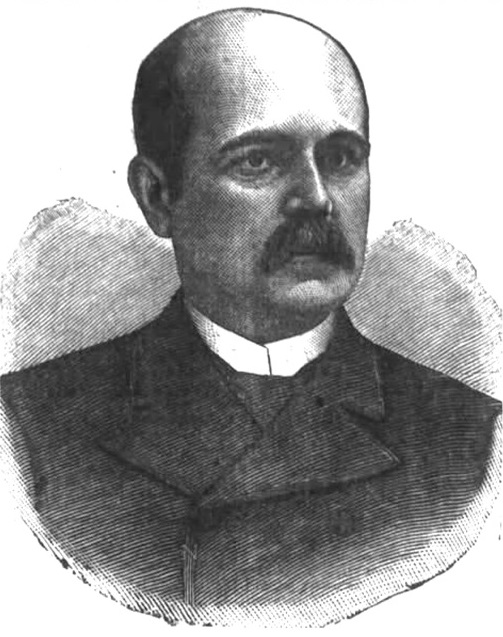
Historical · U.S. House · Pennsylvania · District 12
John Lynch
Former U.S. Representative · Pennsylvania District 12 · 1887–1889 · Democratic
John Lynch represented Pennsylvania's District 12 in the United States House of Representatives (1887–1889) for the Democratic party. The page below collects sourced biographical facts, term history, committee roles, and provenance for Lynch.
Bioguide ID: L000532
Key facts
- Full name
- John Lynch
- State
- Pennsylvania
- District
- District 12
- Party
- Democratic
- House service
- 1887–1889
- First House term
- 1887
- Status
- Left office
- Current term ends
- —
- Born
- 1843
- Bioguide ID
- L000532
- Committee assignments
- —
- Dataset version
- 1.20260606
Biographical narrative
830 words · sourced from the Wikipedia REST extract
John Lynch was an American lawyer and politician who served as a Democratic member of the U.S. House of Representatives for Pennsylvania's 12th congressional district from 1887 to 1889. His career in public service was marked by his legal expertise and his commitment to the Democratic Party during a transformative period in American history. Lynch's tenure in Congress was brief, but it was part of a broader life dedicated to public service and the legal profession.
Early life and career
John Lynch was born on November 1, 1843, in Providence, Rhode Island. His early years were shaped by his family's relocation to Pennsylvania in 1856, when they settled in Wilkes-Barre. This move was significant, as it placed Lynch in a region that was experiencing rapid industrial growth, particularly in coal mining and related industries. Growing up in Wilkes-Barre, Lynch attended local public schools, which provided him with a foundational education. He furthered his studies at Wyoming Seminary in Kingston, Pennsylvania, an institution known for its rigorous academic standards.
In his youth, Lynch engaged in various forms of labor, which included working on a farm and in the coal mines. These experiences likely provided him with a firsthand understanding of the challenges faced by laborers during a time when the coal industry was a cornerstone of the local economy. Additionally, Lynch took on the role of a teacher, which not only contributed to his community but also helped him develop skills that would later serve him in his political career.
Lynch's interest in law emerged during his formative years. He pursued legal studies and, after years of dedication, was admitted to the bar on November 1, 1868. This milestone marked the beginning of his legal career in Wilkes-Barre, where he established himself as a practicing attorney. His work in law would later inform his approach to governance and public service, as he navigated the complexities of legal and legislative matters during his time in Congress.
House tenure
John Lynch's political career took a significant turn when he was elected as a Democrat to the U.S. House of Representatives during the Fiftieth Congress, which convened in 1887. His election to Congress represented a culmination of his legal background and his commitment to public service. Serving Pennsylvania's 12th congressional district, Lynch was part of a legislative body that was grappling with various national issues, including economic policies, labor rights, and the expansion of civil rights.
During his time in the House, Lynch participated in the legislative process, contributing to discussions and decisions that would impact his constituents and the nation. However, his tenure was relatively short-lived, as he faced challenges in seeking reelection in 1888. Despite his efforts, Lynch was unsuccessful in securing a second term, and his time in Congress concluded on March 3, 1889. Following his departure from the House, Lynch returned to his legal practice in Wilkes-Barre, where he continued to serve the community through his legal expertise.
Legislative focus and committees
While specific details regarding Lynch's legislative focus and committee assignments during his time in Congress are not extensively documented, it can be inferred that his background as a lawyer would have influenced his priorities and areas of interest. As a member of the Democratic Party, Lynch likely aligned with the party's platform, which during this era included issues such as labor rights, economic reform, and civil rights. The late 19th century was a period of significant social change in the United States, and Lynch's experiences as a coal miner and educator may have informed his perspectives on labor-related legislation.
After his congressional term, Lynch continued to engage in public service through his legal career. He was appointed as a judge of the court of common pleas, a position he held from 1892 until his death in 1910. This role allowed him to further contribute to the legal system and uphold justice in his community. His judicial tenure was marked by a commitment to fairness and the rule of law, reflecting the values he upheld throughout his career.
John Lynch passed away on August 17, 1910, in Atlantic City, New Jersey. His remains were interred in St. Mary's Cemetery in Wilkes-Barre, Pennsylvania, where he had spent much of his life. Lynch's legacy as a public servant and legal professional is remembered in the context of a rapidly changing America, where issues of labor, justice, and civil rights were increasingly at the forefront of national discourse.
In summary, John Lynch's life was characterized by a blend of legal practice and public service. His journey from a young boy in Rhode Island to a U.S. Representative and later a judge illustrates a commitment to his community and the principles of democracy. Although his congressional career was brief, Lynch's contributions to law and public service left a lasting impact on the region he served. His experiences and the challenges he faced reflect the broader historical context of the late 19th century, a time of significant transformation in American society.
Notable legislation
Sponsored and co-sponsored legislation for John Lynch is pending operator curation. The biographical narrative above carries the same provenance trail until per-bill rows are written.
Sources
- [1]https://en.wikipedia.org/wiki/John_Lynch_(Pennsylvania_politician)Wikipedia · retrieved 2026-06-06
Notable quotes
Sourced quotes for John Lynch are pending operator curation. Narrative-scope provenance remains attached below.
Sources
- [1]https://en.wikipedia.org/wiki/John_Lynch_(Pennsylvania_politician)Wikipedia · retrieved 2026-06-06
Key positions
Curated policy positions for John Lynch are pending operator review. The biographical narrative above carries the same provenance trail until per-topic positions are written.
Sources
- [1]https://en.wikipedia.org/wiki/John_Lynch_(Pennsylvania_politician)Wikipedia · retrieved 2026-06-06
Terms served
- 1887–1889U.S. House · Term 1 · Democratic
Sources & provenance
Every attributable claim above carries a per-section [N] marker that resolves to the corresponding URL below. Each entry records the upstream provider, the canonical URL, and the timestamp at which the source was retrieved by the ingest pipeline.
Key facts
- https://bioguide.congress.gov/search/bio/L000532bioguide · retrieved 2026-06-06
- https://www.govtrack.us/congress/members/407016govtrack · retrieved 2026-06-06
Biographical narrative
- https://en.wikipedia.org/wiki/John_Lynch_(Pennsylvania_politician)wikipedia · retrieved 2026-06-06
Find your representative
Every U.S. state elects representatives by district. Browse Pennsylvania’s delegation, the full former-representative roster, or explore the role and term length.
Related on The Candidate
- Preceded by Daniel ConnollyEarlier holder of the Pennsylvania District 12 House seat · Democratic.Open
- Succeeded by George ShonkLater holder of the Pennsylvania District 12 House seat · Republican.Open
- Adam SeybertFormer U.S. Representative · Pennsylvania District 1 · RepublicanOpen
- Benjamin SayFormer U.S. Representative · Pennsylvania District 1 · RepublicanOpen
- Chapman FreemanFormer U.S. Representative · Pennsylvania District 1 · RepublicanOpen
- Harry RansleyFormer U.S. Representative · Pennsylvania District 1 · RepublicanOpen