
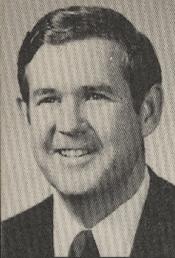
Historical · U.S. House · Pennsylvania · District 12
John Murtha
Former U.S. Representative · Pennsylvania District 12 · 1973–2010 · Democratic
John Murtha represented Pennsylvania's District 12 in the United States House of Representatives (1973–2010) for the Democratic party. The page below collects sourced biographical facts, term history, committee roles, and provenance for Murtha.
Bioguide ID: M001120
Key facts
- Full name
- John Murtha
- State
- Pennsylvania
- District
- District 12
- Party
- Democratic
- House service
- 1973–2010
- First House term
- 1973
- Status
- Left office
- Current term ends
- —
- Born
- 1932
- Bioguide ID
- M001120
- Committee assignments
- —
- Dataset version
- 1.20260605
Biographical narrative
918 words · sourced from the Wikipedia REST extract
John P. Murtha was a prominent American politician and former U.S. Representative who served Pennsylvania's 12th congressional district from 1974 until his death in 2010. A member of the Democratic Party, Murtha was notable for being the first Vietnam War veteran elected to the U.S. House of Representatives and held the distinction of being the longest-serving member from Pennsylvania. His political career spanned nearly four decades, during which he became known for his advocacy on military and defense issues, particularly regarding the Iraq War, as well as for his involvement in various legislative initiatives.
Early life and career
John Patrick Murtha was born on June 17, 1932, in New Martinsville, West Virginia, into an Irish-American family. He grew up in Paden City, West Virginia, and later moved to Westmoreland County, Pennsylvania, a suburban area east of Pittsburgh. Murtha was the son of Mary Edna Ray and John Patrick Murtha. His early life was marked by a commitment to service and leadership, as evidenced by his achievement of the rank of Eagle Scout. In his youth, he worked various jobs, including delivering newspapers and working at a gas station, which provided him with a foundation of work ethic and responsibility.
Murtha graduated from The Kiski School, an all-male boarding institution in Saltsburg, Pennsylvania, before attending Washington and Jefferson College. In 1952, he left college to enlist in the Marine Corps, where he demonstrated exceptional leadership qualities and was awarded the American Spirit Honor Medal during his training. He served as a drill instructor at Parris Island and was subsequently selected for Officer Candidate School in Virginia. Following his training, he was assigned to the Second Marine Division at Camp Lejeune, North Carolina.
After his initial service, Murtha transitioned to the Marine Forces Reserve while also running a small business, Johnstown Minute Car Wash, which continues to operate today. He utilized the G.I. Bill to attend the University of Pittsburgh, where he earned a degree in economics, later taking graduate courses at Indiana University of Pennsylvania. In 1966, he volunteered for service in the Vietnam War, where he served as a battalion staff officer with the 1st Battalion, 1st Marine Regiment, and received several honors for his service, including the Bronze Star Medal with Valor device, two Purple Hearts, and the Vietnamese Cross of Gallantry. He retired from the Marine Corps Reserve as a colonel in 1990, having also been awarded the Navy Distinguished Service Medal.
Murtha began his political career in the Pennsylvania House of Representatives, where he was elected to represent the 72nd legislative district in a special election on May 20, 1969. This election followed the death of Representative Edward McNally. Murtha successfully secured a full term in 1970, marking the beginning of his long-standing political journey.
House tenure
Murtha's congressional career began following the death of Congressman John P. Saylor in October 1973. He quickly entered the special election for Pennsylvania's 12th congressional district, which took place in February 1974 during the Watergate scandal. Murtha won the election by a narrow margin of just 242 votes and was sworn into office on February 20, 1974. He subsequently won a full term in the general election later that year by a significantly larger margin and continued to be re-elected every two years until his passing in 2010.
Throughout his tenure, Murtha faced several challenges, including tough primary contests in 1982, 1990, and 2002. The 1982 primary was particularly contentious due to redistricting efforts that aimed to capitalize on Murtha's association with the Abscam investigation, which had implicated several members of Congress in bribery scandals. Despite these challenges, Murtha consistently demonstrated resilience, winning re-election against formidable opponents. In 2006, he faced Republican challenger Diana Irey, who criticized him for his stance on the Iraq War. However, Murtha maintained a significant lead in the polls and ultimately won the election with a substantial margin.
Legislative focus and committees
During his time in the House of Representatives, Murtha became known for his focus on military and defense issues, leveraging his experience as a veteran to inform his legislative priorities. He was particularly vocal about the Iraq War, advocating for the withdrawal of American forces and raising questions about military strategies and ethics. His positions on these matters garnered national attention and made him a prominent figure in discussions surrounding U.S. military involvement abroad.
Murtha served on several important committees during his congressional career, including the House Appropriations Committee, where he played a key role in shaping funding for defense and military programs. His influence in this committee allowed him to advocate for the needs of his constituents while also addressing broader national security concerns. His tenure was marked by a commitment to ensuring that military personnel received the support and resources necessary for their service.
In addition to his work on military issues, Murtha was involved in various other legislative initiatives, including those related to economic development, healthcare, and infrastructure. His long-standing presence in Congress allowed him to build relationships with colleagues across party lines, although he also faced scrutiny regarding ethics and accountability, particularly during the Abscam investigation in the early 1980s.
Murtha's legacy is characterized by his dedication to public service, his advocacy for veterans and military personnel, and his significant contributions to the legislative process over nearly four decades. His passing on February 8, 2010, marked the end of a notable chapter in Pennsylvania's political history, leaving behind a complex legacy that continues to be examined and discussed in the context of American politics.
Notable legislation
Sponsored and co-sponsored legislation for John Murtha is pending operator curation. The biographical narrative above carries the same provenance trail until per-bill rows are written.
Sources
- [1]https://en.wikipedia.org/wiki/John_MurthaWikipedia · retrieved 2026-06-05
Notable quotes
Sourced quotes for John Murtha are pending operator curation. Narrative-scope provenance remains attached below.
Sources
- [1]https://en.wikipedia.org/wiki/John_MurthaWikipedia · retrieved 2026-06-05
Key positions
Curated policy positions for John Murtha are pending operator review. The biographical narrative above carries the same provenance trail until per-topic positions are written.
Sources
- [1]https://en.wikipedia.org/wiki/John_MurthaWikipedia · retrieved 2026-06-05
Terms served
- 1973–1975U.S. House · Term 1 · Democratic
- 1975–1977U.S. House · Term 2 · Democratic
- 1977–1979U.S. House · Term 3 · Democratic
- 1979–1981U.S. House · Term 4 · Democratic
- 1981–1983U.S. House · Term 5 · Democratic
- 1983–1985U.S. House · Term 6 · Democratic
- 1985–1987U.S. House · Term 7 · Democratic
- 1987–1989U.S. House · Term 8 · Democratic
- 1989–1991U.S. House · Term 9 · Democratic
- 1991–1993U.S. House · Term 10 · Democratic
- 1993–1995U.S. House · Term 11 · Democratic
- 1995–1997U.S. House · Term 12 · Democratic
- 1997–1999U.S. House · Term 13 · Democratic
- 1999–2001U.S. House · Term 14 · Democratic
- 2001–2003U.S. House · Term 15 · Democratic
- 2003–2005U.S. House · Term 16 · Democratic
- 2005–2007U.S. House · Term 17 · Democratic
- 2007–2009U.S. House · Term 18 · Democratic
- 2009–2010U.S. House · Term 19 · Democratic
Sources & provenance
Every attributable claim above carries a per-section [N] marker that resolves to the corresponding URL below. Each entry records the upstream provider, the canonical URL, and the timestamp at which the source was retrieved by the ingest pipeline.
Key facts
- https://bioguide.congress.gov/search/bio/M001120bioguide · retrieved 2026-06-05
- http://www.house.gov/murthahouse.gov · retrieved 2026-06-05
Biographical narrative
- https://en.wikipedia.org/wiki/John_Murthawikipedia · retrieved 2026-06-05
Find your representative
Every U.S. state elects representatives by district. Browse Pennsylvania’s delegation, the full former-representative roster, or explore the role and term length.
Related on The Candidate
- Preceded by John WhalleyEarlier holder of the Pennsylvania District 12 House seat · Republican.Open
- Succeeded by Mark CritzLater holder of the Pennsylvania District 12 House seat · Democratic.Open
- Adam SeybertFormer U.S. Representative · Pennsylvania District 1 · RepublicanOpen
- Benjamin SayFormer U.S. Representative · Pennsylvania District 1 · RepublicanOpen
- Chapman FreemanFormer U.S. Representative · Pennsylvania District 1 · RepublicanOpen
- Harry RansleyFormer U.S. Representative · Pennsylvania District 1 · RepublicanOpen