
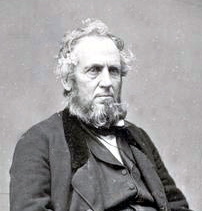
Historical · U.S. House · Pennsylvania · District 13
Henry Tracy
Former U.S. Representative · Pennsylvania District 13 · 1863–1865 · Ind. Republican
Henry Tracy represented Pennsylvania's District 13 in the United States House of Representatives (1863–1865) for the Ind. Republican party. The page below collects sourced biographical facts, term history, committee roles, and provenance for Tracy.
Bioguide ID: T000345
Key facts
- Full name
- Henry Tracy
- State
- Pennsylvania
- District
- District 13
- Party
- Ind. Republican
- House service
- 1863–1865
- First House term
- 1863
- Status
- Left office
- Current term ends
- —
- Born
- 1807
- Bioguide ID
- T000345
- Committee assignments
- —
- Dataset version
- 1.20260606
Biographical narrative
867 words · sourced from the Wikipedia REST extract
Henry Tracy was an Independent Republican politician who served as a U.S. Representative for Pennsylvania's 13th congressional district during the 38th Congress. His political career was marked by his involvement in local governance and his participation in national political events, particularly during a transformative period in American history. Tracy's tenure in the House of Representatives began in 1863 and ended in 1865, after which he returned to his mercantile pursuits.
Early life and career
Henry Wells Tracy was born on September 24, 1807, in Ulster Township, Pennsylvania. His early education took place at the Angelica Seminary, located in Allegany County, New York. This formative experience likely provided him with a foundation in the liberal arts and critical thinking, which would serve him well in his later endeavors. After completing his education, Tracy pursued a career in law, which was a common path for many individuals seeking to enter public service at that time.
In addition to his legal studies, Tracy engaged in various mercantile activities, which involved buying and selling goods, and he also worked as a road contractor. His business ventures took him to several locations, including Standing Stone, Pennsylvania, Havre de Grace, Maryland, and Towanda, Pennsylvania. This diverse professional background not only provided him with practical experience in commerce and construction but also allowed him to build a network of connections that would prove beneficial in his political career.
Tracy's political involvement began to take shape in the early 1860s. He was a delegate to the 1860 Republican National Convention, a significant event that shaped the party's platform and direction during a tumultuous period in American history. His participation in this convention indicated his commitment to the Republican Party's ideals, particularly as the nation was on the brink of the Civil War. Following this, Tracy served in the Pennsylvania House of Representatives for two consecutive years, 1861 and 1862. His time in the state legislature provided him with valuable experience in governance and legislative processes, further preparing him for his future role in the U.S. Congress.
House tenure
Tracy's election to the U.S. House of Representatives came during a critical time in American history. He was elected as an Independent Republican to the 38th Congress, which convened in 1863. This period was marked by the ongoing Civil War, and the political landscape was heavily influenced by issues related to the conflict, including debates over war policy, civil rights, and the future of the Union.
During his time in Congress, Tracy served a single term, which lasted until March 3, 1865. His role as a member of the House of Representatives placed him at the center of national discussions and decisions that would shape the future of the United States. Although specific details about his legislative actions and voting records during this time are not provided, it is reasonable to assume that he participated in the debates and decisions that were crucial to the war effort and the post-war reconstruction of the nation.
After his congressional term ended, Tracy continued to be active in public service. In 1866, he was appointed as the collector of the port of Philadelphia, a position that involved overseeing customs and trade activities at one of the nation's busiest ports. This role further demonstrated his ongoing commitment to public service and governance, as he managed important economic activities that were vital to the region and the country.
Legislative focus and committees
While specific details regarding Tracy's legislative focus and committee assignments during his time in the House of Representatives are not available, it can be inferred that his background in law, commerce, and local governance likely influenced his areas of interest. As a member of the Independent Republican faction, Tracy may have been involved in discussions that aligned with the party's principles, which included a focus on civil rights, economic development, and the preservation of the Union during the Civil War.
The 38th Congress was characterized by significant legislative efforts aimed at addressing the challenges posed by the Civil War and its aftermath. Members of Congress during this period were tasked with navigating complex issues, including the management of war expenditures, the integration of formerly enslaved individuals into society, and the reconstruction of Southern states. Tracy's experiences as a delegate to the Republican National Convention and his service in the Pennsylvania House of Representatives would have provided him with insights into these pressing matters.
After his congressional service, Tracy returned to his mercantile pursuits, indicating a shift back to the private sector. His career trajectory reflects the common path of many politicians of the era, who often moved between public service and private enterprise. Tracy's life after Congress remained relatively low-profile, and he continued to reside in Pennsylvania.
Henry Tracy passed away on April 11, 1886, at the age of 78. He was interred in the Brick Church Cemetery located in Wysox, Pennsylvania. His life and career reflect a period of significant change in American history, marked by the Civil War and its implications for the nation. Tracy's contributions as a public servant, though limited to a single term in the U.S. House of Representatives, are part of the broader narrative of American governance during a pivotal time.
Notable legislation
Sponsored and co-sponsored legislation for Henry Tracy is pending operator curation. The biographical narrative above carries the same provenance trail until per-bill rows are written.
Sources
- [1]https://en.wikipedia.org/wiki/Henry_Wells_TracyWikipedia · retrieved 2026-06-06
Notable quotes
Sourced quotes for Henry Tracy are pending operator curation. Narrative-scope provenance remains attached below.
Sources
- [1]https://en.wikipedia.org/wiki/Henry_Wells_TracyWikipedia · retrieved 2026-06-06
Key positions
Curated policy positions for Henry Tracy are pending operator review. The biographical narrative above carries the same provenance trail until per-topic positions are written.
Sources
- [1]https://en.wikipedia.org/wiki/Henry_Wells_TracyWikipedia · retrieved 2026-06-06
Terms served
- 1863–1865U.S. House · Term 1 · Ind. Republican
Sources & provenance
Every attributable claim above carries a per-section [N] marker that resolves to the corresponding URL below. Each entry records the upstream provider, the canonical URL, and the timestamp at which the source was retrieved by the ingest pipeline.
Key facts
- https://bioguide.congress.gov/search/bio/T000345bioguide · retrieved 2026-06-06
- https://www.govtrack.us/congress/members/410916govtrack · retrieved 2026-06-06
Biographical narrative
- https://en.wikipedia.org/wiki/Henry_Wells_Tracywikipedia · retrieved 2026-06-06
Find your representative
Every U.S. state elects representatives by district. Browse Pennsylvania’s delegation, the full former-representative roster, or explore the role and term length.
Related on The Candidate
- Preceded by William DimmickEarlier holder of the Pennsylvania District 13 House seat · Democratic.Open
- Succeeded by Ulysses MercurLater holder of the Pennsylvania District 13 House seat · Republican.Open
- Adam SeybertFormer U.S. Representative · Pennsylvania District 1 · RepublicanOpen
- Benjamin SayFormer U.S. Representative · Pennsylvania District 1 · RepublicanOpen
- Chapman FreemanFormer U.S. Representative · Pennsylvania District 1 · RepublicanOpen
- Harry RansleyFormer U.S. Representative · Pennsylvania District 1 · RepublicanOpen