
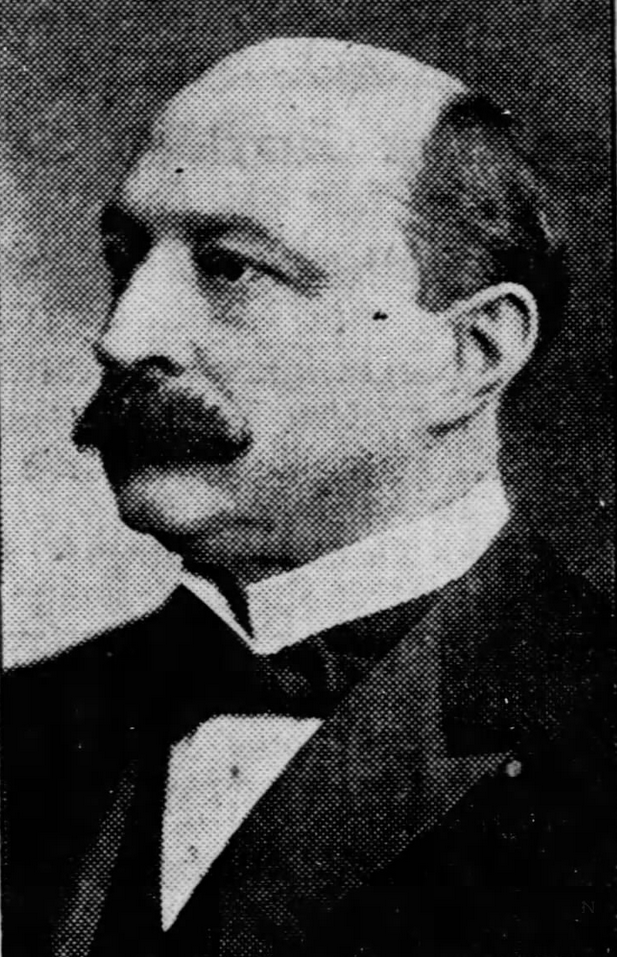
Historical · U.S. House · Pennsylvania · District 13
Marcus Kline
Former U.S. Representative · Pennsylvania District 13 · 1903–1907 · Democratic
Marcus Kline represented Pennsylvania's District 13 in the United States House of Representatives (1903–1907) for the Democratic party. The page below collects sourced biographical facts, term history, committee roles, and provenance for Kline.
Bioguide ID: K000268
Key facts
- Full name
- Marcus Kline
- State
- Pennsylvania
- District
- District 13
- Party
- Democratic
- House service
- 1903–1907
- First House term
- 1903
- Status
- Left office
- Current term ends
- —
- Born
- 1855
- Bioguide ID
- K000268
- Committee assignments
- —
- Dataset version
- 1.20260606
Biographical narrative
925 words · sourced from the Wikipedia REST extract
Marcus Kline was an American lawyer, businessman, and politician who served as a Democratic member of the U.S. House of Representatives from Pennsylvania's 13th congressional district. His congressional tenure spanned from 1903 to 1907, during which he participated in the Fifty-eighth and Fifty-ninth Congresses. Kline's career encompassed various roles in public service and the private sector, reflecting a commitment to both his community and the Democratic Party. After leaving Congress, he continued his professional pursuits in law and banking until his death in 1911.
Early life and career
Marcus Charles Lawrence Kline was born on March 26, 1855, in Emmaus, Pennsylvania. His early education culminated in his graduation from Muhlenberg College, located in Allentown, Pennsylvania. During his time at Muhlenberg, Kline became a member of the Chi Phi fraternity, which is known for fostering brotherhood and leadership among its members. Following his graduation, Kline pursued a career in law, studying diligently to prepare for the bar examination. He was admitted to the bar in 1876, marking the beginning of his legal career in Allentown.
Kline's early professional life was marked by significant public service. In 1877, he was appointed as the city solicitor of Allentown, a role that involved providing legal advice to the city government and representing the city in legal matters. This position allowed him to gain valuable experience in municipal law and governance. He later served as the district attorney for Lehigh County from 1887 to 1890, where he was responsible for prosecuting criminal cases and overseeing legal proceedings within the county. His work in this role contributed to his reputation as a capable and dedicated public servant.
In addition to his legal career, Kline was actively involved in the Democratic Party at the local level. He served as the chairman of the Democratic Party in Lehigh County from 1895 to 1899, during which he played a key role in organizing party activities and supporting Democratic candidates in local elections. His leadership within the party helped to strengthen its presence in the region.
Kline also had a notable career in banking. He held the position of president of the Lehigh Valley Trust Company from 1899 to 1906. In this capacity, he was responsible for overseeing the operations of the bank and ensuring its financial stability. His experience in both law and banking provided him with a strong foundation for his later political career.
House tenure
Kline's political career advanced significantly when he was elected to the U.S. House of Representatives as a member of the Democratic Party. He served during the Fifty-eighth and Fifty-ninth Congresses, beginning his first term in 1903. His election to Congress marked a transition from local to national politics, where he had the opportunity to influence legislation and represent the interests of his constituents on a broader scale.
During his time in the House, Kline was involved in various legislative activities and discussions, contributing to the development of policies that affected his district and the nation. Although specific details regarding the legislation he supported or opposed are not provided, members of Congress typically engage in debates, committee work, and constituent services that reflect their party's platform and the needs of their constituents.
Kline's congressional career was relatively brief, as he chose not to seek renomination in 1906. This decision may have been influenced by various factors, including personal considerations or a desire to return to his legal and banking pursuits. His departure from Congress marked the end of his formal legislative career, but it did not signify the end of his involvement in public service and community affairs.
Legislative focus and committees
While specific details about Kline's legislative focus and committee assignments during his time in Congress are not documented, it is common for members of the House of Representatives to align themselves with committees that reflect their interests and the needs of their constituents. Committees play a crucial role in the legislative process, as they review proposed legislation, conduct hearings, and make recommendations to the full House.
Given Kline's background in law and banking, it is plausible that he may have had an interest in issues related to finance, commerce, or legal reform. Members of Congress often leverage their professional expertise to inform their legislative priorities and contribute to discussions on relevant topics. Additionally, as a representative from Pennsylvania, Kline would have been attentive to the economic and social issues affecting his district, which could have influenced his legislative agenda.
After completing his congressional terms, Kline returned to his legal practice and continued his involvement in banking. He served as president of the Allentown Trust Company from 1907 until his death in 1911. This role allowed him to remain active in the financial sector and contribute to the economic development of his community.
Kline's political engagement extended beyond his congressional service. He was a delegate to the 1908 Democratic National Convention, where he participated in the selection of the party's presidential nominee and contributed to the shaping of the party's platform. This involvement reflects his ongoing commitment to the Democratic Party and his desire to influence national politics.
Marcus Kline passed away on March 10, 1911, in Allentown, Pennsylvania, at the age of 55. His contributions to his community, both as a lawyer and a politician, left a lasting impact on the region. He was interred in Fairview Cemetery in Allentown, where he is remembered for his service and dedication to public life. Kline's legacy as a public servant, lawyer, and businessman continues to be recognized in the historical narrative of Pennsylvania's political landscape.
Notable legislation
Sponsored and co-sponsored legislation for Marcus Kline is pending operator curation. The biographical narrative above carries the same provenance trail until per-bill rows are written.
Sources
- [1]https://en.wikipedia.org/wiki/Marcus_C._L._KlineWikipedia · retrieved 2026-06-06
Notable quotes
Sourced quotes for Marcus Kline are pending operator curation. Narrative-scope provenance remains attached below.
Sources
- [1]https://en.wikipedia.org/wiki/Marcus_C._L._KlineWikipedia · retrieved 2026-06-06
Key positions
Curated policy positions for Marcus Kline are pending operator review. The biographical narrative above carries the same provenance trail until per-topic positions are written.
Sources
- [1]https://en.wikipedia.org/wiki/Marcus_C._L._KlineWikipedia · retrieved 2026-06-06
Terms served
- 1903–1905U.S. House · Term 1 · Democratic
- 1905–1907U.S. House · Term 2 · Democratic
Sources & provenance
Every attributable claim above carries a per-section [N] marker that resolves to the corresponding URL below. Each entry records the upstream provider, the canonical URL, and the timestamp at which the source was retrieved by the ingest pipeline.
Key facts
- https://bioguide.congress.gov/search/bio/K000268bioguide · retrieved 2026-06-06
- https://www.govtrack.us/congress/members/406426govtrack · retrieved 2026-06-06
Biographical narrative
- https://en.wikipedia.org/wiki/Marcus_C._L._Klinewikipedia · retrieved 2026-06-06
Find your representative
Every U.S. state elects representatives by district. Browse Pennsylvania’s delegation, the full former-representative roster, or explore the role and term length.
Related on The Candidate
- Preceded by James RyanEarlier holder of the Pennsylvania District 13 House seat · Democratic.Open
- Succeeded by John RothermelLater holder of the Pennsylvania District 13 House seat · Democratic.Open
- Adam SeybertFormer U.S. Representative · Pennsylvania District 1 · RepublicanOpen
- Benjamin SayFormer U.S. Representative · Pennsylvania District 1 · RepublicanOpen
- Chapman FreemanFormer U.S. Representative · Pennsylvania District 1 · RepublicanOpen
- Harry RansleyFormer U.S. Representative · Pennsylvania District 1 · RepublicanOpen