
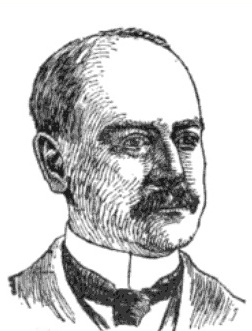
Historical · U.S. House · Pennsylvania · District 14
Charles Wright
Former U.S. Representative · Pennsylvania District 14 · 1899–1905 · Republican
Charles Wright represented Pennsylvania's District 14 in the United States House of Representatives (1899–1905) for the Republican party. The page below collects sourced biographical facts, term history, committee roles, and provenance for Wright.
Bioguide ID: W000756
Key facts
- Full name
- Charles Wright
- State
- Pennsylvania
- District
- District 14
- Party
- Republican
- House service
- 1899–1905
- First House term
- 1899
- Status
- Left office
- Current term ends
- —
- Born
- 1856
- Bioguide ID
- W000756
- Committee assignments
- —
- Dataset version
- 1.20260606
Biographical narrative
882 words · sourced from the Wikipedia REST extract
Charles Wright was a prominent Republican politician who served as a U.S. Representative for Pennsylvania's 14th congressional district. His political career spanned three terms in the House of Representatives, during which he was involved in various legislative activities and held significant committee positions. Born in 1856 in Forest Lake Township, Pennsylvania, Wright's early career in banking laid a foundation for his later political endeavors. He was active in the Republican Party, participating in national conventions and contributing to local governance after his congressional service. Wright passed away in 1925, leaving behind a legacy in both banking and public service.
Early life and career
Charles Frederick Wright was born on May 3, 1856, in Forest Lake Township, Pennsylvania. He was raised in a region that would later become significant to his political career. After completing his education at Montrose Academy in 1874, Wright embarked on a professional journey that began in the banking sector. He took a position as a teller at the First National Bank of Montrose, Pennsylvania, where he worked from 1875 until 1881. This early experience in finance provided him with valuable skills and insights into economic matters, which would later inform his legislative work.
Following his tenure at the First National Bank of Montrose, Wright advanced his banking career by moving to the First National Bank of Susquehanna Depot. He held several key positions there, including assistant cashier and cashier, before ultimately becoming the bank's president in 1899. His leadership in the banking sector not only established his reputation as a capable manager but also connected him with the local community and its economic interests.
Wright's involvement in politics began to take shape as he became active in the Republican Party. His political engagement included serving as a delegate to the Republican National Conventions in 1896, 1904, and 1908. These experiences allowed him to build a network within the party and gain insight into national political dynamics, which would prove beneficial during his congressional campaigns.
House tenure
Wright's political career reached a significant milestone when he was elected to the U.S. House of Representatives. He served three consecutive terms, beginning with the Fifty-sixth Congress, which convened in 1899. His election to the House marked the beginning of a notable chapter in his life, as he represented Pennsylvania's 14th congressional district. During his time in Congress, Wright was involved in various legislative matters and contributed to discussions on national policies.
Throughout his congressional tenure, Wright was recognized for his leadership abilities. He served as the chairman of the United States House Committee on Expenditures in the Department of Agriculture during the Fifty-eighth Congress. This role placed him at the intersection of agricultural policy and fiscal oversight, allowing him to influence how government funds were allocated within the agricultural sector. His work on this committee highlighted his commitment to ensuring responsible government spending and effective management of resources.
Wright's time in Congress was characterized by his alignment with the Republican Party's platform, which focused on economic growth, fiscal responsibility, and support for business interests. His background in banking likely informed his perspectives on financial legislation and economic policy. However, after completing his third term, Wright chose not to seek renomination in 1904, concluding his direct involvement in the legislative process at that time.
Legislative focus and committees
During his tenure in the House of Representatives, Charles Wright's legislative focus was shaped by his background in banking and his commitment to the Republican Party's principles. As a member of Congress, he was involved in discussions and decisions that affected various sectors, particularly agriculture and finance. His role as chairman of the House Committee on Expenditures in the Department of Agriculture allowed him to play a critical part in overseeing government spending related to agricultural programs. This position underscored his interest in ensuring that taxpayer money was utilized effectively and that agricultural policies were implemented efficiently.
Wright's legislative activities were reflective of the broader political landscape of the late 19th and early 20th centuries, a period marked by significant economic changes and challenges. The United States was experiencing rapid industrialization, and issues related to agriculture, trade, and economic policy were at the forefront of national discussions. Wright's background in banking likely provided him with a unique perspective on these issues, enabling him to advocate for policies that aligned with the interests of his constituents and the Republican Party.
After his congressional service, Wright continued to engage in public service. He served as the 53rd Pennsylvania Treasurer from 1911 to 1913, a role that further demonstrated his commitment to financial oversight and public accountability. Additionally, he held the position of commissioner of public service in Pennsylvania during 1915 and 1916, where he was involved in matters related to public utilities and infrastructure.
Following his public service career, Wright returned to the banking industry, where he resumed his professional pursuits. His contributions to both banking and politics left a lasting impact on his community and the state of Pennsylvania. Charles Wright passed away on November 10, 1925, in Susquehanna, Pennsylvania. He was interred in Evergreen Cemetery, marking the end of a life dedicated to public service and community engagement. His legacy continues to be remembered in the context of Pennsylvania's political history and the evolution of the Republican Party during his era.
Notable legislation
Sponsored and co-sponsored legislation for Charles Wright is pending operator curation. The biographical narrative above carries the same provenance trail until per-bill rows are written.
Sources
- [1]https://en.wikipedia.org/wiki/Charles_Frederick_WrightWikipedia · retrieved 2026-06-06
Notable quotes
Sourced quotes for Charles Wright are pending operator curation. Narrative-scope provenance remains attached below.
Sources
- [1]https://en.wikipedia.org/wiki/Charles_Frederick_WrightWikipedia · retrieved 2026-06-06
Key positions
Curated policy positions for Charles Wright are pending operator review. The biographical narrative above carries the same provenance trail until per-topic positions are written.
Sources
- [1]https://en.wikipedia.org/wiki/Charles_Frederick_WrightWikipedia · retrieved 2026-06-06
Terms served
- 1899–1901U.S. House · Term 1 · Republican
- 1901–1903U.S. House · Term 2 · Republican
- 1903–1905U.S. House · Term 3 · Republican
Sources & provenance
Every attributable claim above carries a per-section [N] marker that resolves to the corresponding URL below. Each entry records the upstream provider, the canonical URL, and the timestamp at which the source was retrieved by the ingest pipeline.
Key facts
- https://bioguide.congress.gov/search/bio/W000756bioguide · retrieved 2026-06-06
- https://www.govtrack.us/congress/members/411905govtrack · retrieved 2026-06-06
Biographical narrative
- https://en.wikipedia.org/wiki/Charles_Frederick_Wrightwikipedia · retrieved 2026-06-06
Find your representative
Every U.S. state elects representatives by district. Browse Pennsylvania’s delegation, the full former-representative roster, or explore the role and term length.
Related on The Candidate
- Preceded by Ephraim WoomerEarlier holder of the Pennsylvania District 14 House seat · Republican.Open
- Succeeded by Mial LilleyLater holder of the Pennsylvania District 14 House seat · Republican.Open
- Adam SeybertFormer U.S. Representative · Pennsylvania District 1 · RepublicanOpen
- Benjamin SayFormer U.S. Representative · Pennsylvania District 1 · RepublicanOpen
- Chapman FreemanFormer U.S. Representative · Pennsylvania District 1 · RepublicanOpen
- Harry RansleyFormer U.S. Representative · Pennsylvania District 1 · RepublicanOpen