
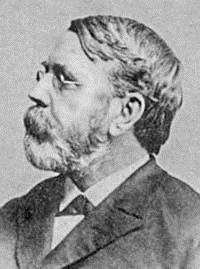
Historical · U.S. House · Pennsylvania · District 14
Franklin Bound
Former U.S. Representative · Pennsylvania District 14 · 1885–1889 · Republican
Franklin Bound represented Pennsylvania's District 14 in the United States House of Representatives (1885–1889) for the Republican party. The page below collects sourced biographical facts, term history, committee roles, and provenance for Bound.
Bioguide ID: B000667
Key facts
- Full name
- Franklin Bound
- State
- Pennsylvania
- District
- District 14
- Party
- Republican
- House service
- 1885–1889
- First House term
- 1885
- Status
- Left office
- Current term ends
- —
- Born
- 1829
- Bioguide ID
- B000667
- Committee assignments
- —
- Dataset version
- 1.20260606
Biographical narrative
871 words · sourced from the Wikipedia REST extract
Franklin Bound was a Republican politician who served as a U.S. Representative for Pennsylvania's 14th congressional district during the late 19th century. His political career was marked by his involvement in both state and national politics, particularly in the aftermath of the American Civil War. Bound's contributions to public service extended beyond his time in Congress, reflecting a commitment to his community and the political landscape of Pennsylvania.
Early life and career
Franklin Bound was born on April 9, 1829, in Milton, Pennsylvania. He spent his formative years in Northumberland County, where he attended local common schools and the Milton Academy, which provided him with a foundational education. His academic pursuits led him to study law, culminating in his graduation from Easton Law School in Easton, Pennsylvania. After being admitted to the bar in 1853, Bound established a private law practice in his hometown of Milton, where he began to build his professional reputation.
In addition to his legal career, Bound was actively involved in the political arena from an early age. His political engagement was evident when he was appointed as a delegate to the 1860 political convention that nominated Andrew Gregg Curtin as the Republican candidate for governor of Pennsylvania. This early involvement in politics set the stage for his later roles in public service. Bound's commitment to his community and his growing political influence were further demonstrated by his election to the Pennsylvania State Senate, where he represented District 13 from 1860 to 1863.
House tenure
Bound's tenure in the U.S. House of Representatives began in 1885, following his election as a Republican to the Forty-ninth Congress. He served two terms in the House, concluding his congressional career on March 3, 1889. During his time in Congress, Bound participated in various legislative discussions and contributed to the shaping of policies that affected his constituents and the broader national landscape. His election to Congress came in the post-Civil War era, a time when the nation was undergoing significant changes and challenges, including Reconstruction and the integration of formerly Confederate states back into the Union.
Throughout his congressional service, Bound was involved in the political dynamics of the time, navigating the complexities of a rapidly evolving society. His experience in the Pennsylvania State Senate likely informed his approach to legislative matters in the House, as he sought to address the needs and concerns of his district. Although specific details regarding his legislative initiatives and voting record are not provided, his dual roles in state and national politics highlight his commitment to public service and governance.
Legislative focus and committees
While specific legislative initiatives and committee assignments during Bound's time in Congress are not detailed in the available information, it is clear that his political career was shaped by the broader context of the late 19th century. The period was characterized by significant economic, social, and political transformations, including industrialization, urbanization, and the ongoing struggles for civil rights and social justice. As a member of the Republican Party, Bound would have been aligned with the party's platform, which included support for economic development, infrastructure improvements, and civil rights for African Americans in the post-war era.
In addition to his congressional duties, Bound's political involvement extended beyond his legislative responsibilities. He was a delegate to the 1868 Republican National Convention, further solidifying his role within the party and contributing to national political discourse. His engagement in these political activities reflects a dedication to the principles of the Republican Party and a desire to influence the direction of policy at both the state and national levels.
After completing his terms in Congress, Bound chose not to seek renomination in 1888. Instead, he returned to his legal career, which he continued until his retirement at the turn of the century. This decision indicates a preference for a professional life in law over continued political service, though he remained an active member of his community and engaged in various civic activities.
Bound's personal life also played a role in his public persona. He was married to Emma E. Bound, and together they had a daughter, Nellie (Bound) Davis. The family resided at 139 South Front Street in Milton, Pennsylvania, where they likely contributed to the local community. Bound's involvement with the Free and Accepted Masons, where he served as master of the Milton Lodge in 1855, further illustrates his commitment to civic engagement and community service.
In the latter years of his life, Bound faced health challenges, which persisted for approximately a decade. He passed away at his home in Milton on August 8, 1910. Following his death, funeral services were held, and he was interred at the Milton Cemetery in his hometown. Bound's legacy as a public servant and community leader is remembered in the context of his contributions to the political landscape of Pennsylvania and the nation during a transformative period in American history.
In summary, Franklin Bound's life and career reflect a dedication to public service, law, and community engagement. His roles in the Pennsylvania State Senate and the U.S. House of Representatives illustrate his commitment to the political process and the welfare of his constituents. Through his various contributions, Bound remains a notable figure in Pennsylvania's political history.
Notable legislation
Sponsored and co-sponsored legislation for Franklin Bound is pending operator curation. The biographical narrative above carries the same provenance trail until per-bill rows are written.
Sources
- [1]https://en.wikipedia.org/wiki/Franklin_BoundWikipedia · retrieved 2026-06-06
Notable quotes
Sourced quotes for Franklin Bound are pending operator curation. Narrative-scope provenance remains attached below.
Sources
- [1]https://en.wikipedia.org/wiki/Franklin_BoundWikipedia · retrieved 2026-06-06
Key positions
Curated policy positions for Franklin Bound are pending operator review. The biographical narrative above carries the same provenance trail until per-topic positions are written.
Sources
- [1]https://en.wikipedia.org/wiki/Franklin_BoundWikipedia · retrieved 2026-06-06
Terms served
- 1885–1887U.S. House · Term 1 · Republican
- 1887–1889U.S. House · Term 2 · Republican
Sources & provenance
Every attributable claim above carries a per-section [N] marker that resolves to the corresponding URL below. Each entry records the upstream provider, the canonical URL, and the timestamp at which the source was retrieved by the ingest pipeline.
Key facts
- https://bioguide.congress.gov/search/bio/B000667bioguide · retrieved 2026-06-06
- https://www.govtrack.us/congress/members/401629govtrack · retrieved 2026-06-06
Biographical narrative
- https://en.wikipedia.org/wiki/Franklin_Boundwikipedia · retrieved 2026-06-06
Find your representative
Every U.S. state elects representatives by district. Browse Pennsylvania’s delegation, the full former-representative roster, or explore the role and term length.
Related on The Candidate
- Preceded by Samuel BarrEarlier holder of the Pennsylvania District 14 House seat · Republican.Open
- Succeeded by John RifeLater holder of the Pennsylvania District 14 House seat · Republican.Open
- Adam SeybertFormer U.S. Representative · Pennsylvania District 1 · RepublicanOpen
- Benjamin SayFormer U.S. Representative · Pennsylvania District 1 · RepublicanOpen
- Chapman FreemanFormer U.S. Representative · Pennsylvania District 1 · RepublicanOpen
- Harry RansleyFormer U.S. Representative · Pennsylvania District 1 · RepublicanOpen