
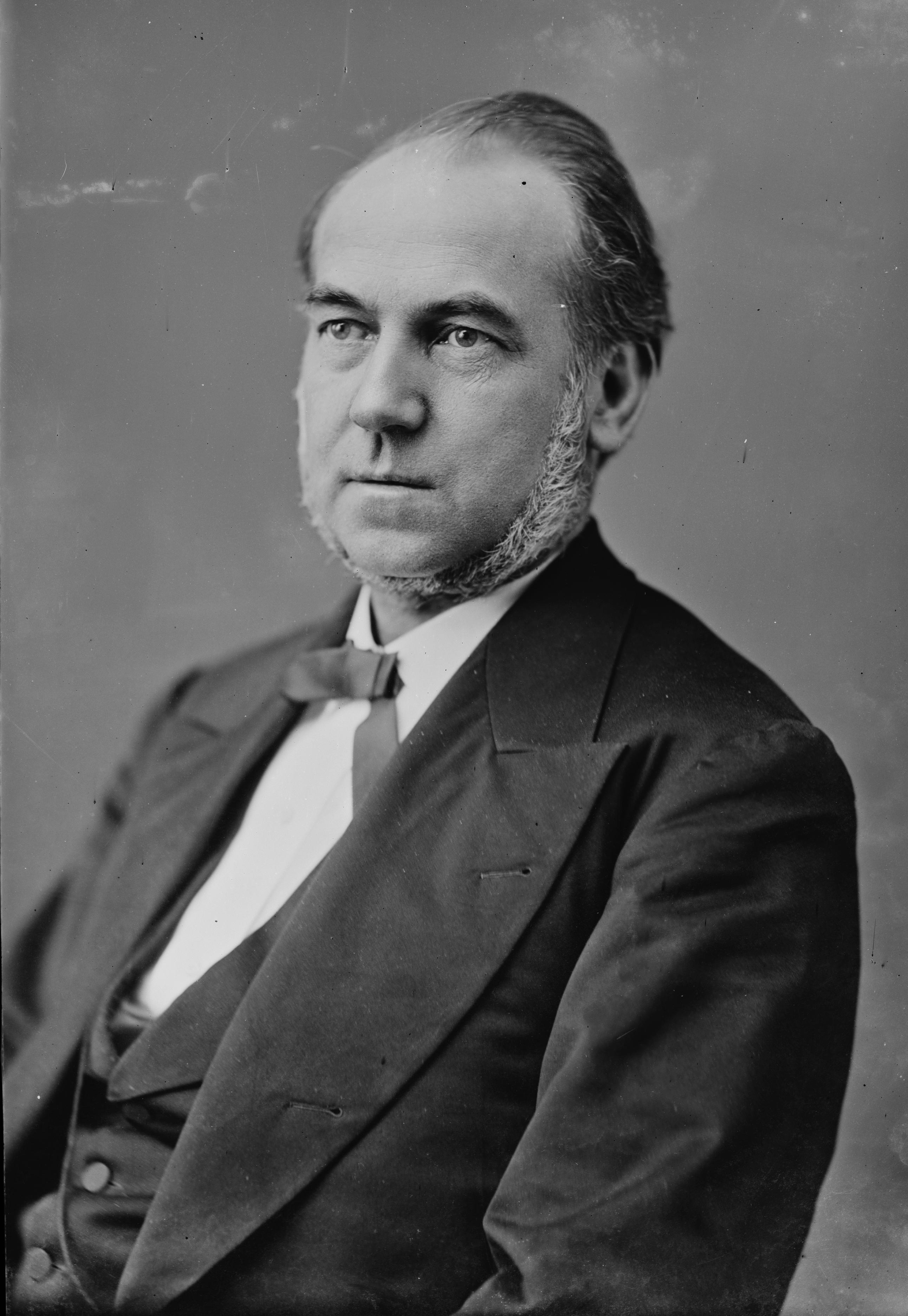
Historical · U.S. House · Pennsylvania · District 14
John Packer
Former U.S. Representative · Pennsylvania District 14 · 1869–1877 · Republican
John Packer represented Pennsylvania's District 14 in the United States House of Representatives (1869–1877) for the Republican party. The page below collects sourced biographical facts, term history, committee roles, and provenance for Packer.
Bioguide ID: P000008
Key facts
- Full name
- John Packer
- State
- Pennsylvania
- District
- District 14
- Party
- Republican
- House service
- 1869–1877
- First House term
- 1869
- Status
- Left office
- Current term ends
- —
- Born
- 1824
- Bioguide ID
- P000008
- Committee assignments
- —
- Dataset version
- 1.20260606
Biographical narrative
897 words · sourced from the Wikipedia REST extract
John Packer was a Republican politician who served as a U.S. Representative for Pennsylvania's 14th congressional district. His tenure in the House of Representatives spanned four terms, beginning in 1869 and concluding in 1877. Packer was involved in various legislative committees during his time in office, particularly focusing on issues related to railways, canals, and postal services. After his congressional career, he returned to his legal practice and banking activities in Sunbury, Pennsylvania, where he spent the remainder of his life.
Early life and career
John Packer was born on March 21, 1824, in Sunbury, Pennsylvania. His early education was conducted privately before he attended the Sunbury Academy, where he furthered his studies. Following his education, Packer began his professional career in public service. From 1839 to 1842, he served with the corps of engineers for the Commonwealth of Pennsylvania. This role involved working on the survey and construction of various public improvements, which likely provided him with valuable experience in infrastructure and project management.
After completing his law studies, Packer was admitted to the bar on August 6, 1844. He began practicing law in Sunbury, where he also engaged in banking, thereby establishing a multifaceted career in both legal and financial sectors. His legal career was complemented by his public service, as he served as the deputy attorney general for the Commonwealth of Pennsylvania from 1845 to 1847. This position allowed him to gain further experience in the legal system and public administration.
Packer's involvement in politics began to take shape when he was elected to the Pennsylvania State House of Representatives, where he served in 1850 and 1851. His political engagement continued as he became one of the organizers of the Susquehanna Railroad Company in 1851, reflecting his interest in transportation and infrastructure development. This experience likely laid the groundwork for his future legislative focus on railways and canals.
House tenure
John Packer's congressional career began when he was elected as a Republican to the U.S. House of Representatives in 1869. He represented Pennsylvania's 14th congressional district and was re-elected for three additional terms, serving a total of four terms in the House. His tenure in Congress was marked by significant developments in transportation and communication, as he held key positions on several important committees.
During the Forty-second Congress, Packer served as the chairman of the United States House Committee on Railways and Canals. In this capacity, he played a crucial role in overseeing legislation related to the nation's railway systems and canal infrastructure, which were vital for economic development and connectivity during that era. His leadership on this committee underscored his commitment to improving transportation networks, which were essential for trade and commerce.
In the following Congress, the Forty-third, Packer transitioned to chairing the United States House Committee on Post Office and Post Roads. This position involved oversight of postal services and the infrastructure necessary for effective communication across the country. His work in this role contributed to the enhancement of postal services, which were increasingly important as the nation expanded and modernized.
Packer's congressional career came to an end when he declined to seek renomination in 1876. After completing his final term in the House, he returned to Sunbury, where he resumed his legal practice and continued his banking activities. His decision to step back from politics marked a shift in his career, allowing him to focus on his professional endeavors in law and finance.
Legislative focus and committees
Throughout his time in the U.S. House of Representatives, John Packer's legislative focus was primarily centered on transportation and communication infrastructure. His leadership roles on the committees for railways, canals, and postal services reflected his commitment to addressing the pressing needs of a rapidly growing nation. The expansion of railways and canals was critical during the post-Civil War period, as these infrastructures played a significant role in economic recovery and growth.
As chairman of the House Committee on Railways and Canals during the Forty-second Congress, Packer was involved in discussions and decisions that shaped the future of transportation in the United States. Railroads were becoming increasingly vital for the movement of goods and people, and Packer's work in this area contributed to the development of policies that supported the expansion and improvement of railway systems.
In his subsequent role as chairman of the House Committee on Post Office and Post Roads, Packer focused on enhancing the efficiency and reach of postal services. This was particularly important during a time when communication was evolving rapidly, and the need for reliable postal services was paramount for both individuals and businesses. His contributions in this area helped to facilitate better communication across the nation, which was essential for fostering economic and social connections.
Packer's legislative efforts were informed by his background in engineering, law, and finance, allowing him to approach issues with a comprehensive understanding of the complexities involved. His work in Congress reflected a dedication to improving the infrastructure that supported the nation's growth and development during a transformative period in American history.
After concluding his congressional service, John Packer continued to engage with his community in Sunbury, Pennsylvania, where he practiced law and participated in banking. He passed away on July 7, 1891, in Sunbury and was interred at the Pomfret Manor Cemetery. His career in public service and law left a lasting impact on his community and the state of Pennsylvania.
Notable legislation
Sponsored and co-sponsored legislation for John Packer is pending operator curation. The biographical narrative above carries the same provenance trail until per-bill rows are written.
Sources
- [1]https://en.wikipedia.org/wiki/John_B._PackerWikipedia · retrieved 2026-06-06
Notable quotes
Sourced quotes for John Packer are pending operator curation. Narrative-scope provenance remains attached below.
Sources
- [1]https://en.wikipedia.org/wiki/John_B._PackerWikipedia · retrieved 2026-06-06
Key positions
Curated policy positions for John Packer are pending operator review. The biographical narrative above carries the same provenance trail until per-topic positions are written.
Sources
- [1]https://en.wikipedia.org/wiki/John_B._PackerWikipedia · retrieved 2026-06-06
Terms served
- 1869–1871U.S. House · Term 1 · Republican
- 1871–1873U.S. House · Term 2 · Republican
- 1873–1875U.S. House · Term 3 · Republican
- 1875–1877U.S. House · Term 4 · Republican
Sources & provenance
Every attributable claim above carries a per-section [N] marker that resolves to the corresponding URL below. Each entry records the upstream provider, the canonical URL, and the timestamp at which the source was retrieved by the ingest pipeline.
Key facts
- https://bioguide.congress.gov/search/bio/P000008bioguide · retrieved 2026-06-06
- https://www.govtrack.us/congress/members/408419govtrack · retrieved 2026-06-06
Biographical narrative
- https://en.wikipedia.org/wiki/John_B._Packerwikipedia · retrieved 2026-06-06
Find your representative
Every U.S. state elects representatives by district. Browse Pennsylvania’s delegation, the full former-representative roster, or explore the role and term length.
Related on The Candidate
- Preceded by George MillerEarlier holder of the Pennsylvania District 14 House seat · Republican.Open
- Succeeded by Samuel BarrLater holder of the Pennsylvania District 14 House seat · Republican.Open
- Adam SeybertFormer U.S. Representative · Pennsylvania District 1 · RepublicanOpen
- Benjamin SayFormer U.S. Representative · Pennsylvania District 1 · RepublicanOpen
- Chapman FreemanFormer U.S. Representative · Pennsylvania District 1 · RepublicanOpen
- Harry RansleyFormer U.S. Representative · Pennsylvania District 1 · RepublicanOpen