
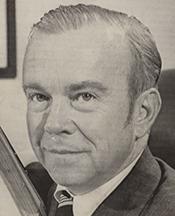
Historical · U.S. House · Pennsylvania · District 14
William Moorhead
Former U.S. Representative · Pennsylvania District 14 · 1959–1981 · Democratic
William Moorhead represented Pennsylvania's District 14 in the United States House of Representatives (1959–1981) for the Democratic party. The page below collects sourced biographical facts, term history, committee roles, and provenance for Moorhead.
Bioguide ID: M000930
Key facts
- Full name
- William Moorhead
- State
- Pennsylvania
- District
- District 14
- Party
- Democratic
- House service
- 1959–1981
- First House term
- 1959
- Status
- Left office
- Current term ends
- —
- Born
- 1923
- Bioguide ID
- M000930
- Committee assignments
- —
- Dataset version
- 1.20260605
Biographical narrative
878 words · sourced from the Wikipedia REST extract
William S. Moorhead was an American politician who served as a Democratic member of the U.S. House of Representatives, representing Pennsylvania's 14th congressional district from 1959 until 1981. Throughout his eleven terms in office, Moorhead was known for his advocacy on various issues, including government transparency, the arts, and economic recovery efforts. His legislative contributions and public service were shaped by his educational background and early career experiences.
Early life and career
William Singer Moorhead was born on April 8, 1923, in Pittsburgh, Pennsylvania. He was the son of William Singer Moorhead, Sr., a notable attorney in the area. Growing up in a family with a legal background, Moorhead pursued his education at Shady Side Academy, a prestigious preparatory school. He graduated from Phillips Andover Academy in 1941 before attending Yale University, where he earned his degree in 1944. While at Yale, he was a member of the elite secret society Skull and Bones, which has been associated with many influential leaders in various fields.
Following his graduation, Moorhead served in the United States Navy during World War II. He enlisted in 1943 and served in the Pacific Theater, ultimately being discharged in 1946 with the rank of lieutenant (junior grade). After his military service, he returned to academia, enrolling at Harvard Law School, from which he graduated in 1949.
Moorhead began his professional career in law, taking on the role of Assistant City Solicitor for Pittsburgh from 1954 to 1957. His involvement in local governance continued as he served on the Allegheny County Housing Authority from 1956 to 1958 and was a member of the Pittsburgh Art Commission in 1958. These positions allowed him to gain valuable experience in public service and community engagement, laying the groundwork for his future political career.
House tenure
Moorhead's political career in the U.S. House of Representatives began when he was elected as a Democrat to the 86th Congress in 1958. He successfully won election to ten consecutive terms, serving in the House until January 3, 1981. During his tenure, Moorhead became known for his active involvement in various legislative initiatives and his commitment to addressing pressing national issues.
Throughout his time in Congress, Moorhead was recognized for his critical stance on Pentagon spending, particularly concerning cost overruns. His advocacy for fiscal responsibility in defense spending resonated with constituents and highlighted his dedication to government accountability. Additionally, he played a significant role in the establishment of the National Endowment for the Arts and the National Endowment for the Humanities, which aimed to promote cultural and educational initiatives across the country.
Moorhead's legislative efforts also included being the floor manager for freedom of information legislation, which sought to enhance transparency in government by making public documents more accessible to citizens. This initiative was part of a broader movement to ensure that government operations were conducted openly and that the public had the right to scrutinize government activities.
In response to the fiscal crisis that struck New York City in 1975, Moorhead sponsored legislation aimed at providing financial assistance to the city. His efforts were indicative of his commitment to addressing economic challenges and supporting urban areas in distress. Additionally, he was the chief sponsor of a bill that led to the creation of a synthetic fuels corporation, reflecting his interest in energy policy and innovation.
Moorhead chose not to seek reelection in 1980, concluding his lengthy congressional career. After leaving office, he returned to the legal profession, joining the Washington law firm of Coan, Couture, Lyons & Moorhead, where he continued to contribute to the field of law.
Legislative focus and committees
During his time in the House of Representatives, Moorhead served on various committees that aligned with his legislative interests and expertise. His focus on government accountability, arts funding, and economic recovery shaped his committee assignments and the initiatives he championed.
Moorhead's work on committees related to budgetary oversight and defense spending allowed him to voice concerns regarding military expenditures and advocate for more prudent fiscal policies. His efforts to address the issues of cost overruns in Pentagon contracts were a significant aspect of his legislative agenda, reflecting his commitment to responsible governance.
In addition to his work on defense and budgetary matters, Moorhead's involvement in the arts and humanities was a defining feature of his congressional career. His support for the National Endowments for the Arts and Humanities underscored his belief in the importance of cultural enrichment and education in society. By advocating for funding and support for these institutions, he contributed to the promotion of artistic and educational initiatives that benefited communities across the nation.
Moorhead's legislative contributions also included a focus on transparency and public access to government information. His role as the floor manager for freedom of information legislation demonstrated his commitment to ensuring that citizens could hold their government accountable and access important public documents.
Overall, William S. Moorhead's legislative focus and committee work reflected his dedication to addressing the needs of his constituents and the broader American public. His efforts in promoting fiscal responsibility, supporting the arts, and advocating for government transparency left a lasting impact on the legislative landscape during his time in office. After concluding his congressional career, Moorhead continued to influence the legal field until his passing in 1987.
Notable legislation
Sponsored and co-sponsored legislation for William Moorhead is pending operator curation. The biographical narrative above carries the same provenance trail until per-bill rows are written.
Sources
- [1]https://en.wikipedia.org/wiki/William_S._MoorheadWikipedia · retrieved 2026-06-05
Notable quotes
Sourced quotes for William Moorhead are pending operator curation. Narrative-scope provenance remains attached below.
Sources
- [1]https://en.wikipedia.org/wiki/William_S._MoorheadWikipedia · retrieved 2026-06-05
Key positions
Curated policy positions for William Moorhead are pending operator review. The biographical narrative above carries the same provenance trail until per-topic positions are written.
Sources
- [1]https://en.wikipedia.org/wiki/William_S._MoorheadWikipedia · retrieved 2026-06-05
Terms served
- 1959–1961U.S. House · Term 1 · Democratic
- 1961–1963U.S. House · Term 2 · Democratic
- 1963–1965U.S. House · Term 3 · Democratic
- 1965–1967U.S. House · Term 4 · Democratic
- 1967–1969U.S. House · Term 5 · Democratic
- 1969–1971U.S. House · Term 6 · Democratic
- 1971–1973U.S. House · Term 7 · Democratic
- 1973–1975U.S. House · Term 8 · Democratic
- 1975–1977U.S. House · Term 9 · Democratic
- 1977–1979U.S. House · Term 10 · Democratic
- 1979–1981U.S. House · Term 11 · Democratic
Sources & provenance
Every attributable claim above carries a per-section [N] marker that resolves to the corresponding URL below. Each entry records the upstream provider, the canonical URL, and the timestamp at which the source was retrieved by the ingest pipeline.
Key facts
- https://bioguide.congress.gov/search/bio/M000930bioguide · retrieved 2026-06-05
- https://www.govtrack.us/congress/members/407901govtrack · retrieved 2026-06-05
Biographical narrative
- https://en.wikipedia.org/wiki/William_S._Moorheadwikipedia · retrieved 2026-06-05
Find your representative
Every U.S. state elects representatives by district. Browse Pennsylvania’s delegation, the full former-representative roster, or explore the role and term length.
Related on The Candidate
- Preceded by Wilson GilletteEarlier holder of the Pennsylvania District 14 House seat · Republican.Open
- Succeeded by William CoyneLater holder of the Pennsylvania District 14 House seat · Democratic.Open
- Adam SeybertFormer U.S. Representative · Pennsylvania District 1 · RepublicanOpen
- Benjamin SayFormer U.S. Representative · Pennsylvania District 1 · RepublicanOpen
- Chapman FreemanFormer U.S. Representative · Pennsylvania District 1 · RepublicanOpen
- Harry RansleyFormer U.S. Representative · Pennsylvania District 1 · RepublicanOpen