
Historical · U.S. House · Pennsylvania · District 15
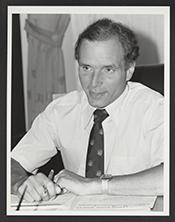
Donald Ritter
Former U.S. Representative · Pennsylvania District 15 · 1979–1993 · Republican
Donald Ritter represented Pennsylvania's District 15 in the United States House of Representatives (1979–1993) for the Republican party. The page below collects sourced biographical facts, term history, committee roles, and provenance for Ritter.
Bioguide ID: R000277
Key facts
- Full name
- Donald Ritter
- State
- Pennsylvania
- District
- District 15
- Party
- Republican
- House service
- 1979–1993
- First House term
- 1979
- Status
- Left office
- Current term ends
- —
- Born
- 1940
- Bioguide ID
- R000277
- Committee assignments
- —
- Dataset version
- 1.20260605
Biographical narrative
973 words · sourced from the Wikipedia REST extract
Donald Lawrence Ritter is a former Republican member of the U.S. House of Representatives who served Pennsylvania's 15th congressional district from 1979 until 1993. During his tenure, he represented a region that includes the Lehigh Valley, which encompasses the cities of Allentown, Bethlehem, and Easton. Ritter's background in science and engineering, along with his commitment to public service, shaped his legislative priorities and approach to governance.
Early life and career
Don Ritter was born on October 21, 1940, in Washington Heights, New York City. He was raised in a family where his father, Frank Ritter, emigrated from Hungary and settled in Manhattan before moving to The Bronx. Ritter's early education took place in various schools in New York City, including P.S. 70 Elementary School, Joseph H. Wade Junior High School, P.S. 117, and the Bronx High School of Science, which is known for its rigorous academic standards.
Following his high school education, Ritter pursued higher education at Lehigh University in Bethlehem, Pennsylvania. He earned a Bachelor of Science degree in metallurgical engineering in 1961. His academic journey continued at the Massachusetts Institute of Technology (MIT), where he obtained a Master of Science degree in 1963 and a Doctor of Science degree in physical metallurgy in 1966. During his time at MIT, he worked as a research assistant, contributing to various scientific projects while completing his doctorate.
Ritter's professional career began with a prestigious fellowship at the Baikov Institute of Metallurgy and Materials Science in Moscow, where he served as a National Academy of Sciences scientific exchange fellow from 1967 to 1968. This experience provided him with insights into the Soviet Union's scientific landscape during a pivotal period in history. Upon returning to the United States, he took on the role of assistant professor at California Polytechnic State University and worked as a consultant for General Dynamics in Pomona, California.
In 1969, Ritter returned to Lehigh University, where he joined the faculty in metallurgy and served as an assistant to the vice president. His career at Lehigh continued to evolve, and in 1976, he was appointed manager of the university's research program development. He remained in this position until he transitioned to a political career in 1979.
House tenure
Ritter's political career began when he announced his candidacy for the U.S. House of Representatives in Pennsylvania's 15th congressional district in 1979. He successfully navigated a competitive five-way primary to secure the Republican nomination. Subsequently, he won the general election, defeating the long-serving Democratic incumbent Fred B. Rooney. Ritter's victory marked a significant political shift in the district, as he became the representative for the 96th United States Congress and continued to serve in six additional Congresses over a span of fourteen years.
Throughout his tenure, Ritter focused on the diverse needs of his constituents in the Lehigh Valley, a region characterized by a mixed economy that included both heavy manufacturing and a strong educational presence with numerous colleges and universities. His ability to connect with a wide range of constituents contributed to his sustained electoral success.
Legislative focus and committees
During his time in the U.S. House of Representatives, Ritter became a senior member of two key committees: the Committee on Energy and Commerce and the Committee on Science and Technology. His scientific background informed his approach to legislation, as he sought to introduce a more analytical and evidence-based perspective into discussions surrounding environmental and energy regulations. This scientific approach earned him the nickname "scientist-congressman," a testament to his unique qualifications among his peers in Congress.
Ritter's legislative agenda included a strong advocacy for free market principles and small government policies. However, he also recognized the challenges faced by local industries, particularly in the steel and apparel sectors, which were experiencing increased competition from foreign markets. He balanced his support for free trade, exemplified by his backing of the North American Free Trade Agreement, with the need to protect the interests of his district's workers.
One of Ritter's notable contributions to public policy was his advocacy for risk assessment as a tool for evaluating environmental and energy-related hazards. He believed that a rational assessment of risks could lead to better prioritization of public health and safety measures. His efforts culminated in the incorporation of risk assessment principles into the Contract with America, which was passed into law in 1995.
In addition to risk assessment, Ritter was a proponent of total quality management (TQM) in public policy. He worked to foster relationships between Congress and leading figures in the TQM movement, promoting the idea that quality management practices could enhance efficiency and effectiveness in government operations. In his home district, he initiated the Quality Valley USA campaign to raise awareness about the economic benefits of TQM for local businesses and workers.
Ritter also took an active role in environmental advocacy, particularly concerning the Lehigh River, which he promoted as a vital resource for recreation and economic development in the region. He co-authored legislation that established the Delaware and Lehigh National Heritage Corridor, which has since become a focal point for environmental and recreational initiatives in the Lehigh Valley.
In matters of foreign policy, Ritter was a vocal advocate for human rights and took a firm stance against Soviet expansionism. He served on the Commission on Security and Cooperation in Europe and was the founding chairman of the Ad Hoc Committee on the Baltic States and Ukraine. His commitment to these issues reflected his broader concerns about global human rights and geopolitical stability.
Ritter's congressional career concluded when he chose not to seek re-election after his last term ended on January 3, 1993. His legacy includes a focus on scientific approaches to legislation, advocacy for local industries, and a commitment to environmental and human rights issues, shaping his contributions to both his district and the broader national discourse during his time in office.
Notable legislation
Sponsored and co-sponsored legislation for Donald Ritter is pending operator curation. The biographical narrative above carries the same provenance trail until per-bill rows are written.
Sources
- [1]https://en.wikipedia.org/wiki/Donald_L._RitterWikipedia · retrieved 2026-06-05
Notable quotes
Sourced quotes for Donald Ritter are pending operator curation. Narrative-scope provenance remains attached below.
Sources
- [1]https://en.wikipedia.org/wiki/Donald_L._RitterWikipedia · retrieved 2026-06-05
Key positions
Curated policy positions for Donald Ritter are pending operator review. The biographical narrative above carries the same provenance trail until per-topic positions are written.
Sources
- [1]https://en.wikipedia.org/wiki/Donald_L._RitterWikipedia · retrieved 2026-06-05
Terms served
- 1979–1981U.S. House · Term 1 · Republican
- 1981–1983U.S. House · Term 2 · Republican
- 1983–1985U.S. House · Term 3 · Republican
- 1985–1987U.S. House · Term 4 · Republican
- 1987–1989U.S. House · Term 5 · Republican
- 1989–1991U.S. House · Term 6 · Republican
- 1991–1993U.S. House · Term 7 · Republican
Sources & provenance
Every attributable claim above carries a per-section [N] marker that resolves to the corresponding URL below. Each entry records the upstream provider, the canonical URL, and the timestamp at which the source was retrieved by the ingest pipeline.
Key facts
- https://bioguide.congress.gov/search/bio/R000277bioguide · retrieved 2026-06-05
- https://www.govtrack.us/congress/members/409251govtrack · retrieved 2026-06-05
Biographical narrative
- https://en.wikipedia.org/wiki/Donald_L._Ritterwikipedia · retrieved 2026-06-05
Find your representative
Every U.S. state elects representatives by district. Browse Pennsylvania’s delegation, the full former-representative roster, or explore the role and term length.
Related on The Candidate
- Preceded by Frederick RooneyEarlier holder of the Pennsylvania District 15 House seat · Democratic.Open
- Succeeded by Paul McHale Jr.Later holder of the Pennsylvania District 15 House seat · Democratic.Open
- Adam SeybertFormer U.S. Representative · Pennsylvania District 1 · RepublicanOpen
- Benjamin SayFormer U.S. Representative · Pennsylvania District 1 · RepublicanOpen
- Chapman FreemanFormer U.S. Representative · Pennsylvania District 1 · RepublicanOpen
- Harry RansleyFormer U.S. Representative · Pennsylvania District 1 · RepublicanOpen