
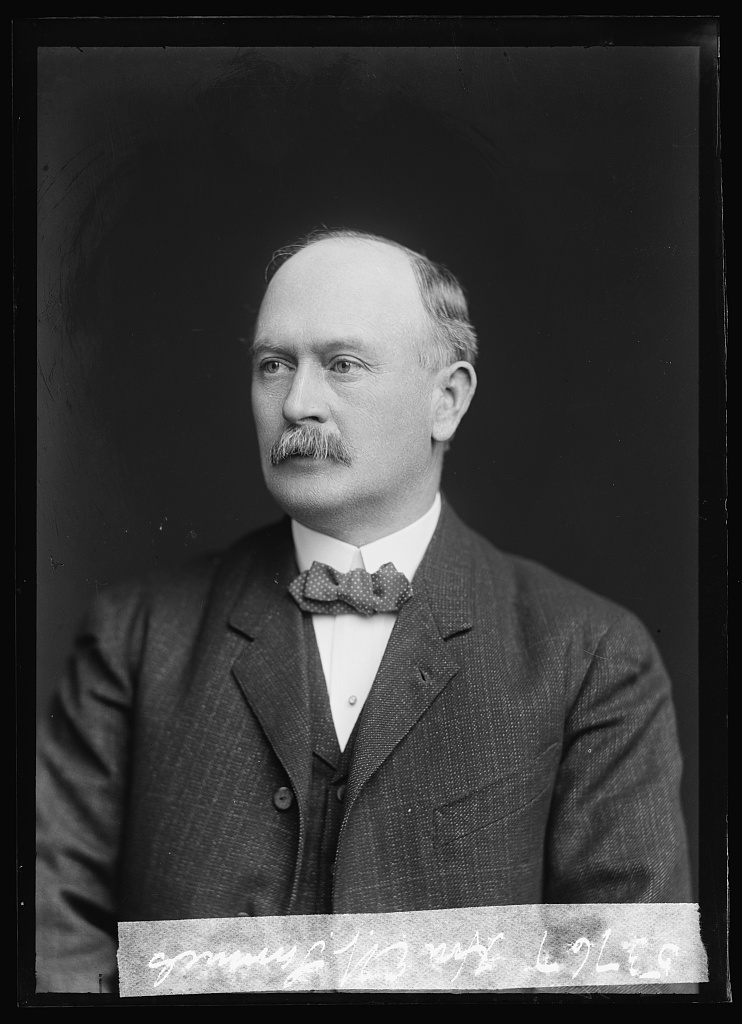
Historical · U.S. House · Pennsylvania · District 16
Edmund Samuel
Former U.S. Representative · Pennsylvania District 16 · 1905–1907 · Republican
Edmund Samuel represented Pennsylvania's District 16 in the United States House of Representatives (1905–1907) for the Republican party. The page below collects sourced biographical facts, term history, committee roles, and provenance for Samuel.
Bioguide ID: S000027
Key facts
- Full name
- Edmund Samuel
- State
- Pennsylvania
- District
- District 16
- Party
- Republican
- House service
- 1905–1907
- First House term
- 1905
- Status
- Left office
- Current term ends
- —
- Born
- 1857
- Bioguide ID
- S000027
- Committee assignments
- —
- Dataset version
- 1.20260606
Biographical narrative
1,009 words · sourced from the Wikipedia REST extract
Edmund Samuel was a Republican politician who served as a U.S. Representative for Pennsylvania's 16th congressional district during the early 20th century. His tenure in the House of Representatives was marked by his involvement in the Fifty-ninth Congress, where he contributed to the legislative process before returning to his medical practice and business endeavors. Samuel's life journey reflects the experiences of many immigrants who sought opportunities in the United States, and his career encompassed both public service and private enterprise.
Early life and career
Edmund Samuel was born on November 27, 1857, in Blaenavon, Wales. His early years were shaped by the socio-economic conditions of the time, particularly in the coal mining industry, which was a significant part of the Welsh economy. In 1859, when Samuel was just a toddler, his family immigrated to the United States, seeking better prospects. They settled in Ashland, Pennsylvania, a region known for its coal mining activities. This move was emblematic of the larger wave of immigration during the 19th century, as many individuals and families sought to escape the hardships of their home countries for a chance at a better life in America.
Growing up in a mining community, Samuel was exposed to the challenges and opportunities that accompanied such an environment. He initially engaged in coal mining, which provided a foundation for his understanding of the labor force and the economic conditions of his constituents. However, Samuel's aspirations extended beyond the mines. He pursued an education in the medical field, which was a significant undertaking during that era. He learned the drug business and began studying medicine, demonstrating a commitment to personal advancement and public service.
Samuel's dedication to his education culminated in his graduation from Jefferson Medical College in Philadelphia in 1880. Following his graduation, he began practicing medicine in Mount Carmel, Pennsylvania, where he established himself as a physician. His medical career allowed him to serve the community directly, addressing health concerns and contributing to the well-being of his patients. In addition to his medical practice, Samuel was actively involved in local governance. He served as a school director in Mount Carmel from 1890 to 1894, reflecting his commitment to education and community development. This role likely provided him with insights into the educational needs and challenges faced by families in his district, further shaping his future political career.
House tenure
Edmund Samuel's political career took a significant turn when he was elected as a Republican to the Fifty-ninth Congress, which convened in 1905. His election to the U.S. House of Representatives marked a notable achievement, as it represented the culmination of his efforts to engage in public service at a higher level. Samuel's tenure in Congress was characterized by his participation in various legislative activities, where he contributed to discussions and decisions that affected not only his constituents in Pennsylvania but also the broader national landscape.
However, Samuel's time in Congress was relatively brief. He served only one term, and his efforts to secure re-election in 1906 were unsuccessful. Following his defeat, he also ran for election in 1908 but was not successful in that endeavor either. The political landscape of the time was competitive, and Samuel faced challenges typical of many politicians seeking to maintain their positions. After concluding his congressional service, he returned to Mount Carmel, where he resumed his medical practice, continuing to serve the community that had supported him during his political career.
In addition to his medical work, Samuel took on leadership roles in the business sector. He served as the president and general manager of the Shamokin-Mount Carmel Transit Company from 1908 to 1924. This position allowed him to engage in the transportation industry, which was vital for the economic development of the region. His involvement in this company likely provided him with insights into the infrastructure needs of his community and the importance of transportation in facilitating economic growth.
Legislative focus and committees
During his time in the House of Representatives, Edmund Samuel's legislative focus would have been influenced by his background as a physician and his experiences in local governance. While specific details of his legislative initiatives and committee assignments are not documented, it is reasonable to infer that he may have been involved in issues related to health care, education, and labor, given his professional background and prior experience as a school director. His medical training would have equipped him with a unique perspective on health-related legislation, and his role in local education could have informed his views on educational policies.
Samuel's tenure in Congress occurred during a period of significant change in the United States, including the Progressive Era, which was characterized by social reform and increased government intervention in economic and social issues. As a member of the Republican Party during this time, he would have been part of broader discussions regarding the role of government in addressing societal challenges. His contributions to legislative debates and his engagement with constituents would have reflected the concerns and aspirations of the people he represented.
After leaving Congress, Samuel continued to be active in his community and professional life. He retired in 1925 and relocated to Brooklyn, New York, where he spent his later years. His decision to move may have been influenced by personal or familial considerations, as well as the desire for a change in environment. Samuel passed away on March 7, 1930, in Mount Carmel, Pennsylvania, where he had established his medical practice and political career. He was laid to rest in Mount Carmel Cemetery, marking the end of a life dedicated to service in both medicine and politics.
Edmund Samuel's life and career illustrate the journey of an immigrant who sought to contribute to American society through various means. His experiences in medicine, local governance, and the U.S. Congress reflect the diverse pathways individuals can take in public service and the impact they can have on their communities. His legacy is one of commitment to both health care and public service, showcasing the interconnectedness of these fields in addressing the needs of society.
Notable legislation
Sponsored and co-sponsored legislation for Edmund Samuel is pending operator curation. The biographical narrative above carries the same provenance trail until per-bill rows are written.
Sources
- [1]https://en.wikipedia.org/wiki/Edmund_W._SamuelWikipedia · retrieved 2026-06-06
Notable quotes
Sourced quotes for Edmund Samuel are pending operator curation. Narrative-scope provenance remains attached below.
Sources
- [1]https://en.wikipedia.org/wiki/Edmund_W._SamuelWikipedia · retrieved 2026-06-06
Key positions
Curated policy positions for Edmund Samuel are pending operator review. The biographical narrative above carries the same provenance trail until per-topic positions are written.
Sources
- [1]https://en.wikipedia.org/wiki/Edmund_W._SamuelWikipedia · retrieved 2026-06-06
Terms served
- 1905–1907U.S. House · Term 1 · Republican
Sources & provenance
Every attributable claim above carries a per-section [N] marker that resolves to the corresponding URL below. Each entry records the upstream provider, the canonical URL, and the timestamp at which the source was retrieved by the ingest pipeline.
Key facts
- https://bioguide.congress.gov/search/bio/S000027bioguide · retrieved 2026-06-06
- https://www.govtrack.us/congress/members/409546govtrack · retrieved 2026-06-06
Biographical narrative
- https://en.wikipedia.org/wiki/Edmund_W._Samuelwikipedia · retrieved 2026-06-06
Find your representative
Every U.S. state elects representatives by district. Browse Pennsylvania’s delegation, the full former-representative roster, or explore the role and term length.
Related on The Candidate
- Preceded by Charles DickermanEarlier holder of the Pennsylvania District 16 House seat · Democratic.Open
- Succeeded by John McHenryLater holder of the Pennsylvania District 16 House seat · Democratic.Open
- Adam SeybertFormer U.S. Representative · Pennsylvania District 1 · RepublicanOpen
- Benjamin SayFormer U.S. Representative · Pennsylvania District 1 · RepublicanOpen
- Chapman FreemanFormer U.S. Representative · Pennsylvania District 1 · RepublicanOpen
- Harry RansleyFormer U.S. Representative · Pennsylvania District 1 · RepublicanOpen