
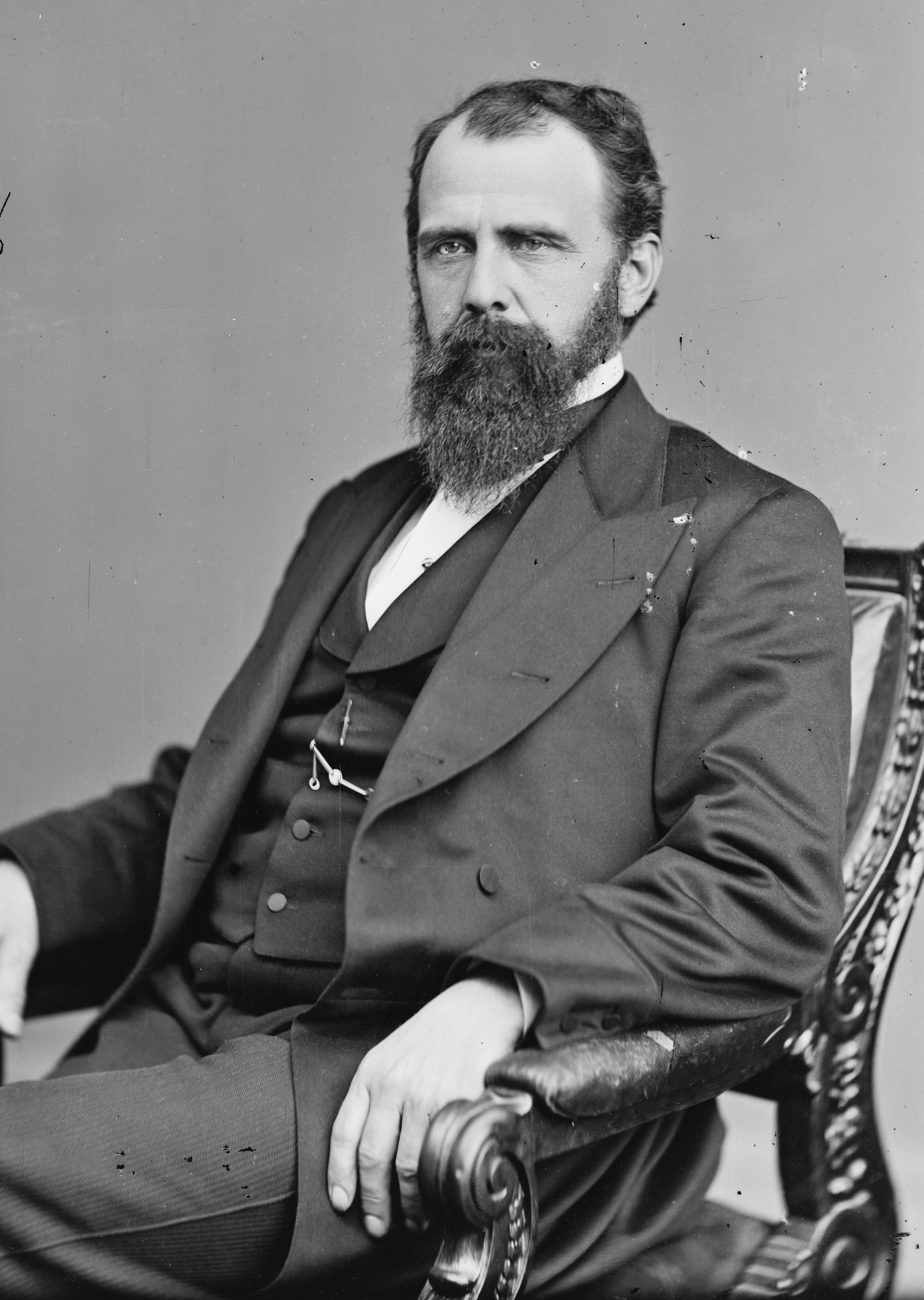
Historical · U.S. House · Pennsylvania · District 16
Sobieski Ross
Former U.S. Representative · Pennsylvania District 16 · 1873–1877 · Republican
Sobieski Ross represented Pennsylvania's District 16 in the United States House of Representatives (1873–1877) for the Republican party. The page below collects sourced biographical facts, term history, committee roles, and provenance for Ross.
Bioguide ID: R000454
Key facts
- Full name
- Sobieski Ross
- State
- Pennsylvania
- District
- District 16
- Party
- Republican
- House service
- 1873–1877
- First House term
- 1873
- Status
- Left office
- Current term ends
- —
- Born
- 1828
- Bioguide ID
- R000454
- Committee assignments
- —
- Dataset version
- 1.20260606-1
Biographical narrative
905 words · sourced from the Wikipedia REST extract
Sobieski Ross was a Republican politician who served as a U.S. Representative for Pennsylvania's 16th congressional district during the 1870s. His political career was marked by two terms in the House of Representatives, where he participated in the legislative processes of the time. Born in the mid-19th century, Ross was involved in various professional pursuits before entering politics, including civil engineering and real estate. After completing his congressional service, he returned to his business endeavors until his passing in 1877.
Early life and career
Sobieski Ross was born on May 16, 1828, in Coudersport, Pennsylvania. His early education took place in local institutions, including common schools and Coudersport Academy, where he received foundational knowledge that would serve him throughout his life. Following his education, Ross engaged in civil engineering, a profession that likely provided him with skills in planning, design, and project management. This background in engineering may have influenced his later interests in infrastructure and development during his political career.
In addition to civil engineering, Ross was involved in the real estate business, which would have required a keen understanding of market dynamics and property management. His work in real estate not only contributed to his personal financial stability but also connected him to the community in which he lived and worked. Furthermore, Ross had an interest in agricultural pursuits, indicating a diverse range of interests and a connection to the land, which was a significant aspect of life in Pennsylvania during that era.
In 1852, Ross was appointed as an associate judge, a role that would have involved overseeing legal proceedings and contributing to the judicial system in his community. This position likely provided him with valuable experience in governance and law, further preparing him for his future political career. His involvement in both the judiciary and local business affairs positioned him as a prominent figure in Coudersport, where he developed a reputation that would eventually lead to his election to Congress.
House tenure
Sobieski Ross was elected to the U.S. House of Representatives as a member of the Republican Party, serving in the Forty-third and Forty-fourth Congresses. His first term began in 1873, during a period of significant political and social change in the United States. The post-Civil War era was marked by efforts to rebuild the nation and address the challenges of Reconstruction, issues that would have been central to the legislative agenda during Ross's time in office.
As a member of the House, Ross participated in discussions and decisions that shaped national policy. While specific details of his legislative actions are not provided, it can be inferred that he was involved in the broader efforts of the Republican Party during this transformative period. The Republican Party at the time was focused on issues such as civil rights, economic development, and the integration of formerly enslaved individuals into society. Ross's background in civil engineering and real estate may have influenced his perspectives on infrastructure and economic growth, key issues for many representatives of his time.
Ross's congressional service spanned two terms, during which he would have had the opportunity to engage with various legislative initiatives and contribute to the development of policies that affected his constituents in Pennsylvania. However, he chose not to seek renomination in 1876, a decision that marked the end of his formal political career in the House. Following his departure from Congress, Ross returned to his real estate business, indicating a preference for private enterprise over continued public service.
Legislative focus and committees
While specific details regarding Sobieski Ross's legislative focus and committee assignments during his time in Congress are not documented, it is reasonable to surmise that his professional background in civil engineering and real estate would have informed his interests in infrastructure and economic development. Representatives during this period often focused on issues pertinent to their districts, and given Ross's experience, he may have advocated for policies that supported local growth and development.
The political landscape of the 1870s was characterized by significant challenges, including the ongoing effects of the Civil War and the complexities of Reconstruction. Issues such as land use, transportation, and economic recovery were paramount, and Ross's background may have positioned him to contribute meaningfully to discussions surrounding these topics. The Republican Party, which he represented, was heavily involved in promoting policies that aimed to rebuild the nation and ensure civil rights for all citizens, particularly in the Southern states.
After concluding his congressional service, Ross returned to Coudersport, where he resumed his work in real estate. This transition back to private life suggests a commitment to his community and local economic development, which may have been a priority throughout his career. His decision to step away from politics and focus on business reflects a common trajectory for many politicians of the era, who often returned to their professional roots after serving in public office.
Sobieski Ross passed away on October 24, 1877, in Coudersport, Pennsylvania. His interment took place at Eulalia Cemetery, where he rests alongside other members of his community. Ross's life and career reflect the complexities of American politics during a time of significant change, and his contributions as a U.S. Representative are part of the broader narrative of the Reconstruction era and its aftermath. His experiences in civil engineering, real estate, and the judiciary provided him with a unique perspective that he brought to his role in Congress, influencing the legislative landscape of his time.
Notable legislation
Sponsored and co-sponsored legislation for Sobieski Ross is pending operator curation. The biographical narrative above carries the same provenance trail until per-bill rows are written.
Sources
- [1]https://en.wikipedia.org/wiki/Sobieski_RossWikipedia · retrieved 2026-06-06
Notable quotes
Sourced quotes for Sobieski Ross are pending operator curation. Narrative-scope provenance remains attached below.
Sources
- [1]https://en.wikipedia.org/wiki/Sobieski_RossWikipedia · retrieved 2026-06-06
Key positions
Curated policy positions for Sobieski Ross are pending operator review. The biographical narrative above carries the same provenance trail until per-topic positions are written.
Sources
- [1]https://en.wikipedia.org/wiki/Sobieski_RossWikipedia · retrieved 2026-06-06
Terms served
- 1873–1875U.S. House · Term 1 · Republican
- 1875–1877U.S. House · Term 2 · Republican
Sources & provenance
Every attributable claim above carries a per-section [N] marker that resolves to the corresponding URL below. Each entry records the upstream provider, the canonical URL, and the timestamp at which the source was retrieved by the ingest pipeline.
Key facts
- https://bioguide.congress.gov/search/bio/R000454bioguide · retrieved 2026-06-06
- https://www.govtrack.us/congress/members/409418govtrack · retrieved 2026-06-06
Biographical narrative
- https://en.wikipedia.org/wiki/Sobieski_Rosswikipedia · retrieved 2026-06-06
Find your representative
Every U.S. state elects representatives by district. Browse Pennsylvania’s delegation, the full former-representative roster, or explore the role and term length.
Related on The Candidate
- Preceded by Benjamin MeyersEarlier holder of the Pennsylvania District 16 House seat · Democratic.Open
- Succeeded by Robert WalkerLater holder of the Pennsylvania District 16 House seat · Republican.Open
- Adam SeybertFormer U.S. Representative · Pennsylvania District 1 · RepublicanOpen
- Benjamin SayFormer U.S. Representative · Pennsylvania District 1 · RepublicanOpen
- Chapman FreemanFormer U.S. Representative · Pennsylvania District 1 · RepublicanOpen
- Harry RansleyFormer U.S. Representative · Pennsylvania District 1 · RepublicanOpen