
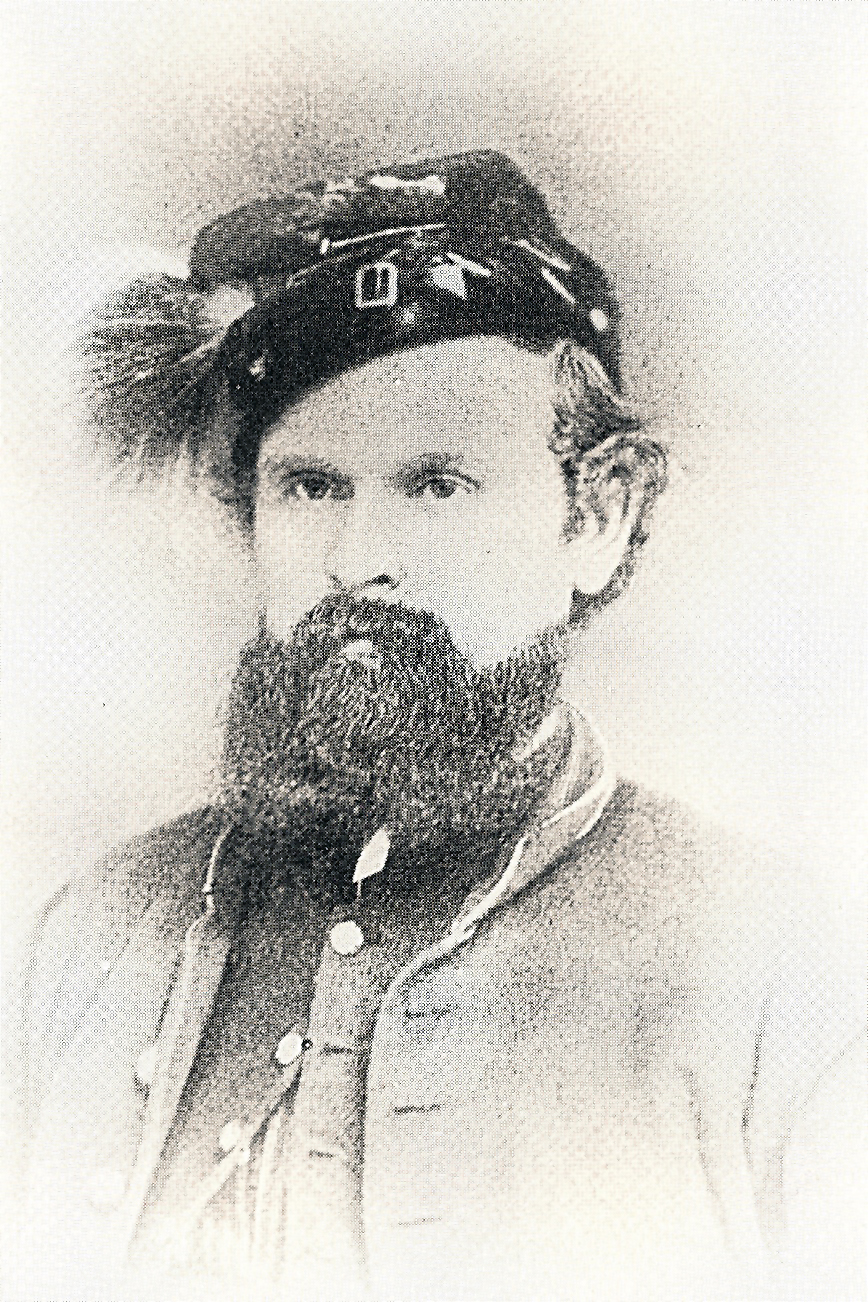
Historical · U.S. House · Pennsylvania · District 16
William Brown
Former U.S. Representative · Pennsylvania District 16 · 1883–1887 · Republican
William Brown represented Pennsylvania's District 16 in the United States House of Representatives (1883–1887) for the Republican party. The page below collects sourced biographical facts, term history, committee roles, and provenance for Brown.
Bioguide ID: B000952
Key facts
- Full name
- William Brown
- State
- Pennsylvania
- District
- District 16
- Party
- Republican
- House service
- 1883–1887
- First House term
- 1883
- Status
- Left office
- Current term ends
- —
- Born
- 1836
- Bioguide ID
- B000952
- Committee assignments
- —
- Dataset version
- 1.20260606
Biographical narrative
867 words · sourced from the Wikipedia REST extract
William Brown was a Republican politician who served as a U.S. Representative for Pennsylvania's 16th congressional district from 1883 until 1887. His career in public service was marked by a commitment to both local and national issues, and he held various positions in law and government throughout his life. Born in 1836, Brown's early experiences and education laid the foundation for his later political career, which included significant roles at both the state and federal levels.
Early life and career
William Brown was born on April 22, 1836, in Summerhill, New York. In 1838, when he was just two years old, his family relocated to Elk County, Pennsylvania. This move was pivotal, as it introduced him to the community and environment that would shape his future endeavors. Brown received his early education in the common schools of Pennsylvania and furthered his studies at Smethport Academy. His academic journey culminated in a degree from Alfred University in Allegany County, New York, which he obtained in 1861.
Following his graduation, Brown enlisted in the military during the Civil War, joining the Twenty-third New York Volunteers in 1861. His service was marked by a transfer to the First Pennsylvania Rifles later that same year, reflecting a commitment to his country during a tumultuous period in American history. After the war, Brown transitioned into public service, beginning with an appointment as the recorder of deeds for McKean County, Pennsylvania, in 1864. He further expanded his involvement in education by becoming the superintendent of schools in the county in 1866.
Brown's legal career began in earnest when he studied law and was admitted to the bar in 1866. That same year, he was elected as the district attorney for McKean County, a position that allowed him to gain significant legal experience and establish his reputation in the community. In 1869, he moved to Corry, Pennsylvania, where he continued his legal practice and served as city attorney for three years. His political career expanded as he was elected to the city council for two years, demonstrating his growing influence in local governance.
In the early 1870s, Brown's political aspirations led him to the Pennsylvania House of Representatives, where he served from 1872 to 1876. His contributions during this time were recognized, and in 1876, he was appointed aide-de-camp to Governor John F. Hartranft, further solidifying his role in state politics. Brown was also associated with the Pennsylvania National Guard, reflecting his continued commitment to public service and community safety. In 1878, he relocated to Bradford, Pennsylvania, where he continued to practice law and build his professional network.
House tenure
William Brown's tenure in the U.S. House of Representatives began when he was elected as a Republican to the Forty-eighth Congress, serving from 1883 to 1885. He was subsequently re-elected to the Forty-ninth Congress, where he continued to represent Pennsylvania's 16th congressional district until 1887. During his time in Congress, Brown was involved in various legislative activities, contributing to discussions and decisions that shaped policies affecting his constituents and the nation.
His congressional career, while relatively brief, was marked by a focus on issues pertinent to his district and the broader Republican agenda of the time. However, after serving two terms, Brown sought renomination in 1886 but was unsuccessful. This marked the end of his direct involvement in federal legislative affairs, after which he returned to his legal practice.
Legislative focus and committees
While specific details regarding the exact legislative initiatives and committee assignments during Brown's time in Congress are not provided, it can be inferred that as a member of the Republican Party during the mid-1880s, he likely engaged with issues relevant to his constituents in Pennsylvania. The Republican Party during this period was involved in various national debates, including economic policies, infrastructure development, and civil rights matters, which would have influenced the legislative priorities of its members.
Following his congressional service, Brown resumed his legal career and continued to contribute to public service in various capacities. He served as the city solicitor of Bradford from 1892 to 1897, further demonstrating his commitment to local governance. His expertise in law led him to work as an auditor for the War Department from 1897 to 1899 and later for the Navy Department from 1899 to 1907. These roles allowed him to apply his legal knowledge to federal administrative functions, contributing to the efficiency and accountability of government operations.
In 1907, Brown was appointed Assistant Attorney General by President Theodore Roosevelt, a position he held until 1910. During this time, he was responsible for the defense of Spanish treaty claims, showcasing his legal acumen and ability to navigate complex legal issues at the national level. After concluding his service in this role, he returned to Bradford, where he continued to practice law until his passing.
William Brown's life came to an end on November 4, 1926. He was interred in Alfred Cemetery in Alfred, New York, marking the conclusion of a life dedicated to public service and the legal profession. His contributions to both local and national governance reflect a career shaped by a commitment to his community and the principles of the Republican Party during a significant period in American history.
Notable legislation
Sponsored and co-sponsored legislation for William Brown is pending operator curation. The biographical narrative above carries the same provenance trail until per-bill rows are written.
Sources
- [1]https://en.wikipedia.org/wiki/William_Wallace_BrownWikipedia · retrieved 2026-06-06
Notable quotes
Sourced quotes for William Brown are pending operator curation. Narrative-scope provenance remains attached below.
Sources
- [1]https://en.wikipedia.org/wiki/William_Wallace_BrownWikipedia · retrieved 2026-06-06
Key positions
Curated policy positions for William Brown are pending operator review. The biographical narrative above carries the same provenance trail until per-topic positions are written.
Sources
- [1]https://en.wikipedia.org/wiki/William_Wallace_BrownWikipedia · retrieved 2026-06-06
Terms served
- 1883–1885U.S. House · Term 1 · Republican
- 1885–1887U.S. House · Term 2 · Republican
Sources & provenance
Every attributable claim above carries a per-section [N] marker that resolves to the corresponding URL below. Each entry records the upstream provider, the canonical URL, and the timestamp at which the source was retrieved by the ingest pipeline.
Key facts
- https://bioguide.congress.gov/search/bio/B000952bioguide · retrieved 2026-06-06
- https://www.govtrack.us/congress/members/401905govtrack · retrieved 2026-06-06
Biographical narrative
- https://en.wikipedia.org/wiki/William_Wallace_Brownwikipedia · retrieved 2026-06-06
Find your representative
Every U.S. state elects representatives by district. Browse Pennsylvania’s delegation, the full former-representative roster, or explore the role and term length.
Related on The Candidate
- Preceded by Robert WalkerEarlier holder of the Pennsylvania District 16 House seat · Republican.Open
- Succeeded by Henry McCormickLater holder of the Pennsylvania District 16 House seat · Republican.Open
- Adam SeybertFormer U.S. Representative · Pennsylvania District 1 · RepublicanOpen
- Benjamin SayFormer U.S. Representative · Pennsylvania District 1 · RepublicanOpen
- Chapman FreemanFormer U.S. Representative · Pennsylvania District 1 · RepublicanOpen
- Harry RansleyFormer U.S. Representative · Pennsylvania District 1 · RepublicanOpen