
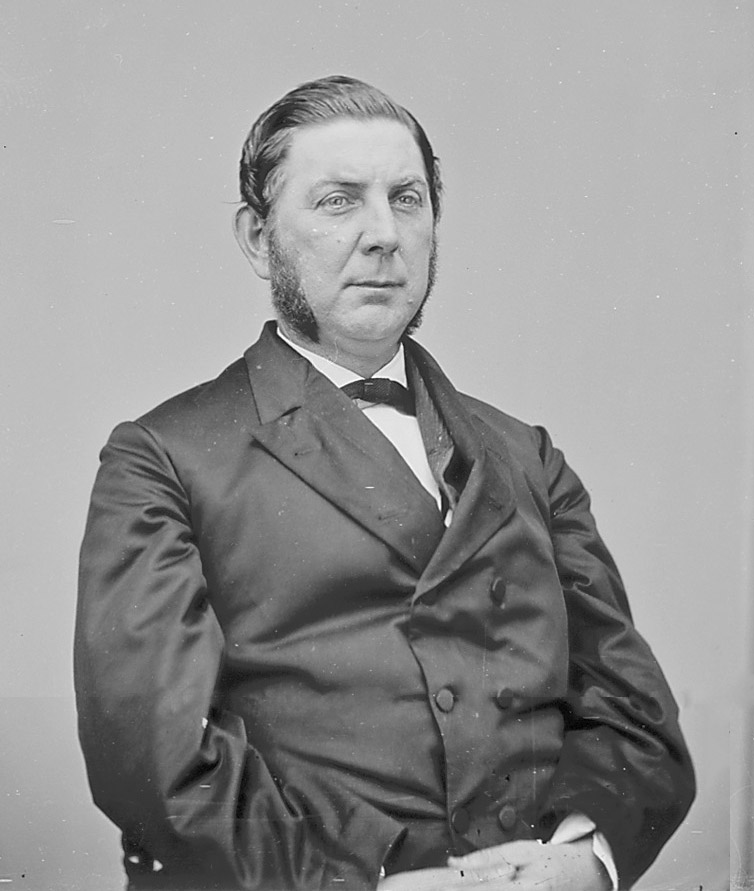
Historical · U.S. House · Pennsylvania · District 17
Alexander Coffroth
Former U.S. Representative · Pennsylvania District 17 · 1863–1881 · Democratic
Alexander Coffroth represented Pennsylvania's District 17 in the United States House of Representatives (1863–1881) for the Democratic party. The page below collects sourced biographical facts, term history, committee roles, and provenance for Coffroth.
Bioguide ID: C000593
Key facts
- Full name
- Alexander Coffroth
- State
- Pennsylvania
- District
- District 17
- Party
- Democratic
- House service
- 1863–1881
- First House term
- 1863
- Status
- Left office
- Current term ends
- —
- Born
- 1828
- Bioguide ID
- C000593
- Committee assignments
- —
- Dataset version
- 1.20260606
Biographical narrative
912 words · sourced from the Wikipedia REST extract
Alexander Coffroth was a Democratic politician who served as a U.S. Representative from Pennsylvania's 17th congressional district. His political career spanned three terms in the House of Representatives, during which he participated in significant legislative developments, including the passage of the Thirteenth Amendment. Born in 1828, Coffroth's early life and professional endeavors laid the groundwork for his later political involvement, which culminated in his service in the U.S. Congress until 1881.
Early life and career
Alexander Hamilton Coffroth was born on May 18, 1828, in Somerset, Pennsylvania. He grew up in a family that included at least two brothers, John B. Coffroth and C.A.B. Coffroth. Coffroth's education began in the local public schools and continued at Somerset Academy, where he received a foundational education that would support his future endeavors. Following his schooling, he ventured into the world of journalism, producing a Democratic newspaper in Somerset for five years. This experience likely honed his communication skills and deepened his understanding of political issues, which would later influence his legislative career.
Coffroth pursued legal studies under the mentorship of Hon. Jeremiah S. Black, a prominent figure in Pennsylvania law and politics. He was admitted to the bar in February 1851 and began practicing law in Somerset. His legal career provided him with a platform to engage in public service and political discourse. Coffroth's political involvement began to take shape as he participated as a delegate in several Democratic State conventions, showcasing his commitment to the party and its principles. Notably, he was a delegate to the 1860 Democratic National Convention, which convened in Charleston, South Carolina, and later in Baltimore, Maryland. These experiences further solidified his position within the Democratic Party.
In addition to his political engagements, Coffroth served as an assessor of internal revenue in 1867, a role that involved overseeing tax assessments and contributing to the federal revenue system during a time of significant national change. His involvement in the Democratic National Convention in 1872 further exemplified his active participation in shaping party policies and strategies.
House tenure
Coffroth's congressional career began when he was elected to the Thirty-eighth Congress as a Democrat, marking his entry into federal politics. His tenure in the House of Representatives commenced in 1863, a period marked by the Civil War and significant national turmoil. During his first term, Coffroth supported the passage of the Thirteenth Amendment, which abolished slavery in the United States. This legislative action was a pivotal moment in American history, and Coffroth's support indicated his alignment with the broader Democratic Party's efforts to navigate the complexities of the war and its aftermath.
After his initial term, Coffroth was re-elected to the Thirty-ninth Congress, where he was seated on February 19, 1866. However, his time in this Congress was cut short when he was succeeded by William H. Koontz, who contested the election results. This development marked a significant moment in Coffroth's political journey, as he was ousted from his seat due to the contested nature of the election.
Coffroth returned to Congress for a third term when he was elected to the Forty-sixth Congress. During this period, he served as the chairman of the United States House Committee on Invalid Pensions, a role that involved overseeing legislation related to veterans' benefits and pensions. His leadership in this committee underscored his commitment to addressing the needs of those who had served in the military, reflecting the broader societal concerns of the time.
Despite his contributions to the House, Coffroth chose not to seek renomination in 1880. After concluding his congressional service, he returned to Somerset to resume his legal practice, indicating a shift back to his professional roots following his time in public office. Coffroth's decision to step away from the political arena allowed him to focus on his legal career and personal life.
Legislative focus and committees
Throughout his time in the House of Representatives, Coffroth's legislative focus was shaped by the pressing issues of his era, particularly those related to civil rights and veterans' affairs. His support for the Thirteenth Amendment highlighted his engagement with the critical social and political transformations occurring in the United States during the Civil War and Reconstruction periods. This amendment was a landmark piece of legislation that sought to redefine the nation's values and legal framework regarding human rights.
As chairman of the House Committee on Invalid Pensions during the Forty-sixth Congress, Coffroth played a significant role in addressing the needs of veterans. The committee was responsible for reviewing and proposing legislation related to pensions for those who had served in the military, a matter of great importance in the post-Civil War context. His leadership in this committee reflected his commitment to ensuring that veterans received the support and benefits they deserved, acknowledging their sacrifices and contributions to the nation.
Coffroth's legislative work was conducted within the broader framework of the Democratic Party's goals and priorities during a transformative period in American history. His involvement in key legislative initiatives and committee leadership roles demonstrated his active participation in shaping policies that affected the lives of many Americans.
After leaving Congress, Coffroth continued to engage with his community and legal practice until his death on September 2, 1906, at a sanitarium in Markleton, Pennsylvania. He was interred in Union Cemetery in Somerset, Pennsylvania. His legacy includes being the last surviving pallbearer who served at the funeral of President Abraham Lincoln, a testament to his connections to significant historical events and figures in American history.
Notable legislation
Sponsored and co-sponsored legislation for Alexander Coffroth is pending operator curation. The biographical narrative above carries the same provenance trail until per-bill rows are written.
Sources
- [1]https://en.wikipedia.org/wiki/Alexander_H._CoffrothWikipedia · retrieved 2026-06-06
Notable quotes
Sourced quotes for Alexander Coffroth are pending operator curation. Narrative-scope provenance remains attached below.
Sources
- [1]https://en.wikipedia.org/wiki/Alexander_H._CoffrothWikipedia · retrieved 2026-06-06
Key positions
Curated policy positions for Alexander Coffroth are pending operator review. The biographical narrative above carries the same provenance trail until per-topic positions are written.
Sources
- [1]https://en.wikipedia.org/wiki/Alexander_H._CoffrothWikipedia · retrieved 2026-06-06
Terms served
- 1863–1865U.S. House · Term 1 · Democratic
- 1865–1867U.S. House · Term 2 · Democratic
- 1879–1881U.S. House · Term 3 · Democratic
Sources & provenance
Every attributable claim above carries a per-section [N] marker that resolves to the corresponding URL below. Each entry records the upstream provider, the canonical URL, and the timestamp at which the source was retrieved by the ingest pipeline.
Key facts
- https://bioguide.congress.gov/search/bio/C000593bioguide · retrieved 2026-06-06
- https://www.govtrack.us/congress/members/402722govtrack · retrieved 2026-06-06
Biographical narrative
- https://en.wikipedia.org/wiki/Alexander_H._Coffrothwikipedia · retrieved 2026-06-06
Find your representative
Every U.S. state elects representatives by district. Browse Pennsylvania’s delegation, the full former-representative roster, or explore the role and term length.
Related on The Candidate
- Preceded by Edward McPhersonEarlier holder of the Pennsylvania District 17 House seat · Republican.Open
- Succeeded by Simon WolvertonLater holder of the Pennsylvania District 17 House seat · Democratic.Open
- Adam SeybertFormer U.S. Representative · Pennsylvania District 1 · RepublicanOpen
- Benjamin SayFormer U.S. Representative · Pennsylvania District 1 · RepublicanOpen
- Chapman FreemanFormer U.S. Representative · Pennsylvania District 1 · RepublicanOpen
- Harry RansleyFormer U.S. Representative · Pennsylvania District 1 · RepublicanOpen