
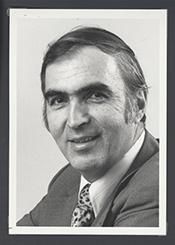
Historical · U.S. House · Pennsylvania · District 17
George Gekas
Former U.S. Representative · Pennsylvania District 17 · 1983–2003 · Republican
George Gekas represented Pennsylvania's District 17 in the United States House of Representatives (1983–2003) for the Republican party. The page below collects sourced biographical facts, term history, committee roles, and provenance for Gekas.
Bioguide ID: G000121
Key facts
- Full name
- George Gekas
- State
- Pennsylvania
- District
- District 17
- Party
- Republican
- House service
- 1983–2003
- First House term
- 1983
- Status
- Left office
- Current term ends
- —
- Born
- 1930
- Bioguide ID
- G000121
- Committee assignments
- —
- Dataset version
- 1.20260605
Biographical narrative
846 words · sourced from the Wikipedia REST extract
George W. Gekas was an American politician who served as a Republican member of the U.S. House of Representatives for Pennsylvania's 17th congressional district from 1983 until 2003. His political career spanned two decades, during which he was involved in various legislative efforts and held significant positions within the House. Gekas was known for his legal background and his service in both state and federal legislative bodies.
Early life and career
George William Gekas was born on April 14, 1930, in Harrisburg, Pennsylvania. He was the son of Mary Touloumes and William Gekas. Gekas completed his secondary education at William Penn High School, graduating in 1948. He pursued higher education at Dickinson College, where he earned a Bachelor of Arts degree in 1952. Following his undergraduate studies, he attended the Dickinson School of Law, obtaining his Juris Doctor degree in 1958. During his time at Dickinson College, he was a member of the Sigma Alpha Epsilon fraternity.
After completing his education, Gekas served in the United States Army from 1953 to 1955, contributing to his country during a pivotal time. Upon returning to civilian life, he began his professional career in law, initially working in private practice for two years. He then transitioned to public service, serving as the assistant district attorney for Dauphin County from 1960 to 1966. This role provided him with valuable experience in the legal system and public administration.
Gekas entered the political arena in 1966 when he was elected to the Pennsylvania House of Representatives, representing the 103rd district. He served in this capacity until 1974, when he was defeated in an election marked by a significant Democratic wave, largely attributed to the fallout from the Watergate scandal. Following this setback, Gekas returned to public office in 1977 as a member of the Pennsylvania State Senate, where he represented the 15th district until 1982.
House tenure
In the aftermath of the 1980 census, Pennsylvania underwent a redistricting process that resulted in the loss of two congressional districts. The Republican-controlled state legislature created a new congressional district based in Harrisburg, which Gekas successfully contested in the 1982 elections. This victory marked his entry into the U.S. House of Representatives, where he became the second Greek-American elected to Congress from Pennsylvania, following Gus Yatron.
Gekas's tenure in the House was characterized by his re-election to the position nine additional times, reflecting his sustained support within his district. Throughout his congressional career, he was involved in various legislative initiatives and was known for his distinctive voting record. Notably, he was the only member of the House to oppose the Gun-Free School Zones Act of 1990, a stance that underscored his views on gun rights and education policy.
In addition to his legislative activities, Gekas played a significant role in high-profile impeachment proceedings. He served as one of the House managers during the impeachment trials of both Alcee Hastings and President Bill Clinton, demonstrating his involvement in some of the most contentious political events of the era.
Despite his long-standing service and multiple re-elections, Gekas faced a challenging political landscape in the early 2000s. The 2000 census and subsequent redistricting altered the demographics of his district significantly. In the 2002 election, he was challenged by Tim Holden, a Democratic incumbent whose district had been partially absorbed into Gekas's 17th District. On election night, Gekas was defeated, marking a notable shift in the political dynamics of the region. His loss was particularly significant as he was the only Republican incumbent to be defeated in a district with a Democratic challenger that year.
Legislative focus and committees
During his time in the House of Representatives, Gekas was involved in various legislative efforts that reflected his priorities and the interests of his constituents. His legal background informed his approach to policy-making, particularly in areas related to law enforcement, education, and civil rights. Gekas's opposition to the Gun-Free School Zones Act of 1990 illustrated his commitment to Second Amendment rights and his belief in local control over educational policies.
Gekas's participation in impeachment proceedings highlighted his engagement with issues of governance and accountability. Serving as a House manager during these trials, he was involved in the legal and procedural aspects of impeachment, which required a deep understanding of constitutional law and legislative processes.
Throughout his congressional career, Gekas served on various committees that shaped his legislative agenda. While specific committee assignments are not detailed, members of Congress typically engage with committees that align with their interests and the needs of their constituents. Gekas's legal expertise likely influenced his committee work, particularly in areas related to judiciary matters and public safety.
After his defeat in 2002, Gekas returned to Harrisburg, where he established a law practice, continuing his professional career outside of elected office. He remained active in the community and continued to reside in Harrisburg until his passing on December 16, 2021, at the age of 91. Gekas's legacy as a long-serving member of the U.S. House of Representatives reflects his contributions to Pennsylvania's political landscape and his engagement in significant legislative matters during his tenure.
Notable legislation
Sponsored and co-sponsored legislation for George Gekas is pending operator curation. The biographical narrative above carries the same provenance trail until per-bill rows are written.
Sources
- [1]https://en.wikipedia.org/wiki/George_GekasWikipedia · retrieved 2026-06-05
Notable quotes
Sourced quotes for George Gekas are pending operator curation. Narrative-scope provenance remains attached below.
Sources
- [1]https://en.wikipedia.org/wiki/George_GekasWikipedia · retrieved 2026-06-05
Key positions
Curated policy positions for George Gekas are pending operator review. The biographical narrative above carries the same provenance trail until per-topic positions are written.
Sources
- [1]https://en.wikipedia.org/wiki/George_GekasWikipedia · retrieved 2026-06-05
Terms served
- 1983–1985U.S. House · Term 1 · Republican
- 1985–1987U.S. House · Term 2 · Republican
- 1987–1989U.S. House · Term 3 · Republican
- 1989–1991U.S. House · Term 4 · Republican
- 1991–1993U.S. House · Term 5 · Republican
- 1993–1995U.S. House · Term 6 · Republican
- 1995–1997U.S. House · Term 7 · Republican
- 1997–1999U.S. House · Term 8 · Republican
- 1999–2001U.S. House · Term 9 · Republican
- 2001–2003U.S. House · Term 10 · Republican
Sources & provenance
Every attributable claim above carries a per-section [N] marker that resolves to the corresponding URL below. Each entry records the upstream provider, the canonical URL, and the timestamp at which the source was retrieved by the ingest pipeline.
Key facts
- https://bioguide.congress.gov/search/bio/G000121bioguide · retrieved 2026-06-05
- https://www.govtrack.us/congress/members/400544govtrack · retrieved 2026-06-05
Biographical narrative
- https://en.wikipedia.org/wiki/George_Gekaswikipedia · retrieved 2026-06-05
Find your representative
Every U.S. state elects representatives by district. Browse Pennsylvania’s delegation, the full former-representative roster, or explore the role and term length.
Related on The Candidate
- Preceded by Allen ErtelEarlier holder of the Pennsylvania District 17 House seat · Democratic.Open
- Succeeded by Conor LambLater holder of the Pennsylvania District 17 House seat · Democratic.Open
- Adam SeybertFormer U.S. Representative · Pennsylvania District 1 · RepublicanOpen
- Benjamin SayFormer U.S. Representative · Pennsylvania District 1 · RepublicanOpen
- Chapman FreemanFormer U.S. Representative · Pennsylvania District 1 · RepublicanOpen
- Harry RansleyFormer U.S. Representative · Pennsylvania District 1 · RepublicanOpen