
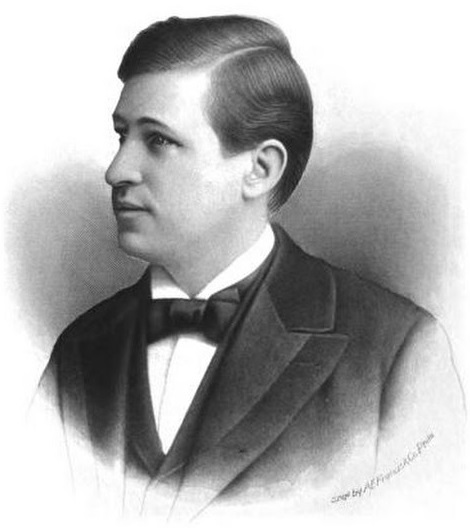
Historical · U.S. House · Pennsylvania · District 17
Monroe Kulp
Former U.S. Representative · Pennsylvania District 17 · 1895–1899 · Republican
Monroe Kulp represented Pennsylvania's District 17 in the United States House of Representatives (1895–1899) for the Republican party. The page below collects sourced biographical facts, term history, committee roles, and provenance for Kulp.
Bioguide ID: K000338
Key facts
- Full name
- Monroe Kulp
- State
- Pennsylvania
- District
- District 17
- Party
- Republican
- House service
- 1895–1899
- First House term
- 1895
- Status
- Left office
- Current term ends
- —
- Born
- 1858
- Bioguide ID
- K000338
- Committee assignments
- —
- Dataset version
- 1.20260606
Biographical narrative
947 words · sourced from the Wikipedia REST extract
Monroe Kulp was a Republican politician who served as a U.S. Representative for Pennsylvania's 17th congressional district during the late 19th century. His political career spanned two terms in the U.S. House of Representatives, where he was involved in various legislative activities and served as a delegate to the Republican National Convention. Kulp's background in business and his involvement in local utilities and infrastructure projects reflected his commitment to the economic development of his community. He was born in 1858 and passed away in 1911, leaving a legacy tied to both his business ventures and his political service.
Early life and career
Monroe Kulp was born on October 23, 1858, in Barto, Pennsylvania. He was the son of Darlington R. Kulp and Elizabeth Gilbert Kulp. His early education took place in the public schools of Shamokin, Pennsylvania, where he likely developed a foundational understanding of the community and its needs. Following his primary education, Kulp pursued higher education at the State Normal College in Lebanon, Ohio, which prepared him for a career in various professional fields. He furthered his education by graduating from Eastman Business College in Poughkeepsie, New York, a well-regarded institution known for training individuals in business practices.
After completing his education, Kulp returned to Pennsylvania and became actively involved in the local economy. He engaged in several industries, including coal, lumber, brick, and ice, primarily in Shamokin. His early career began in his father's businesses, where he gained practical experience in managing and operating commercial enterprises. Over time, Kulp expanded his business interests by organizing several ventures, often collaborating with his brother G. Gilbert Kulp and his friend D. C. Kaseman. This partnership allowed them to diversify their investments, which included timber lands, railroads, residential and commercial real estate, and banking operations.
In addition to his business pursuits, Kulp played a significant role in the development of essential utilities in the Shamokin area. He became involved in local telephone, electricity, water, and sewer services, as well as trolley companies. His engagement in these sectors not only contributed to the economic growth of Shamokin but also improved the quality of life for its residents by providing necessary infrastructure and services.
House tenure
Kulp's political career began when he was elected as a Republican to the Fifty-fourth and Fifty-fifth Congresses, serving from 1895 until 1899. His election to the U.S. House of Representatives marked a significant transition from his business career to public service. During his time in Congress, Kulp participated in various legislative activities, contributing to discussions and decisions that impacted both his constituents in Pennsylvania and the nation as a whole.
While specific details regarding the legislation he supported or the committees he served on during his tenure are not provided, it is known that Kulp was active in the political landscape of his time. His involvement in the Republican Party extended beyond his congressional duties, as he was also a delegate to the 1900 Republican National Convention. This role allowed him to participate in shaping the party's platform and selecting its candidates for the upcoming elections, further solidifying his influence within the party.
Kulp's congressional career concluded when he chose not to seek renomination in 1898. The decision to step away from politics after two terms may have been influenced by various factors, including his health and personal circumstances. Nevertheless, his contributions during his time in office reflected his dedication to public service and the interests of his constituents.
Legislative focus and committees
While specific details about Kulp's legislative focus and the committees he served on during his time in Congress are not available, it can be inferred that his background in business and local utilities likely influenced his priorities as a legislator. Given his extensive experience in various industries, Kulp may have been particularly interested in issues related to economic development, infrastructure, and public services. His involvement in utilities and real estate suggests a commitment to enhancing the quality of life for residents in his district through improved services and economic opportunities.
Kulp's participation in the Republican National Convention in 1900 indicates his active engagement in the broader political landscape beyond his congressional duties. This involvement may have provided him with insights into national issues and the direction of the Republican Party, which could have influenced his legislative priorities during his time in office.
Despite the lack of specific legislative achievements or committee assignments documented in the available sources, Kulp's dual role as a businessman and politician positioned him to advocate for policies that aligned with his experiences and the needs of his constituents. His understanding of local economic conditions and infrastructure challenges likely informed his approach to governance and legislative decision-making.
Kulp's tenure in the U.S. House of Representatives, though relatively brief, was marked by his commitment to public service and his efforts to represent the interests of his district. His background in business and local utilities provided him with a unique perspective on the challenges faced by his constituents, and his involvement in the Republican Party allowed him to contribute to the political discourse of his time.
Monroe Kulp passed away on October 19, 1911, in Shamokin, Pennsylvania, just days before his 53rd birthday. His health had been declining due to Bright's disease, rheumatism, and other ailments, which ultimately led to his death. Kulp was buried at Shamokin City Cemetery, leaving behind a legacy tied to both his business ventures and his political service. He married Sara Washington Detweiler in 1897, and the couple did not have any children. Kulp's life and career reflect the interconnectedness of business and politics in the late 19th century, as well as the importance of local leaders in shaping their communities.
Notable legislation
Sponsored and co-sponsored legislation for Monroe Kulp is pending operator curation. The biographical narrative above carries the same provenance trail until per-bill rows are written.
Sources
- [1]https://en.wikipedia.org/wiki/Monroe_H._KulpWikipedia · retrieved 2026-06-06
Notable quotes
Sourced quotes for Monroe Kulp are pending operator curation. Narrative-scope provenance remains attached below.
Sources
- [1]https://en.wikipedia.org/wiki/Monroe_H._KulpWikipedia · retrieved 2026-06-06
Key positions
Curated policy positions for Monroe Kulp are pending operator review. The biographical narrative above carries the same provenance trail until per-topic positions are written.
Sources
- [1]https://en.wikipedia.org/wiki/Monroe_H._KulpWikipedia · retrieved 2026-06-06
Terms served
- 1895–1897U.S. House · Term 1 · Republican
- 1897–1899U.S. House · Term 2 · Republican
Sources & provenance
Every attributable claim above carries a per-section [N] marker that resolves to the corresponding URL below. Each entry records the upstream provider, the canonical URL, and the timestamp at which the source was retrieved by the ingest pipeline.
Key facts
- https://bioguide.congress.gov/search/bio/K000338bioguide · retrieved 2026-06-06
- https://www.govtrack.us/congress/members/406491govtrack · retrieved 2026-06-06
Biographical narrative
- https://en.wikipedia.org/wiki/Monroe_H._Kulpwikipedia · retrieved 2026-06-06
Find your representative
Every U.S. state elects representatives by district. Browse Pennsylvania’s delegation, the full former-representative roster, or explore the role and term length.
Related on The Candidate
- Preceded by Simon WolvertonEarlier holder of the Pennsylvania District 17 House seat · Democratic.Open
- Succeeded by Rufus PolkLater holder of the Pennsylvania District 17 House seat · Democratic.Open
- Adam SeybertFormer U.S. Representative · Pennsylvania District 1 · RepublicanOpen
- Benjamin SayFormer U.S. Representative · Pennsylvania District 1 · RepublicanOpen
- Chapman FreemanFormer U.S. Representative · Pennsylvania District 1 · RepublicanOpen
- Harry RansleyFormer U.S. Representative · Pennsylvania District 1 · RepublicanOpen