
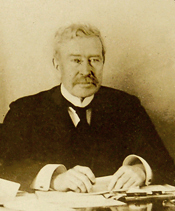
Historical · U.S. House · Pennsylvania · District 18
Marlin Olmsted
Former U.S. Representative · Pennsylvania District 18 · 1897–1913 · Republican
Marlin Olmsted represented Pennsylvania's District 18 in the United States House of Representatives (1897–1913) for the Republican party. The page below collects sourced biographical facts, term history, committee roles, and provenance for Olmsted.
Bioguide ID: O000079
Key facts
- Full name
- Marlin Olmsted
- State
- Pennsylvania
- District
- District 18
- Party
- Republican
- House service
- 1897–1913
- First House term
- 1897
- Status
- Left office
- Current term ends
- —
- Born
- 1847
- Bioguide ID
- O000079
- Committee assignments
- —
- Dataset version
- 1.20260606
Biographical narrative
902 words · sourced from the Wikipedia REST extract
Marlin Olmsted was a prominent Republican politician who served as a U.S. Representative for Pennsylvania's 18th congressional district. His tenure in the House of Representatives spanned from 1897 until 1913, during which he was involved in various legislative activities and held significant committee positions. Born in 1847, Olmsted's early career included law practice and public service, culminating in his election to Congress, where he participated in key legislative processes and impeachment proceedings.
Early life and career
Marlin Edgar Olmsted was born on May 21, 1847, in Ulysses Township, Pennsylvania. His early education took place in local common schools, followed by attendance at Coudersport Academy, which provided him with a foundational education that would serve him throughout his career. After completing his schooling, Olmsted began his professional journey in public service. He initially worked as an assistant corporation clerk, where he was responsible for various administrative duties. His competence in this role led to his promotion to corporation clerk, where he oversaw the collection of corporate taxes under Pennsylvania's revenue system. This experience in government operations likely influenced his later political career.
In addition to his work in public service, Olmsted pursued a legal education. He studied law and was admitted to the bar in 1878, subsequently beginning his legal practice in Harrisburg, Pennsylvania. His legal career provided him with valuable insights into the legislative process and the workings of government, which would later inform his actions as a legislator. In 1891, he was elected to represent Dauphin County at a proposed constitutional convention, further establishing his political credentials and commitment to public service.
On October 26, 1899, Olmsted married Gertrude Howard, marking a personal milestone in his life. The couple's life together would unfold against the backdrop of Olmsted's growing political career, which would soon lead him to national office.
House tenure
Marlin Olmsted's congressional career began in 1897 when he was elected as a Republican to the Fifty-fifth Congress. He successfully secured re-election to seven subsequent Congresses, demonstrating a sustained level of support from his constituents in Pennsylvania's 18th district. His time in the House of Representatives was marked by significant involvement in legislative affairs and committee work.
During his tenure, Olmsted served as Chairman of the United States House Committee on Elections No. 2 from the Fifty-seventh through the Sixtieth Congresses. This role placed him at the forefront of issues related to electoral processes and the integrity of elections, which were particularly pertinent topics during his time in office. His leadership in this committee allowed him to influence legislation and policies that shaped the electoral landscape.
In addition to his work on election-related matters, Olmsted also chaired the United States House Committee on Insular Affairs during the Sixty-first Congress. This committee was responsible for overseeing issues related to U.S. territories and possessions, a significant area of focus during the early 20th century as the United States expanded its influence overseas. Olmsted's involvement in this committee reflects his engagement with the broader implications of U.S. governance and its territorial policies.
One notable event during Olmsted's congressional career was his appointment as one of the managers by the House of Representatives in 1905 to conduct impeachment proceedings against Charles Swayne, a judge of the United States District Court for the Northern District of Florida. This responsibility underscored Olmsted's role in upholding judicial accountability and the rule of law.
Despite his lengthy and impactful career in Congress, Olmsted chose not to seek renomination in 1912. After concluding his service in the House, he returned to his legal practice in Harrisburg, where he continued to contribute to his community and the legal profession.
Legislative focus and committees
Throughout his eight terms in the U.S. House of Representatives, Marlin Olmsted focused on various legislative issues that were significant during the late 19th and early 20th centuries. His roles on key committees allowed him to influence legislation that affected both his constituents and the nation as a whole.
As Chairman of the House Committee on Elections No. 2, Olmsted was involved in discussions and decisions regarding electoral integrity, voting rights, and the administration of elections. This committee's work was crucial during a period when the United States was grappling with issues related to voter access and the fairness of electoral processes. His leadership in this area demonstrated a commitment to ensuring that elections were conducted fairly and transparently.
In his capacity as Chairman of the House Committee on Insular Affairs, Olmsted dealt with matters concerning U.S. territories, including issues of governance, civil rights, and the integration of these territories into the broader framework of American law and society. His work in this committee highlighted the complexities of American expansionism and the responsibilities that came with governing newly acquired territories.
Olmsted's legislative focus was reflective of the broader political landscape of his time, characterized by debates over civil rights, electoral reform, and the role of the United States in international affairs. His participation in impeachment proceedings further illustrated his engagement with the principles of accountability and justice within the federal government.
Marlin Olmsted passed away on July 19, 1913, at the Manhattan Eye, Ear and Throat Hospital. His contributions to public service and the legislative process left a lasting impact on his constituents and the political landscape of Pennsylvania. He was laid to rest at Harrisburg Cemetery, marking the end of a significant chapter in his life dedicated to public service and legal advocacy.
Notable legislation
Sponsored and co-sponsored legislation for Marlin Olmsted is pending operator curation. The biographical narrative above carries the same provenance trail until per-bill rows are written.
Sources
- [1]https://en.wikipedia.org/wiki/Marlin_E._OlmstedWikipedia · retrieved 2026-06-06
Notable quotes
Sourced quotes for Marlin Olmsted are pending operator curation. Narrative-scope provenance remains attached below.
Sources
- [1]https://en.wikipedia.org/wiki/Marlin_E._OlmstedWikipedia · retrieved 2026-06-06
Key positions
Curated policy positions for Marlin Olmsted are pending operator review. The biographical narrative above carries the same provenance trail until per-topic positions are written.
Sources
- [1]https://en.wikipedia.org/wiki/Marlin_E._OlmstedWikipedia · retrieved 2026-06-06
Terms served
- 1897–1899U.S. House · Term 1 · Republican
- 1899–1901U.S. House · Term 2 · Republican
- 1901–1903U.S. House · Term 3 · Republican
- 1903–1905U.S. House · Term 4 · Republican
- 1905–1907U.S. House · Term 5 · Republican
- 1907–1909U.S. House · Term 6 · Republican
- 1909–1911U.S. House · Term 7 · Republican
- 1911–1913U.S. House · Term 8 · Republican
Sources & provenance
Every attributable claim above carries a per-section [N] marker that resolves to the corresponding URL below. Each entry records the upstream provider, the canonical URL, and the timestamp at which the source was retrieved by the ingest pipeline.
Key facts
- https://bioguide.congress.gov/search/bio/O000079bioguide · retrieved 2026-06-06
- https://www.govtrack.us/congress/members/408352govtrack · retrieved 2026-06-06
Biographical narrative
- https://en.wikipedia.org/wiki/Marlin_E._Olmstedwikipedia · retrieved 2026-06-06
Find your representative
Every U.S. state elects representatives by district. Browse Pennsylvania’s delegation, the full former-representative roster, or explore the role and term length.
Related on The Candidate
- Preceded by Louis AtkinsonEarlier holder of the Pennsylvania District 18 House seat · Republican.Open
- Succeeded by Aaron KreiderLater holder of the Pennsylvania District 18 House seat · Republican.Open
- Adam SeybertFormer U.S. Representative · Pennsylvania District 1 · RepublicanOpen
- Benjamin SayFormer U.S. Representative · Pennsylvania District 1 · RepublicanOpen
- Chapman FreemanFormer U.S. Representative · Pennsylvania District 1 · RepublicanOpen
- Harry RansleyFormer U.S. Representative · Pennsylvania District 1 · RepublicanOpen