
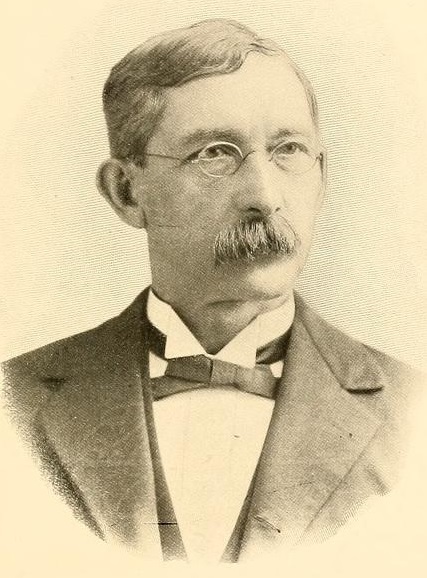
Historical · U.S. House · Pennsylvania · District 19
Edward Ziegler
Former U.S. Representative · Pennsylvania District 19 · 1899–1901 · Democratic
Edward Ziegler represented Pennsylvania's District 19 in the United States House of Representatives (1899–1901) for the Democratic party. The page below collects sourced biographical facts, term history, committee roles, and provenance for Ziegler.
Bioguide ID: Z000006
Key facts
- Full name
- Edward Ziegler
- State
- Pennsylvania
- District
- District 19
- Party
- Democratic
- House service
- 1899–1901
- First House term
- 1899
- Status
- Left office
- Current term ends
- —
- Born
- 1844
- Bioguide ID
- Z000006
- Committee assignments
- —
- Dataset version
- 1.20260606
Biographical narrative
933 words · sourced from the Wikipedia REST extract
Edward Ziegler was an American politician and lawyer who served as a U.S. Representative for Pennsylvania's 19th congressional district from 1899 to 1901. A member of the Democratic Party, Ziegler's political career was marked by a single term in the 56th United States Congress. His professional background included significant experience in law and local governance, and he was actively involved in his community throughout his life. Ziegler was born on March 3, 1844, in Bedford, Pennsylvania, and he passed away on December 21, 1931, in York, Pennsylvania.
Early life and career
Edward Danner Ziegler was born in Bedford, Pennsylvania, where he spent his early years. He pursued higher education and graduated from Pennsylvania College in 1865, which provided him with a solid academic foundation. Following his graduation, Ziegler engaged in teaching at the York County Academy, where he likely developed skills in communication and leadership that would later benefit his political career.
Ziegler's interest in law led him to study the subject in depth. After completing his legal studies, he was admitted to the bar in 1868, allowing him to commence his legal practice in York, Pennsylvania. His legal career began during a period when the legal profession was evolving, and he became an integral part of the local legal community. Ziegler's early involvement in public service included serving as the commissioner's clerk for York County in 1871 and 1872, where he gained experience in local government operations.
In addition to his role as a clerk, Ziegler served as counsel to the board of commissioners, further solidifying his reputation as a knowledgeable and capable legal professional. His commitment to public service continued as he was elected district attorney of York County, a position he held from 1881 to 1883. This role not only enhanced his legal expertise but also provided him with valuable insights into the workings of the judicial system and the needs of his constituents.
Ziegler's political involvement extended beyond local governance. He was a delegate to the 1884 Democratic National Convention, where he participated in shaping the party's platform and direction. This experience likely helped him build connections within the Democratic Party and laid the groundwork for his future political endeavors.
House tenure
Edward Ziegler's congressional career began when he was elected to the United States House of Representatives, representing Pennsylvania's 19th congressional district. His term commenced on March 4, 1899, during the 56th United States Congress. Ziegler's election to Congress marked a significant milestone in his career, as it provided him with a platform to influence national legislation and represent the interests of his constituents at the federal level.
During his time in office, Ziegler participated in the legislative process, contributing to discussions and decisions that shaped the policies of the time. However, his tenure in Congress was relatively brief, as he served only one term. Ziegler faced challenges in his bid for re-election in 1900 and was ultimately unsuccessful in securing renomination. This outcome concluded his formal legislative career, but it did not mark the end of his involvement in public service.
Following his departure from Congress on March 3, 1901, Ziegler returned to his legal practice in York, where he continued to serve his community through his work as an attorney. His experience in Congress likely enriched his understanding of the law and governance, which he applied in his subsequent legal endeavors.
Legislative focus and committees
While specific details regarding Ziegler's legislative focus and committee assignments during his time in Congress are not extensively documented, it can be inferred that his background in law and local governance influenced his approach to legislation. As a member of the Democratic Party, Ziegler would have aligned with the party's platform and priorities during the late 19th century, which included issues such as labor rights, economic reform, and social justice.
Ziegler's legal expertise likely played a role in his contributions to discussions on legislative matters, particularly those related to the judiciary and local governance. His experience as a district attorney would have provided him with insights into criminal justice issues, while his work as counsel to the board of commissioners may have informed his perspective on local government operations and the needs of municipalities.
Although Ziegler's congressional career was limited to a single term, his participation in the legislative process during a transformative period in American history would have exposed him to the complexities of national governance. The late 19th century was characterized by significant social and economic changes, including industrialization and urbanization, which presented both challenges and opportunities for lawmakers.
After concluding his congressional service, Ziegler remained active in his legal career. In 1923, he was appointed by the judge of the court of common pleas of York County to serve as the auditor for several county offices, including those of prothonotary, register of wills, clerk of the court, treasurer, and recorder. This appointment reflected his continued commitment to public service and his expertise in legal and administrative matters. He held this position until 1925, further demonstrating his dedication to the governance of York County.
Edward Ziegler continued to practice law in York until his death on December 21, 1931, at the age of 87. His contributions to his community and his involvement in both local and national governance left a lasting impact. He was interred in Prospect Hill Cemetery in York, Pennsylvania, where he rests alongside many of his contemporaries who also contributed to the development of the region. Ziegler's life and career exemplify the journey of a dedicated public servant who navigated the complexities of law and politics during a pivotal era in American history.
Notable legislation
Sponsored and co-sponsored legislation for Edward Ziegler is pending operator curation. The biographical narrative above carries the same provenance trail until per-bill rows are written.
Sources
- [1]https://en.wikipedia.org/wiki/Edward_D._ZieglerWikipedia · retrieved 2026-06-06
Notable quotes
Sourced quotes for Edward Ziegler are pending operator curation. Narrative-scope provenance remains attached below.
Sources
- [1]https://en.wikipedia.org/wiki/Edward_D._ZieglerWikipedia · retrieved 2026-06-06
Key positions
Curated policy positions for Edward Ziegler are pending operator review. The biographical narrative above carries the same provenance trail until per-topic positions are written.
Sources
- [1]https://en.wikipedia.org/wiki/Edward_D._ZieglerWikipedia · retrieved 2026-06-06
Terms served
- 1899–1901U.S. House · Term 1 · Democratic
Sources & provenance
Every attributable claim above carries a per-section [N] marker that resolves to the corresponding URL below. Each entry records the upstream provider, the canonical URL, and the timestamp at which the source was retrieved by the ingest pipeline.
Key facts
- https://bioguide.congress.gov/search/bio/Z000006bioguide · retrieved 2026-06-06
- https://www.govtrack.us/congress/members/411999govtrack · retrieved 2026-06-06
Biographical narrative
- https://en.wikipedia.org/wiki/Edward_D._Zieglerwikipedia · retrieved 2026-06-06
Find your representative
Every U.S. state elects representatives by district. Browse Pennsylvania’s delegation, the full former-representative roster, or explore the role and term length.
Related on The Candidate
- Preceded by George BennerEarlier holder of the Pennsylvania District 19 House seat · Democratic.Open
- Succeeded by Alvin EvansLater holder of the Pennsylvania District 19 House seat · Republican.Open
- Adam SeybertFormer U.S. Representative · Pennsylvania District 1 · RepublicanOpen
- Benjamin SayFormer U.S. Representative · Pennsylvania District 1 · RepublicanOpen
- Chapman FreemanFormer U.S. Representative · Pennsylvania District 1 · RepublicanOpen
- Harry RansleyFormer U.S. Representative · Pennsylvania District 1 · RepublicanOpen