
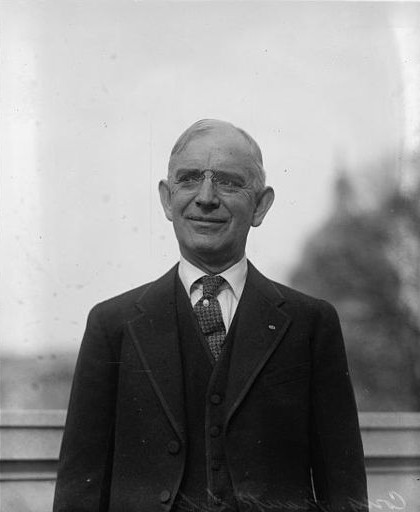
Historical · U.S. House · Pennsylvania · District 19
Frank Sites
Former U.S. Representative · Pennsylvania District 19 · 1923–1925 · Democratic
Frank Sites represented Pennsylvania's District 19 in the United States House of Representatives (1923–1925) for the Democratic party. The page below collects sourced biographical facts, term history, committee roles, and provenance for Sites.
Bioguide ID: S000457
Key facts
- Full name
- Frank Sites
- State
- Pennsylvania
- District
- District 19
- Party
- Democratic
- House service
- 1923–1925
- First House term
- 1923
- Status
- Left office
- Current term ends
- —
- Born
- 1864
- Bioguide ID
- S000457
- Committee assignments
- —
- Dataset version
- 1.20260606
Biographical narrative
918 words · sourced from the Wikipedia REST extract
Frank Sites was a Democratic politician who served as a U.S. Representative for Pennsylvania's 19th congressional district. His tenure in the House of Representatives spanned from 1923 until 1925. Born in the mid-19th century, Sites had a diverse career that included roles in education and public service before entering the political arena. His life and career reflect the transitions of American society during the early 20th century, as well as the local dynamics of Pennsylvania politics.
Early life and career
Frank Crawford Sites was born on December 24, 1864, in Shippensburg, Pennsylvania. His early years were marked by a significant move when, in 1875, his family relocated to Harrisburg, the state capital. This transition would play a pivotal role in shaping his future, as Harrisburg became the center of his professional and political activities. Sites received his education in the public school system, where he laid the foundation for his future endeavors.
After completing his education, Sites pursued a career in the trades, specifically as a watchmaker and jeweler. This choice of profession was indicative of the skilled labor opportunities available during that era, and it allowed him to establish a stable livelihood. His work in this field not only provided him with financial stability but also connected him with the local community, fostering relationships that would later benefit his political career.
Sites' involvement in public service began in earnest when he was elected to the Harrisburg school board in 1903. He served in this capacity until 1912, demonstrating a commitment to education and community development. His experience on the school board likely provided him with insights into the educational needs and challenges facing local families, which would inform his later political decisions.
In 1913, Sites was appointed as the postmaster of Harrisburg, a position he held until 1922. This role placed him in a significant position of authority within the community, allowing him to further engage with constituents and understand their needs. His tenure as postmaster coincided with a period of growth and change in Harrisburg, and he would have been involved in the administration of postal services during a time when communication was becoming increasingly vital to American society.
House tenure
Frank Sites' political career reached a new height when he was elected to the U.S. House of Representatives as a Democrat in 1922. He took office during the Sixty-eighth Congress, which convened in 1923. His election to Congress marked a significant transition from local to national politics, as he began to represent the interests of his constituents on a larger stage.
During his time in the House, Sites was part of a legislative body that was grappling with various issues, including economic challenges and social changes that were shaping the United States in the early 20th century. His experience in local governance and public service likely influenced his approach to national issues, providing him with a unique perspective on the needs of his district.
Despite his initial success in securing a seat in Congress, Sites faced challenges in his bid for reelection in 1924. He was unable to maintain his position and subsequently left office on March 3, 1925. The reasons for his electoral defeat are not detailed in the available records, but it is not uncommon for first-term representatives to encounter difficulties in securing a second term, especially in a rapidly changing political landscape.
After leaving Congress, Sites returned to Harrisburg, where he shifted his focus to the bond business. This transition marked a return to the private sector, where he utilized his skills and experience to engage in financial services. His involvement in the bond business would have allowed him to remain connected to the economic developments of the time, as well as to the community he had served as a public official.
Legislative focus and committees
While specific details regarding Frank Sites' legislative focus and committee assignments during his time in the House of Representatives are not provided, it can be inferred that his background in education and public service would have influenced his priorities as a legislator. Representatives often draw upon their previous experiences to guide their legislative agendas, and Sites' work on the school board and as postmaster likely informed his understanding of issues related to education, infrastructure, and community welfare.
Given the era in which he served, Sites would have been involved in discussions surrounding various national policies, including those related to economic recovery, labor rights, and social welfare. The early 1920s were marked by a post-World War I economic adjustment, and legislators were tasked with addressing the needs of a rapidly changing society. Sites' role as a member of Congress would have required him to navigate these complex issues while advocating for the interests of his constituents in Pennsylvania.
Although his time in office was relatively brief, Sites' contributions to the legislative process would have been shaped by his commitment to public service and his understanding of the challenges faced by his district. His experiences in local governance provided him with a foundation for addressing the needs of his constituents at the national level.
After his congressional career, Frank Sites continued to live in Harrisburg until his death on May 23, 1935. He was interred at the East Harrisburg Cemetery, marking the end of a life dedicated to both community service and public office. His legacy as a public servant reflects the values and challenges of his time, and his contributions to the local community and the nation remain a part of Pennsylvania's political history.
Notable legislation
Sponsored and co-sponsored legislation for Frank Sites is pending operator curation. The biographical narrative above carries the same provenance trail until per-bill rows are written.
Sources
- [1]https://en.wikipedia.org/wiki/Frank_C._SitesWikipedia · retrieved 2026-06-06
Notable quotes
Sourced quotes for Frank Sites are pending operator curation. Narrative-scope provenance remains attached below.
Sources
- [1]https://en.wikipedia.org/wiki/Frank_C._SitesWikipedia · retrieved 2026-06-06
Key positions
Curated policy positions for Frank Sites are pending operator review. The biographical narrative above carries the same provenance trail until per-topic positions are written.
Sources
- [1]https://en.wikipedia.org/wiki/Frank_C._SitesWikipedia · retrieved 2026-06-06
Terms served
- 1923–1925U.S. House · Term 1 · Democratic
Sources & provenance
Every attributable claim above carries a per-section [N] marker that resolves to the corresponding URL below. Each entry records the upstream provider, the canonical URL, and the timestamp at which the source was retrieved by the ingest pipeline.
Key facts
- https://bioguide.congress.gov/search/bio/S000457bioguide · retrieved 2026-06-06
- https://www.govtrack.us/congress/members/409949govtrack · retrieved 2026-06-06
Biographical narrative
- https://en.wikipedia.org/wiki/Frank_C._Siteswikipedia · retrieved 2026-06-06
Find your representative
Every U.S. state elects representatives by district. Browse Pennsylvania’s delegation, the full former-representative roster, or explore the role and term length.
Related on The Candidate
- Preceded by John RoseEarlier holder of the Pennsylvania District 19 House seat · Republican.Open
- Succeeded by Joshua SwartzLater holder of the Pennsylvania District 19 House seat · Republican.Open
- Adam SeybertFormer U.S. Representative · Pennsylvania District 1 · RepublicanOpen
- Benjamin SayFormer U.S. Representative · Pennsylvania District 1 · RepublicanOpen
- Chapman FreemanFormer U.S. Representative · Pennsylvania District 1 · RepublicanOpen
- Harry RansleyFormer U.S. Representative · Pennsylvania District 1 · RepublicanOpen