
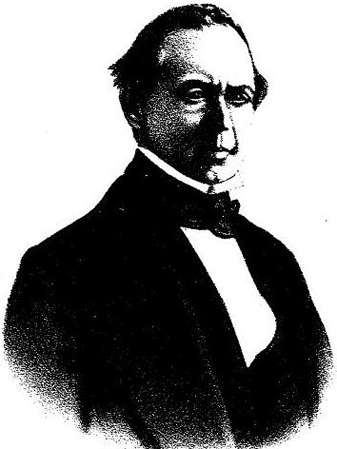
Historical · U.S. House · Pennsylvania · District 19
Job Mann
Former U.S. Representative · Pennsylvania District 19 · 1835–1851 · Democratic
Job Mann represented Pennsylvania's District 19 in the United States House of Representatives (1835–1851) for the Democratic party. The page below collects sourced biographical facts, term history, committee roles, and provenance for Mann.
Bioguide ID: M000106
Key facts
- Full name
- Job Mann
- State
- Pennsylvania
- District
- District 19
- Party
- Democratic
- House service
- 1835–1851
- First House term
- 1835
- Status
- Left office
- Current term ends
- —
- Born
- 1795
- Bioguide ID
- M000106
- Committee assignments
- —
- Dataset version
- 1.20260606
Biographical narrative
945 words · sourced from the Wikipedia REST extract
Job Mann was a prominent political figure in the 19th century, serving as a U.S. Representative from Pennsylvania. A member of the Democratic Party, Mann's political career spanned several years, during which he was involved in various legislative activities and held multiple positions within the state and national government. His tenure in the U.S. House of Representatives was marked by his alignment with the Jacksonian movement, reflecting the political dynamics of his time. Mann's contributions to his community and the state of Pennsylvania are recognized through his various roles, including serving as a county clerk and later as the state treasurer.
Early life and career
Job Mann was born on March 31, 1795, in Bethel Township, Pennsylvania. He received his early education in common schools and furthered his studies at the Bedford Academy, which laid the foundation for his future endeavors in law and politics. After completing his education, Mann began his professional career in public service. In 1816, he took on the role of clerk to the board of county commissioners, which provided him with valuable experience in governmental operations and public administration.
Mann's commitment to public service continued as he assumed the position of register, recorder, and clerk of Bedford County, Pennsylvania, a role he held from 1818 until 1835. This extensive experience in local government equipped him with insights into the needs and concerns of his constituents, shaping his future political career. During this period, Mann also pursued legal studies and was admitted to the bar in 1839, marking the beginning of his practice in Bedford, Pennsylvania.
In addition to his legal career, Mann was involved in state politics. He served as a member of the Pennsylvania House of Representatives, where he contributed to legislative discussions and decisions that impacted the state. His political alignment with the Jacksonian movement, which emphasized agrarian interests and the rights of the common man, positioned him as a representative of the values and aspirations of his constituents.
House tenure
Job Mann's congressional career began when he was elected as a Jacksonian to the Twenty-fourth Congress, which convened in 1835. His election to the House of Representatives marked a significant milestone in his political journey, allowing him to represent the interests of Pennsylvania's 19th congressional district on a national stage. During his first term, Mann engaged in various legislative initiatives and discussions, contributing to the broader political landscape of the time.
However, his tenure in the House was not without challenges. Mann sought reelection in 1836 for the Twenty-fifth Congress but was unsuccessful in his bid. Despite this setback, he continued to pursue his legal career and remained active in public service. His dedication to his profession and community did not go unnoticed, and he was later elected as the 16th Treasurer of Pennsylvania, serving from 1842 to 1845. This role further solidified his reputation as a committed public servant and provided him with additional experience in financial management and governance.
Mann's political career saw a resurgence when he was elected again as a Democrat to the Thirtieth and Thirty-first Congresses. His return to the House allowed him to once again advocate for the interests of his constituents and engage in legislative matters. Throughout his time in Congress, Mann focused on issues relevant to his district and the state of Pennsylvania, contributing to the ongoing political discourse of the era.
After completing his final term in the House, Mann chose not to seek renomination in 1850. He returned to his legal practice in Bedford, where he continued to serve his community until his passing. Job Mann's political career, marked by his service in the U.S. House of Representatives and various state roles, reflects the complexities and challenges of 19th-century American politics.
Legislative focus and committees
Throughout his time in the U.S. House of Representatives, Job Mann's legislative focus was shaped by the political climate of the Jacksonian era and the specific needs of his constituents in Pennsylvania. As a member of the Democratic Party, he aligned himself with the party's principles, which often emphasized agrarian interests, individual rights, and opposition to centralized banking and economic monopolies. Mann's legislative priorities were likely influenced by the socio-economic conditions of his district, which included agricultural concerns and the needs of local communities.
While specific details regarding the committees on which Mann served are not documented, it is common for members of Congress during this period to have participated in committees that addressed issues pertinent to their constituents. These committees often dealt with matters such as agriculture, commerce, and local infrastructure, reflecting the interests of the districts they represented. Mann's experience as a county clerk and state treasurer would have provided him with valuable insights into fiscal matters and local governance, which could have informed his contributions to relevant legislative discussions.
Mann's involvement in the legislative process extended beyond his formal roles in Congress. His advocacy for local interests was exemplified by his efforts to establish a post office in an unnamed village in Harrison Township. This initiative led to the creation of Manns Choice, Pennsylvania, a town named after him, highlighting his commitment to serving the needs of his constituents even after his congressional tenure.
In summary, Job Mann's legislative focus and activities in the U.S. House of Representatives were characterized by his alignment with the Democratic Party and the Jacksonian movement. His extensive experience in public service, law, and local governance equipped him to address the concerns of his constituents effectively. Although specific legislative achievements may not be detailed, Mann's contributions to the political landscape of his time reflect the complexities of 19th-century American governance and the importance of local representation in the federal legislative process.
Notable legislation
Sponsored and co-sponsored legislation for Job Mann is pending operator curation. The biographical narrative above carries the same provenance trail until per-bill rows are written.
Sources
- [1]https://en.wikipedia.org/wiki/Job_MannWikipedia · retrieved 2026-06-06
Notable quotes
Sourced quotes for Job Mann are pending operator curation. Narrative-scope provenance remains attached below.
Sources
- [1]https://en.wikipedia.org/wiki/Job_MannWikipedia · retrieved 2026-06-06
Key positions
Curated policy positions for Job Mann are pending operator review. The biographical narrative above carries the same provenance trail until per-topic positions are written.
Sources
- [1]https://en.wikipedia.org/wiki/Job_MannWikipedia · retrieved 2026-06-06
Terms served
- 1835–1837U.S. House · Term 1 · Jackson
- 1847–1849U.S. House · Term 2 · Democratic
- 1849–1851U.S. House · Term 3 · Democratic
Sources & provenance
Every attributable claim above carries a per-section [N] marker that resolves to the corresponding URL below. Each entry records the upstream provider, the canonical URL, and the timestamp at which the source was retrieved by the ingest pipeline.
Key facts
- https://bioguide.congress.gov/search/bio/M000106bioguide · retrieved 2026-06-06
- https://www.govtrack.us/congress/members/407130govtrack · retrieved 2026-06-06
Biographical narrative
- https://en.wikipedia.org/wiki/Job_Mannwikipedia · retrieved 2026-06-06
Find your representative
Every U.S. state elects representatives by district. Browse Pennsylvania’s delegation, the full former-representative roster, or explore the role and term length.
Related on The Candidate
- Preceded by Richard CoulterEarlier holder of the Pennsylvania District 19 House seat · Jackson.Open
- Succeeded by Carlton CurtisLater holder of the Pennsylvania District 19 House seat · Republican.Open
- Adam SeybertFormer U.S. Representative · Pennsylvania District 1 · RepublicanOpen
- Benjamin SayFormer U.S. Representative · Pennsylvania District 1 · RepublicanOpen
- Chapman FreemanFormer U.S. Representative · Pennsylvania District 1 · RepublicanOpen
- Harry RansleyFormer U.S. Representative · Pennsylvania District 1 · RepublicanOpen