
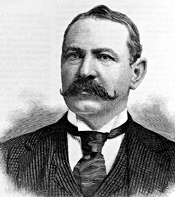
Historical · U.S. House · Pennsylvania · District 19
Levi Maish
Former U.S. Representative · Pennsylvania District 19 · 1875–1891 · Democratic
Levi Maish represented Pennsylvania's District 19 in the United States House of Representatives (1875–1891) for the Democratic party. The page below collects sourced biographical facts, term history, committee roles, and provenance for Maish.
Bioguide ID: M000072
Key facts
- Full name
- Levi Maish
- State
- Pennsylvania
- District
- District 19
- Party
- Democratic
- House service
- 1875–1891
- First House term
- 1875
- Status
- Left office
- Current term ends
- —
- Born
- 1837
- Bioguide ID
- M000072
- Committee assignments
- —
- Dataset version
- 1.20260606
Biographical narrative
936 words · sourced from the Wikipedia REST extract
Levi Maish was a Democratic politician who served as a U.S. Representative for Pennsylvania's 19th congressional district. His political career spanned four terms in the House of Representatives, during which he engaged in various legislative activities and contributed to the political landscape of his time. Born in 1837, Maish's early life and career were marked by education, military service during the Civil War, and a commitment to public service that eventually led him to the halls of Congress. He passed away in 1899, leaving behind a legacy of civic involvement and dedication to his constituents.
Early life and career
Levi Maish was born on November 22, 1837, in Conewago Township, Pennsylvania. Growing up in a rural setting, he received his early education in the common schools of the area. His academic pursuits continued at the York County Academy, where he further developed his educational foundation. Following his studies, Maish took on the role of educator, teaching in both Manchester Township and York. This experience in education would later inform his approach to public service and legislative priorities.
As the nation approached the Civil War, Maish's commitment to his country became evident. In 1862, he took a significant step by recruiting a company for the Union Army, demonstrating his leadership abilities and dedication to the Union cause. He joined the 130th Pennsylvania Infantry as a captain, quickly rising through the ranks due to his educational background and leadership skills. His military service included participation in key battles, such as the Battle of Antietam, where he sustained severe injuries. Despite these challenges, he continued to serve, ultimately being promoted to colonel after the Battle of Fredericksburg. Maish's military career concluded when he was mustered out with his regiment on May 21, 1863, following the expiration of their term of service.
After the war, Maish sought to further his education in law, attending lectures at the University of Pennsylvania's law department in Philadelphia. He was admitted to the bar in 1864, marking the beginning of his legal career. His legal expertise would later complement his political endeavors. In addition to his law practice, Maish also engaged in state politics, serving in the Pennsylvania State House of Representatives during the years 1867 and 1868. His involvement in state governance included a significant appointment in 1872, when he was selected by the legislature to serve on a commission tasked with reexamining and reauditing the accounts of certain public officers in York County, Pennsylvania.
House tenure
Levi Maish's congressional career began when he was elected as a Democrat to the Forty-fourth Congress, which convened in 1875. His election marked the start of a significant period in his life, as he would go on to serve four terms in the U.S. House of Representatives. He was re-elected to the Forty-fifth Congress, continuing his legislative work and representing the interests of his constituents in Pennsylvania.
However, Maish faced challenges in his political career. In 1878, he sought re-election but was unsuccessful, which temporarily interrupted his service in Congress. Despite this setback, he remained active in politics and was later elected to the Fiftieth and Fifty-first Congresses. His tenure in the House was characterized by his engagement with various legislative issues and his commitment to his party's platform. Unfortunately, his political journey faced another obstacle when he was not re-elected in 1890, marking the end of his time in Congress.
After concluding his congressional service, Maish continued to practice law in Washington, D.C. His legal career persisted until his death on February 26, 1899. Following his passing, he was laid to rest in Oak Hill Cemetery, with his remains later interred at Arlington National Cemetery, a site that honors the sacrifices of those who served in the military.
Legislative focus and committees
During his time in the House of Representatives, Levi Maish was involved in various legislative activities that reflected the priorities and concerns of his constituents. Although specific details regarding the bills he sponsored or the committees he served on are not provided, it is known that he was an active member of the Democratic Party during a period of significant political change in the United States. His legislative focus likely aligned with the broader goals of the Democratic Party at the time, which included issues related to civil rights, economic development, and social welfare.
Maish's background as a lawyer and educator may have influenced his approach to legislation, as he would have been familiar with the legal and educational needs of his constituents. His military service also likely informed his perspectives on veterans' affairs and national defense, important issues during the post-Civil War era. The challenges of Reconstruction and the integration of returning soldiers into civilian life would have been pressing concerns for lawmakers of his time.
In addition to his legislative work, Maish's involvement in Freemasonry reflects his commitment to community service and civic engagement. He was initiated into York Lodge No. 266, F.&A.M., in York, Pennsylvania, in 1863. After resigning from this lodge in 1869, he became a warrant member of Zeredatha Lodge No. 451, where he was later elected as Worshipful Master in 1873. This involvement in Freemasonry indicates his dedication to the values of brotherhood, charity, and community service, which were integral to the Masonic tradition.
Levi Maish's contributions to Pennsylvania and the nation during his time in office and beyond illustrate a life dedicated to public service, education, and civic responsibility. His experiences as a soldier, educator, lawyer, and legislator reflect the diverse roles he played in his community and the broader political landscape of the United States during a transformative period in its history.
Notable legislation
Sponsored and co-sponsored legislation for Levi Maish is pending operator curation. The biographical narrative above carries the same provenance trail until per-bill rows are written.
Sources
- [1]https://en.wikipedia.org/wiki/Levi_MaishWikipedia · retrieved 2026-06-06
Notable quotes
Sourced quotes for Levi Maish are pending operator curation. Narrative-scope provenance remains attached below.
Sources
- [1]https://en.wikipedia.org/wiki/Levi_MaishWikipedia · retrieved 2026-06-06
Key positions
Curated policy positions for Levi Maish are pending operator review. The biographical narrative above carries the same provenance trail until per-topic positions are written.
Sources
- [1]https://en.wikipedia.org/wiki/Levi_MaishWikipedia · retrieved 2026-06-06
Terms served
- 1875–1877U.S. House · Term 1 · Democratic
- 1877–1879U.S. House · Term 2 · Democratic
- 1887–1889U.S. House · Term 3 · Democratic
- 1889–1891U.S. House · Term 4 · Democratic
Sources & provenance
Every attributable claim above carries a per-section [N] marker that resolves to the corresponding URL below. Each entry records the upstream provider, the canonical URL, and the timestamp at which the source was retrieved by the ingest pipeline.
Key facts
- https://bioguide.congress.gov/search/bio/M000072bioguide · retrieved 2026-06-06
- https://www.govtrack.us/congress/members/407100govtrack · retrieved 2026-06-06
Biographical narrative
- https://en.wikipedia.org/wiki/Levi_Maishwikipedia · retrieved 2026-06-06
Find your representative
Every U.S. state elects representatives by district. Browse Pennsylvania’s delegation, the full former-representative roster, or explore the role and term length.
Related on The Candidate
- Preceded by Carlton CurtisEarlier holder of the Pennsylvania District 19 House seat · Republican.Open
- Succeeded by James StahleLater holder of the Pennsylvania District 19 House seat · Republican.Open
- Adam SeybertFormer U.S. Representative · Pennsylvania District 1 · RepublicanOpen
- Benjamin SayFormer U.S. Representative · Pennsylvania District 1 · RepublicanOpen
- Chapman FreemanFormer U.S. Representative · Pennsylvania District 1 · RepublicanOpen
- Harry RansleyFormer U.S. Representative · Pennsylvania District 1 · RepublicanOpen